
Navigating Plan C
AN INTRODUCTION TO THE IDEAS EXPLORED IN PLAN C FOR CIVILIZATION
Does it undermine emissions cuts?
One of the most persistent concerns about solar geoengineering is that it could weaken the political will to reduce greenhouse gas emissions – the root cause of climate change.
The moral hazard concern
The worry is straightforward: SRM could reduce temperatures quickly and relatively cheaply compared to restructuring the global energy system. If that option is on the table, governments and industries may have less incentive to cut emissions. If emissions cuts were abandoned in favour of SRM, the problem would only grow – ever-larger amounts of cooling needed, with ever-greater risks, while ocean acidification worsened unchecked.
The concern has historical parallels. Climate adaptation once raised similar fears that it would undermine the push for emissions cuts – but has since become an accepted part of climate strategy. Carbon dioxide removal faces the same debate today. Whether SRM will be seen as a complement to emissions cuts rather than a replacement remains an open question.

An example of adaptation efforts: the Maeslantkering, a storm surge barrier in the Netherlands. Credit: bertknot.
The gap between ambition and reality
This concern exists against a specific backdrop: despite decades of commitments, global emissions have not fallen in line with climate goals.
That growing gap is part of what makes the SRM conversation relevant. If current plans were working, the case for exploring additional approaches would be weaker. The fact that they are falling short complicates the moral hazard argument: could SRM provide necessary risk reduction while the world struggles to deliver on promises already made – or would it make that struggle harder?
Emissions before and after the Paris Agreement
The adoption of the Paris Agreement in December 2015 was a landmark moment for international climate policy. It introduced the 1.5°C target and requires countries to set goals for reducing emissions, among other measures. How do emissions in the nine years before the Paris Agreement compare to the nine years after?
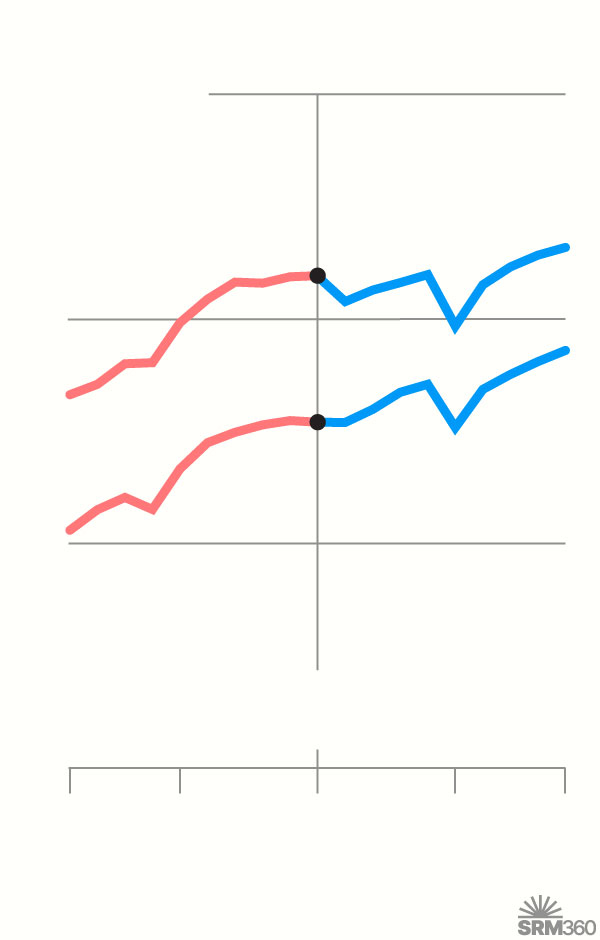
CO₂ emissions
50 billion tonnes
Pre-Paris
Post-Paris
UP 14%
UP 3%
40
UP 9%
Total
UP 16%
30
Fossil fuels
Paris adopted
(2015)
20
’06
’10
’20
’24
Source: Global Carbon Budget (2025) via Our World in Data
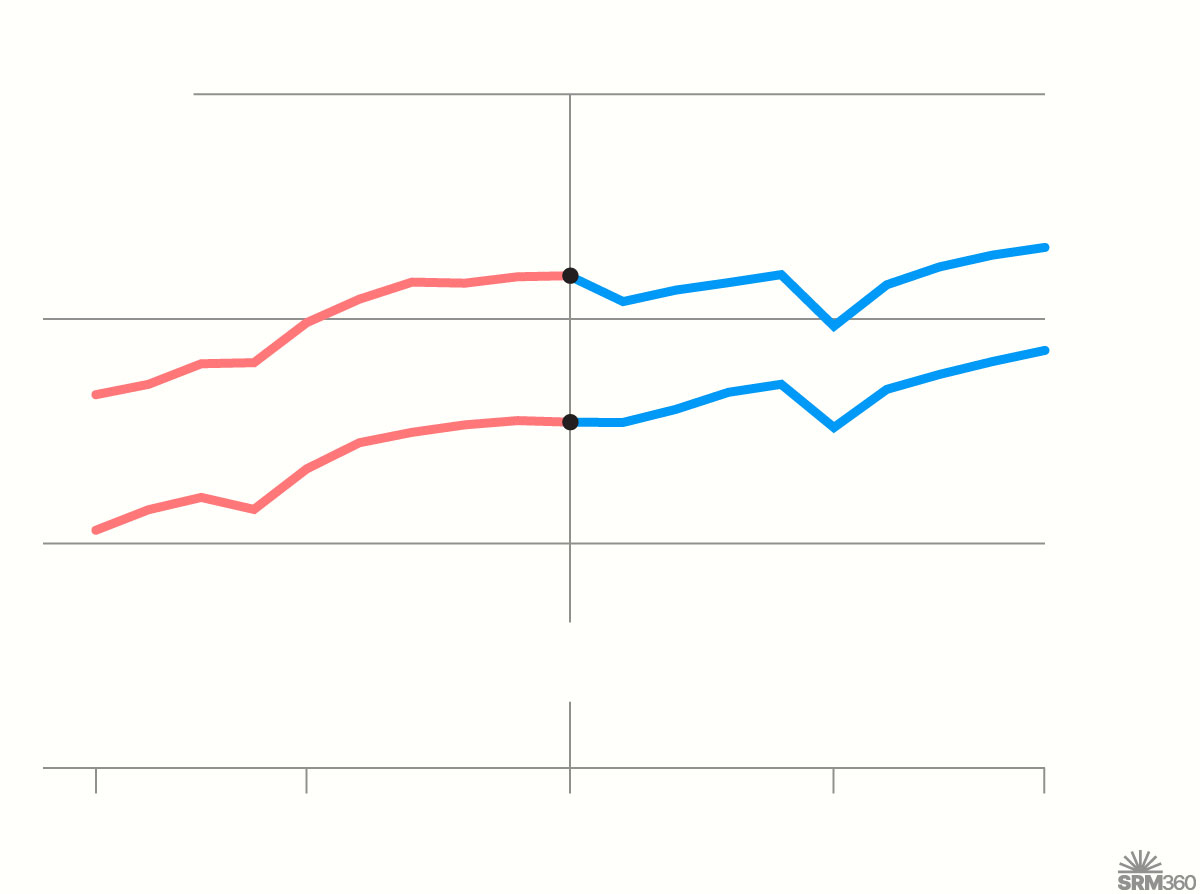
CO₂ emissions
50 billion tonnes
Pre-Paris
Post-Paris
UP 14%
UP 3%
Total
40
Fossil fuels
UP 9%
UP 16%
30
Paris adopted
(2015)
20
2006
2010
2020
2024
Source: Global Carbon Budget (2025) via Our World in Data

What does the research suggest?
Public attitude studies have generally found that people, after learning about SRM, do not show reduced support for emissions cuts. Some studies find the opposite. However, individual attitudes tell us little about how corporations, industry groups, or governments might behave.
Framing matters. One study found a displacement effect when SRM was described as a “great solution” needing little else. When presented neutrally – as a complement to emissions cuts with its own risks – no such effect appeared. Informal surveys of researchers and policy experts show a range of views on whether SRM is likely to slow or accelerate decarbonisation. The evidence suggests that how the conversation is held could matter as much as whether it is held at all.
Emissions survey
In November 2025, we conducted an informal survey of experts in our Researcher Database and others in the solar geoengineering community. Respondents shared their estimates for the most likely trajectory of net annual carbon dioxide emissions and how sunlight reflection methods (SRM) would affect progress on emissions cuts.
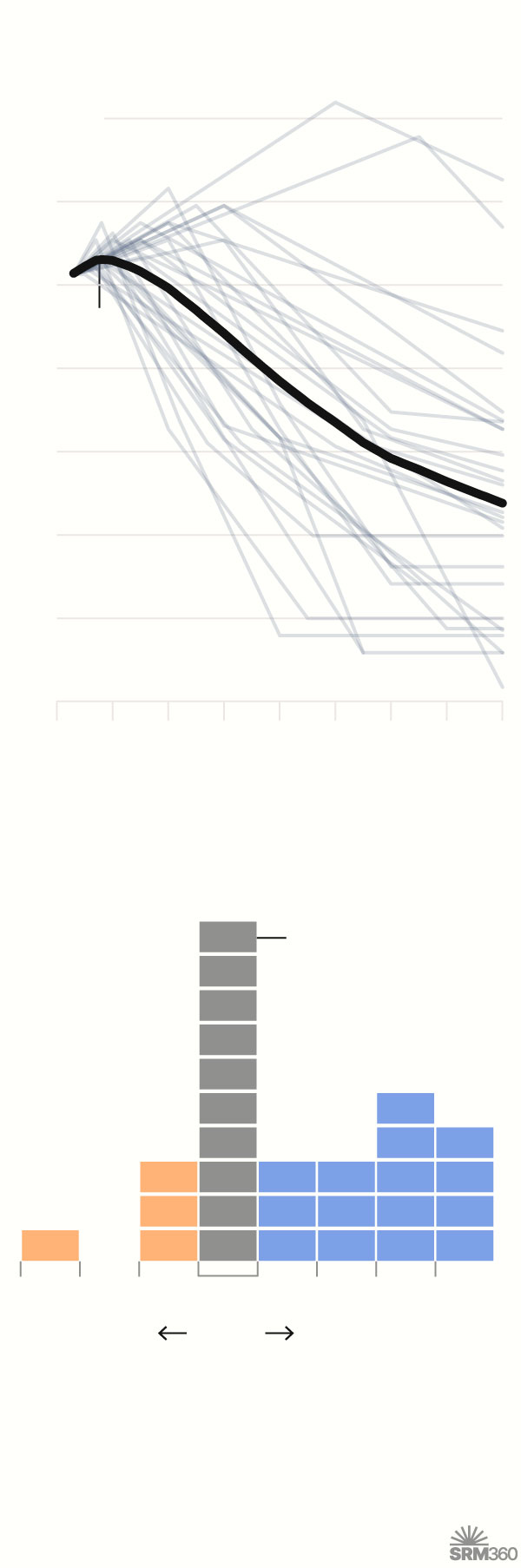
SRM360 survey: likely CO2 emissions trajectory
billion tonnes
60
50
40
Average
30
20
10
0
–10
’20
’30
’40
’50
’60
’70
’80
’90
2100
How much would solar geoengineering delay progress on emissions cuts?
One survey response
-30%
-20
-10
0
10
20
30
40%
Emissions milestones would be delayed by x%
Emissions milestones would be reached x% sooner
Note: There were 29 respondents to the survey.
Source: SRM360.org
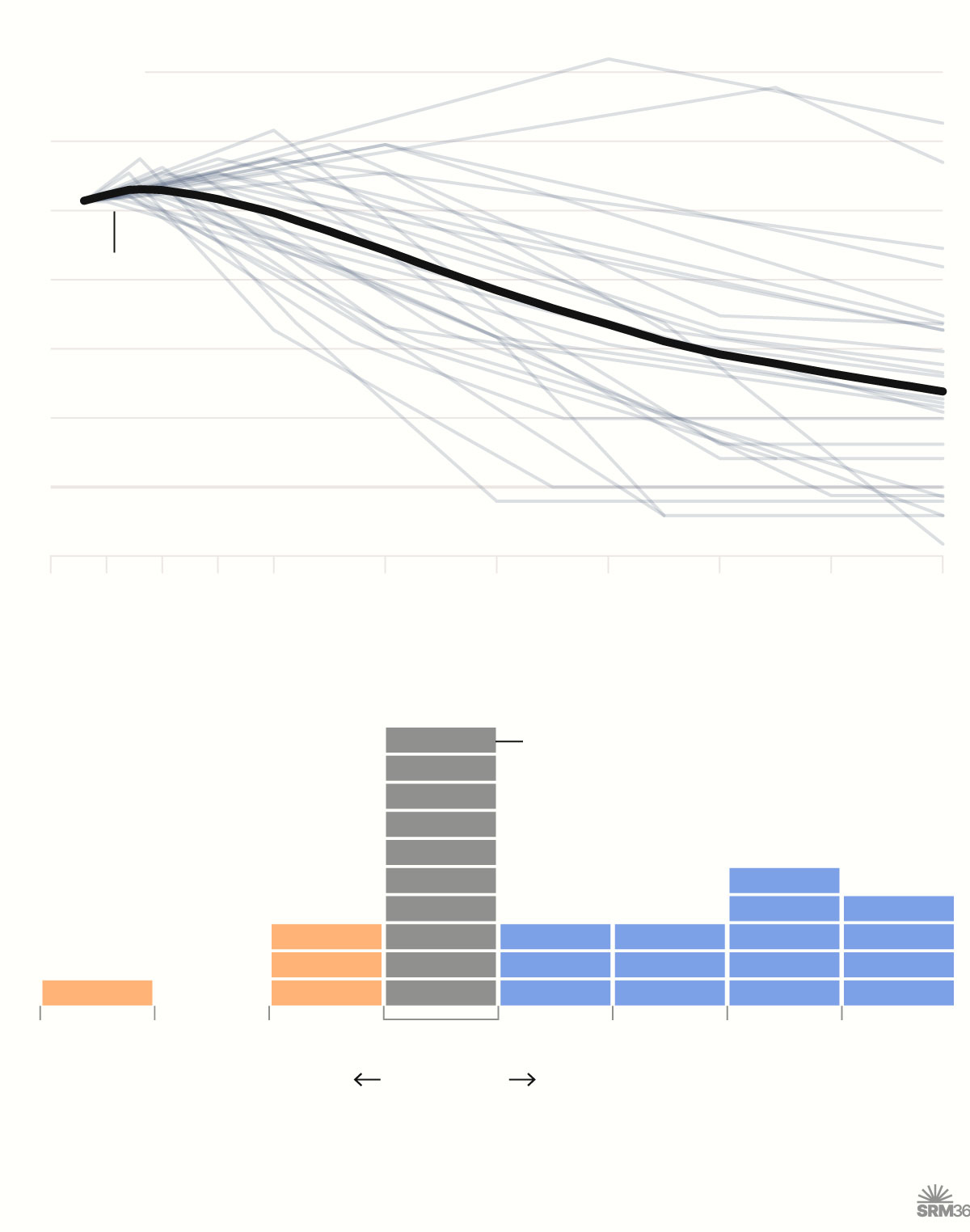
SRM360 survey: likely CO2 emissions trajectory
billion tonnes
60
50
40
Average
30
20
10
0
–10
2020
’25
’30
’35
’40
2050
2060
2070
2080
2090
2100
How much would solar geoengineering delay progress on emissions cuts?
One survey response
-30%
-20
-10
0
10
20
30
40%
Emissions milestones would be reached x% sooner
Emissions milestones would be delayed by x%
Note: There were 29 respondents to the survey.
Source: SRM360.org

SRM360 survey: likely CO2 emissions trajectory
billion tonnes
60
50
40
Average
30
20
10
0
–10
2020
’25
2050
2060
2070
2080
2090
2100
2030
2040
How much would solar geoengineering delay progress on emissions cuts?
One survey response
-30%
-20
-10
0
10
20
30
40%
Emissions milestones would be reached x% sooner
Emissions milestones would be delayed by x%
Note: There were 29 respondents to the survey.
Source: SRM360.org
