Article
Does International Law Prohibit SRM?
Sunlight reflection methods (SRM), also known as solar geoengineering, would alter the climate and could cause significant harm. What international laws are relevant to SRM, and do any prohibit its use?

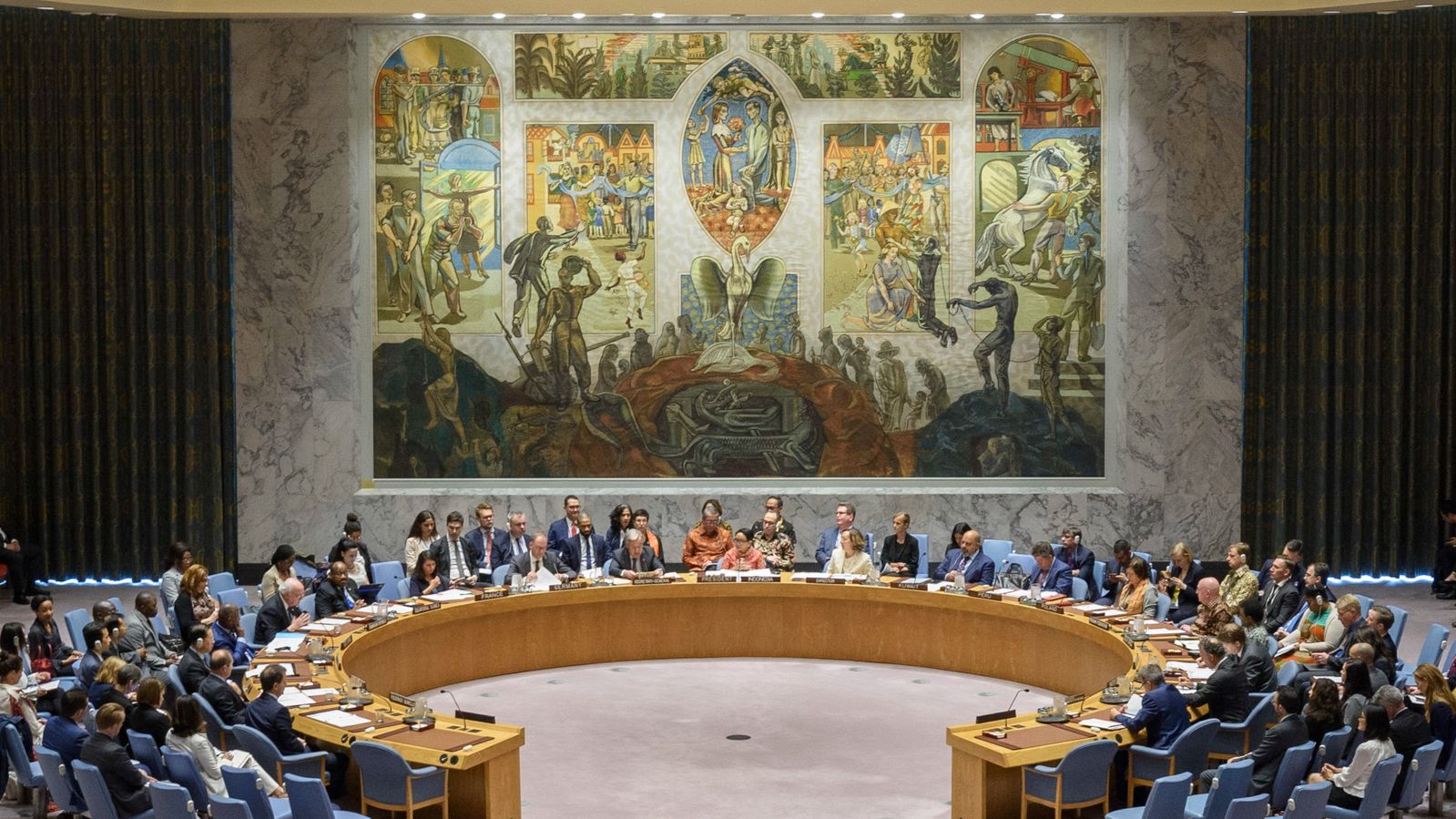
Photo: AJEL


Key takeaways
- There are international laws relevant to SRM, but none outright prohibit research, outdoor experiments, or deployment.
- SRM deployment could still face legal challenges, as countries might argue it conflicts with certain legal principles.
- SRM could be prohibited in the future, but this seems unlikely in the near term.
SRM Guide
How Should SRM Be Governed?
Simply put, international law is law among states. There are two main types of binding international law: customary international law and treaty law.
Customary international law consists of legal obligations among all states that derive from practice. The customary rule most relevant to SRM is the “no-harm rule”, which holds that states have duties to take steps to reduce significant environmental harms to other states. This is binding on all states and would apply to SRM since it could pose risks of significant harm to states other than the potential deployer(s).
The UN International Law Commission, which helps develop and codify rules of customary international law, does not interpret the no-harm rule as prohibiting SRM. Instead, in its Draft Guidelines on the Protection of the Atmosphere, the Commission’s Special Rapporteur stated that SRM “should only be conducted with prudence and caution, and subject to any applicable rules of international law”.1 While customary international law could present legal obstacles to SRM, it does not amount to an outright prohibition.2
Treaty law, as its name suggests, consists of legal obligations arising from treaties signed and ratified3 by states. Unlike customary international law, treaty law is binding only on those states that have ratified it.
United Nations Framework Convention on Climate Change: Does not address SRM
The United Nations Framework Convention on Climate Change is the principal treaty governing climate change and the framework within which the Paris Agreement was developed, but it does not address SRM specifically.4 Instead, SRM has been addressed in piecemeal fashion by a handful of other treaties related to the environment. The table below summarises this patchwork coverage.
Are there treaties that prohibit SRM?
| Treaty | Does it prohibit SRM? | Reason |
|---|---|---|
| United Nations Framework Convention on Climate Change | No | Does not directly address SRM |
| Convention on Biological Diversity | No | Invitation (not legally binding) to refrain from “geo-engineering” that might affect biodiversity, except for small-scale research |
| London Protocol | No | An amendment prohibiting specific “marine geoengineering” activities, except research – not in force and currently not applicable to SRM |
| ENMOD | No | Prohibition on “hostile” use of environmental modification techniques – not applicable to the peaceful use of SRM |
Convention on Biological Diversity: A non-binding decision on “geo-engineering”
In 2010, states party to the Convention on Biological Diversity (CBD), which aims to protect global biodiversity, adopted a decision urging countries to prevent “climate-related geo-engineering activities [including SRM] that may affect biodiversity” – with the exception of “small scale scientific research studies” – until there is adequate scientific justification and appropriate consideration of risks and impacts.
Some people refer to this decision as an international “moratorium”. But since it is a decision rather than an amendment, it is not legally binding – even on states that have ratified the CBD.5 Furthermore, the United States is not a party to the CBD.
Regardless, most informed commentators reject the notion that the CBD prohibits SRM because its parties are under no obligation stemming from this decision.6
London Convention and Protocol: Prospective amendment does not apply to SRM
The London Convention and London Protocol regulate ocean dumping.7 In 2013, negotiators finalised an amendment to the London Protocol that would prohibit specific listed “marine geoengineering” activities with a possible exception for “legitimate scientific research”. As written, this amendment would apply only to ocean fertilisation, which aims to capture carbon dioxide from the atmosphere by stimulating phytoplankton blooms.
However, states that have ratified the London Protocol are considering whether to list marine cloud brightening as a form of marine geoengineering under the terms of the amendment.
Yet this 2013 amendment has not entered into force – only 9 of a required 38 countries have ratified it. And if it ever did enter into force and consequently became legally binding, the amendment does not currently address SRM. Further, as in the case of the CBD, the US is not a party to the London Protocol. Again, as with the CBD, legal scholars acknowledge that the London Protocol does not prohibit SRM.8
ENMOD: Only applies to hostile activities
The Convention on the Prohibition of Military or Any Other Hostile Use of Environmental Modification Techniques, or ENMOD, was signed in 1977 following weather modification efforts by the United States during the Vietnam War. The treaty prohibits the “hostile” use of environmental modification techniques.

An example of hostile environmental modification – a US military helicopter spraying Agent Orange during the Vietnam War.
Hostile use of SRM would therefore be prohibited, but such uses seem unlikely, and its peaceful use is not restricted by this treaty.9
No outright prohibition on SRM, but that could change
While it can be argued that international law ought to prohibit the use of SRM, no customary rules or treaties categorically outlaw it.
Some indications of at least limited support for banning SRM should be noted. Following unauthorised balloon releases carried out in Mexico by the US start-up company Make Sunsets in 2022, the Mexican government announced its intention to prohibit SRM and rally other countries to take similar steps.10 And at the 20th African Ministerial Conference on the Environment in 2025, ministers called for a “non-use agreement” on SRM.
While support for prohibiting the use of SRM may grow in the future, for now, international law poses no definitive barriers to SRM.
Open questions
- Will support for an international prohibition on SRM grow?
- Could national or regional bans trigger serious international discussions?
- If an international ban were adopted, how would it be enforced?


Endnotes
- Reynolds JL. (2021). Solar Geoengineering Could Be Consistent with International Law. In: Mayer B, Zahar A, editors. Debating Climate Law. Cambridge University Press; p. 257–73. https://doi.org/10.1017/9781108879064.020
- Armeni C, Redgwell C. (2015). International Legal and Regulatory Issues of Climate Geoengineering Governance: Rethinking the Approach. Climate Geoengineering Governance Working Paper Series: 021. https://jreynolds.org/wp-content/uploads/2021/12/Armeni_Redgwell_2015_Rethinking.pdf
- Ratification is the process by which a state formally consents to be bound by a treaty, often through action by national lawmakers.
- Note that under United States law, the Paris Agreement is not a treaty as it was not submitted to the Senate for ratification. This was deliberately written and agreed as such in Paris.
- Brunnee J. (2002). COPing with Consent: Law-Making Under Multilateral Environmental Agreements. Leiden Journal of International Law 15: 1-52. https://doi.org/10.1017/S0922156502000018
- Williamson P, Bodle R. (2016). Update on Climate Geoengineering in Relation to the Convention on Biological Diversity: Potential Impacts and Regulatory Framework. Technical Series No. 84. https://www.cbd.int/doc/publications/cbd-ts-84-en.pdf
- The London Convention, signed in 1972, regulates ocean dumping only for specified materials. The London Protocol (to the London Convention), signed in 1996, prohibits dumping of all materials not specified. The London Protocol is intended eventually to supersede the London Convention to simplify regulation of ocean dumping.
- Scott KN. (2023). From Ocean Dumping to Marine Geoengineering: The Evolution of the London Regime. Rayfuse R, Jaeckel A, Klein N, editors, Research Handbook on International Marine Environmental Law, 240-263. Cheltenham, UK: Edward Elgar Publishing. https://doi.org/10.4337/9781789909081.00019
- Eliason A. (2022). Avoiding Moonraker: Averting Unilateral Geoengineering Efforts. University of Pennsylvania Journal of International Law 43: 429-467. https://doi.org/10.2139/ssrn.3811361
- It remains unclear whether Mexico adopted such a ban, and there is no evidence it has undertaken any international initiative in this regard.