Article
What Is Termination Shock?
If sunlight reflection methods (SRM), or solar geoengineering, were ever deployed to bring down global temperatures, abruptly stopping such a programme would cause a rapid and dangerous rise in temperatures. What is the likelihood of this occurring, and what would its impacts be?
Photo: REUTERS


Key takeaways
- Because cooling effects from SRM approaches would be short-lived unless maintained, a large-scale deployment that ended suddenly and did not restart within a year or two would lead to a relatively rapid warming.
- This “termination shock” would challenge the capacity of societies and ecosystems to adapt, with potentially greater impacts than under climate change itself.
- Termination risks may be manageable given the international incentives to avoid this risk, the inherent robustness of the deployment systems, and the long timescale needed for an interruption to cause major impacts.
SRM Guide
How Could SRM Go Wrong?
If SRM were ever deployed, it would not address the root causes of climate change, but instead act as a mask for many of its effects. Stratospheric aerosol injection (SAI) – involving the dispersal of tiny reflective particles high in the atmosphere – or marine cloud brightening (MCB) – using sea-salt particles to make certain clouds brighter – could lower global temperatures, but the greenhouse gases that caused global warming would remain in the atmosphere.
That means that if a large-scale SRM programme were to stop suddenly, in the years that followed the planet’s temperature would rise more rapidly than it would have with climate change alone.1,2 This phenomenon is known as termination shock.
What would termination shock look like?
For termination shock to occur, the cooling from SRM would need to be substantial. If only a small deployment were undertaken – perhaps cooling the planet by only a few tenths of a degree – ending it suddenly would not lead to dramatic warming. However, as the scale of an SRM deployment gets larger, the potential for a rapid rebound in temperatures grows.
The consequences of terminating an SRM deployment would depend on how and when it occurs. In one scenario, visualised below, a deployment of SAI begins in 2035, aimed at maintaining a global average of 1.5°C of warming against a background of continued greenhouse warming. In this kind of scenario, suddenly and permanently ending deployment after some decades would see temperatures rise sharply, rebounding towards levels that would have been present without SRM over the course of about a decade. In that period, the rate of warming could be several times what it would have been under climate change alone.
Termination shock
Sunlight reflection methods (SRM) only provide a temporary cooling effect, which would need to be maintained for decades to offset global warming.
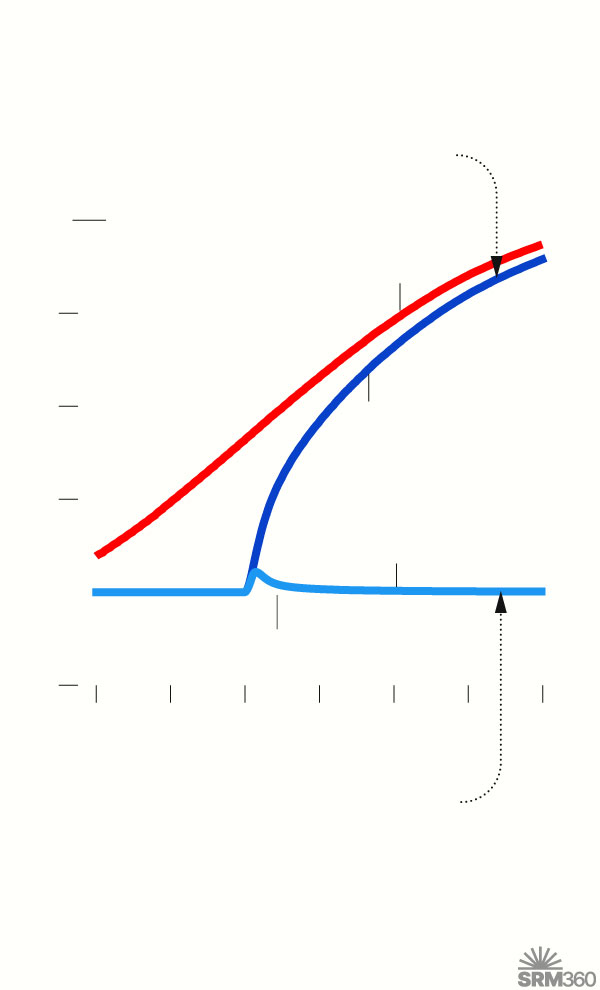
GLOBAL TEMPERATURE INCREASE
If SRM deployment suddenly and permanently stopped, temperatures would rapidly rise in what’s called a “termination shock”.
3.5°C
No SRM
3.0
2.5
SRM interrupted indefinitely
2.0
SRM interrupted for 1 year
1.5
SRM continues
1.0
2040
’50
’60
’70
’80
’90
2100
But, if the deployment were restarted within a few months, this rapid warming could be avoided.
Source: Based on results from Farley et al. (2024), Environmental Research Climate
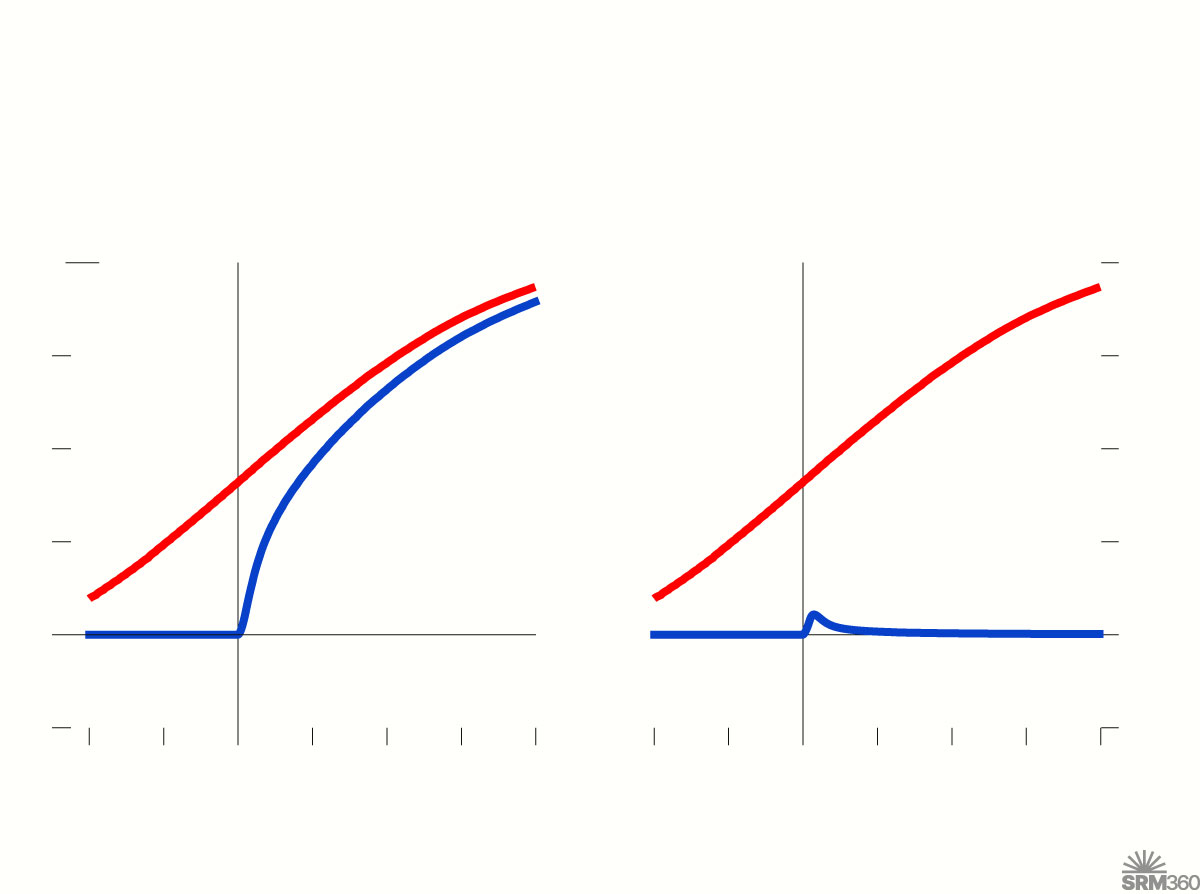
GLOBAL TEMPERATURE INCREASE
But, if the deployment were restarted within a few months, this rapid warming could be avoided.
If SRM deployment suddenly and permanently stopped, temperatures would rapidly rise in what’s called a “termination shock”.
3.5°C
3.5°C
No SRM
No SRM
3.0
3.0
2.5
2.5
SRM interrupted indefinitely
SRM interrupted for 1 year
2.0
2.0
1.5
1.5
1.0
1.0
2040
’50
’60
’70
’80
’90
2100
2040
’50
’60
’70
’80
’90
2100
Source: Based on results from Farley et al. (2024), Environmental Research Climate
Other aspects of the climate would also rebound rapidly towards where they would have been without SRM.1 In addition, there would be short-term disruptions driven by temperatures rising more rapidly over land than the oceans, which would affect regional rainfall patterns, for example.3
The difficulty of adapting to climate change depends on the magnitude of change, but also on the rate of change. The rapid changes that a large termination shock would bring would pose a serious challenge for already stretched adaptation efforts.4 For example, the combination of rapidly rising temperatures and changes to rainfall patterns could impact food production in many regions.1
It could also have significant impacts on biodiversity. In one study, an abrupt termination of SAI would require species to migrate an average of almost three times faster than under a moderate warming scenario in order to stay in an appropriate habitat.5
It’s clear that a termination shock could be very dangerous, but how likely is this to occur?
Why might an SRM programme be interrupted?
Once a large-scale SAI programme is up and running, it might be interrupted for a number of possible reasons. A common concern is the potential for international disagreement on the technology’s deployment,6 which could even escalate to the point of a war breaking out. A major conflict, whether triggered by SRM or not, could certainly disrupt SAI; aside from the general destabilising effect of such a conflict, it could also involve direct attacks on the infrastructure involved, i.e., the air bases and planes used to fly aerosols up to the stratosphere.
Destructive natural disasters might also disrupt an SRM deployment. Regional disasters like earthquakes could damage local infrastructure, while major events like pandemics or asteroid impacts could potentially halt deployments globally – though the world might have larger issues to manage in such a scenario.
An SRM programme might also be suddenly abandoned by a later generation of decision-makers. If that were to happen early in the deployment – say, after a weather disaster was rightly or wrongly blamed on SRM in its first year or two – it would not cause a termination shock. If that happened after decades of large-scale SRM deployment, a termination shock would follow. However, there would be strong incentives for future generations to avoid such outcomes.
How long is the SRM interruption?
Another important characteristic of any potential interruption of SRM is its duration. In some of the scenarios discussed above, it may be feasible to restart the programme relatively quickly – after an earthquake affects some of the infrastructure, say, or if a war is resolved within a year or two.
With SAI, because the aerosols already in the stratosphere would take 1–2 years to fall down to the ground,7 the world would have a period of months in which the programme could be restarted without an appreciable rise in temperatures.8 One study found that a one-year interruption to a large-scale deployment of SAI would cause a 20% loss of its cooling, but this would recover quickly and no rapid rise in temperatures would occur.9 With MCB, though the effect on the clouds would disappear within days, it would still take weeks or longer for the planet to warm substantially due to its inertia.8
The relatively long time before an interruption would result in harms makes SRM different from some other large-scale, societally critical pieces of infrastructure. For example, if the power grid of a major area goes down, its impact is felt almost immediately. An interruption to SRM would have little climatic effect for months – providing a window of time to get it back up and running without harm.
How could termination shock be avoided?
If SRM were deployed, several factors might make termination shock unlikely, or help prevent its occurrence. Perhaps most importantly, aggressive climate change mitigation through emissions reductions and carbon dioxide removal would reduce the risk of termination shock – the less cooling the world needs from SRM, the less of a shock it would get from any interruption.
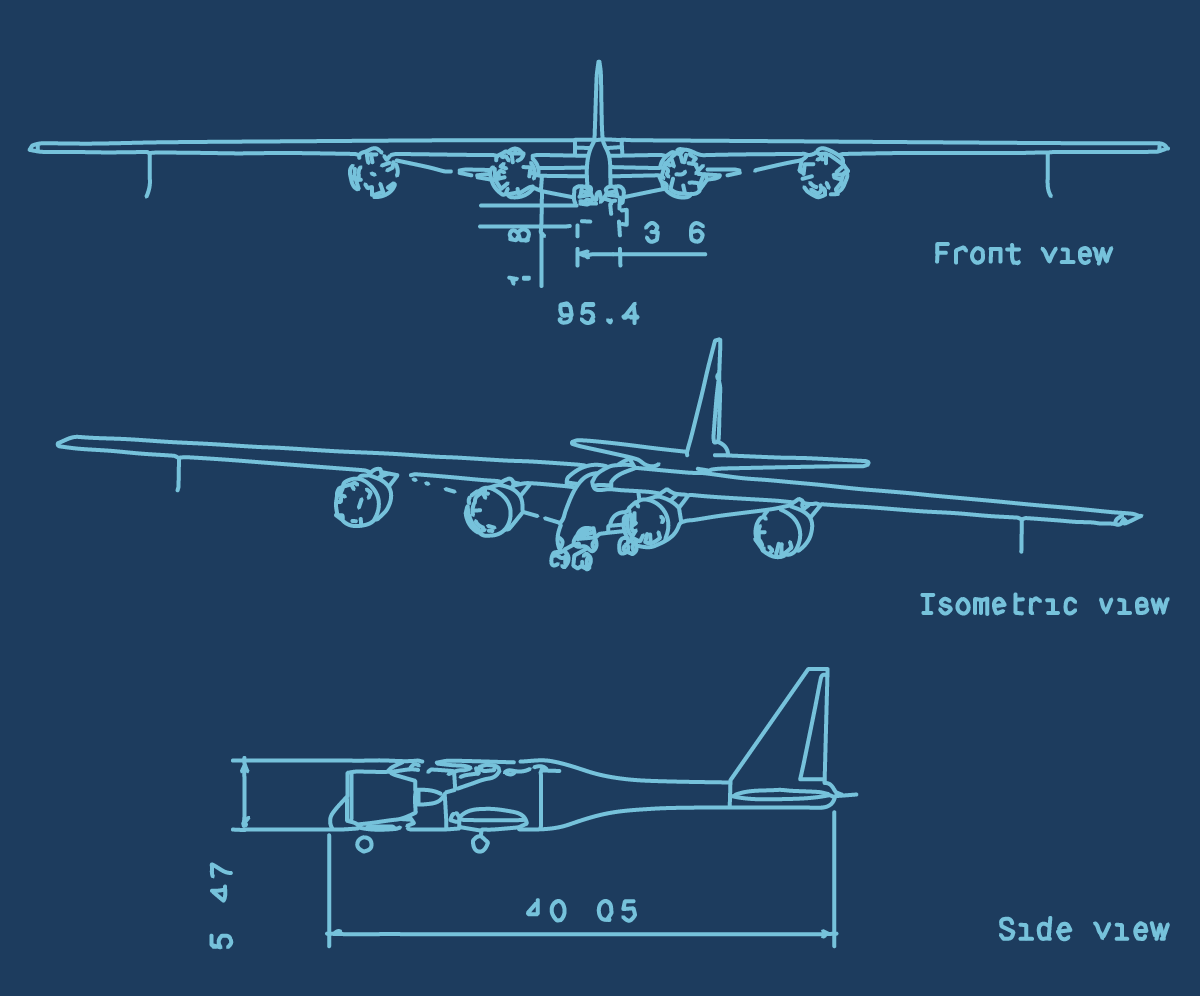
Beyond that, a global-scale programme would likely involve distributed infrastructure that may prove quite resilient. For SAI, that would mean tens or hundreds of aircraft flying from multiple air bases across the world, and for MCB, that would mean hundreds of vessels operating across the oceans. That means that most external risks – for example from localised natural disasters – would only threaten part of the system, leaving other parts unaffected.
If a decision to end the programme is made, deployments could gradually be phased out to limit the impacts of termination shock. Slowly reducing the SRM deployment over time would still result in temperatures rising towards the level caused by greenhouse gases in the atmosphere, but at a slower rate that would be easier to adapt to. Sharp rises in temperature could be avoided altogether if done over decades.
For SAI, the relatively low barrier to entry in terms of technology and cost means that redundancies in the infrastructure could readily be built, akin to multi-layered backup systems for power grids. Also, other actors could develop their own systems or backups, as countries have done for the US’s GPS system.8 And again, the delayed effects mean that SRM deployment could plausibly be restarted weeks or months after an interruption begins, preventing a termination shock from becoming a reality.
It is widely agreed that if SRM were ever deployed, it should be undertaken with a robust system of governance involving input from many stakeholders around the world. That sort of broad collaboration would help protect any deployment against potential interruptions, and allow the system to run more smoothly. However, developing collaborative governance for a possible SRM deployment could prove challenging, and non-cooperative approaches could prove much less stable and much more dangerous.
Open questions
- How much difference does the short-term rate of warming make to the impacts on societies and ecosystems?
- What governance arrangements could help to reduce the risk of termination shock if SRM were to be deployed?
- How resilient could SRM deployment systems be made to natural disasters and other shocks, and what backups or safeguards would be needed?

Endnotes
- McCusker KE, Armour KC, Bitz CM, Battisti DS. (2014). Rapid and extensive warming following cessation of solar radiation management. Environmental Research Letters. 9(2):024005. http://doi.org/10.1088/1748-9326/9/2/024005
- Jones A, Haywood JM, Alterskjær K, et al. (2013). The impact of abrupt suspension of solar radiation management (termination effect) in experiment G2 of the Geoengineering Model Intercomparison Project (GeoMIP). Journal of Geophysical Research: Atmospheres. 118(17):9743-52. https://doi.org/10.1002/jgrd.50762
- Bhowmick M, Mishra SK, Kravitz B, et al. (2021). Response of the Indian summer monsoon to global warming, solar geoengineering and its termination. Scientific Reports. 11(1):9791. https://doi.org/10.1038/s41598-021-89249-6
- Chen S, Tan-Soo JS, Ye HJ. (2023). Adaptation cannot keep pace with projected temperature increase. iScience. 26(12). https://doi.org/10.1016/j.isci.2023.108403
- Trisos CH, Amatulli G, Gurevitch J, et al. (2018). Potentially dangerous consequences for biodiversity of solar geoengineering implementation and termination. Nature Ecology & Evolution. 2(3):475-82. https://doi.org/10.1038/s41559-017-0431-0
- Möller I, Young DN. (2026). Why we need to explore conflict and competition around solar geoengineering. PLOS Climate. 5(4):e0000869. https://doi.org/10.1371/journal.pclm.0000869
- Laakso A, Korhonen H, Romakkaniemi S, Kokkola H. (2017). Radiative and climate effects of stratospheric sulfur geoengineering using seasonally varying injection areas. Atmospheric Chemistry and Physics. 17(11):6957-74. https://doi.org/10.5194/acp-17-6957-2017
- Parker A, Irvine PJ. (2018). The risk of termination shock from solar geoengineering. Earth’s Future. 6(3):456-67. https://doi.org/10.1002/2017EF000735
- Farley J, MacMartin DG, Visioni D, Kravitz B. (2024). Emulating inconsistencies in stratospheric aerosol injection. Environmental Research: Climate. 3(3):035012. http://doi.org/10.1088/2752-5295/ad519c