Article
Who Funds Work on Solar Geoengineering?
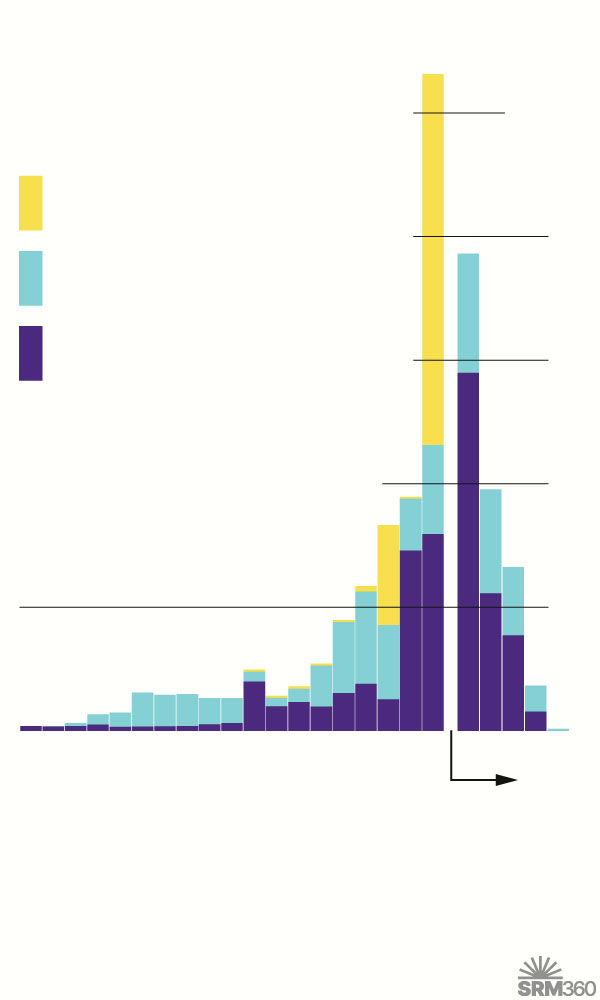
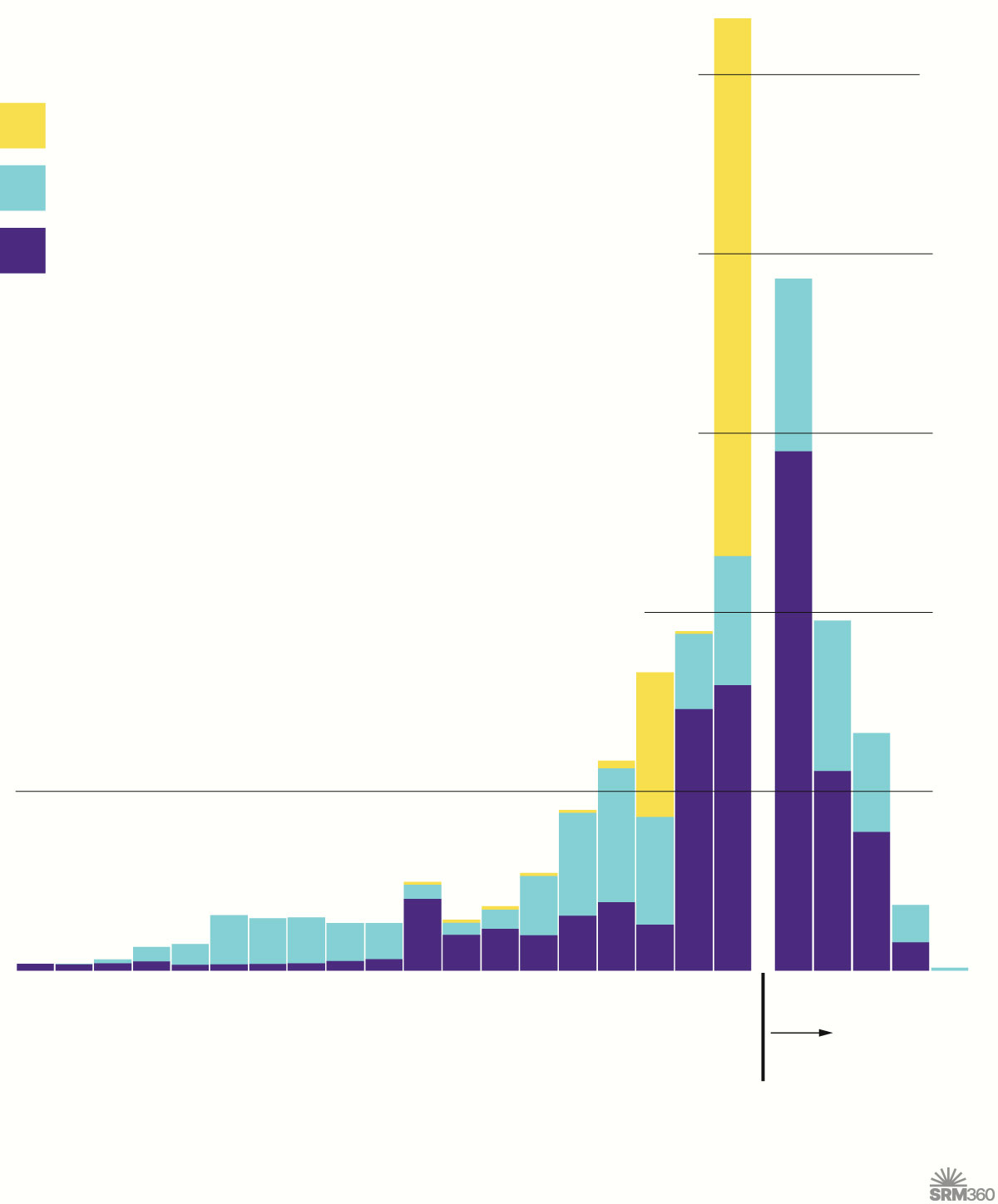
Funding for sunlight reflection methods (SRM), or solar geoengineering, has risen rapidly in recent years. In this analysis based on our updated Funding Tracker, SRM360 provides an overview of the funding landscape – where money is coming from and going to, which countries, philanthropies, and private enterprises are playing large roles, and what parts of the world appear to be falling behind in this growing field.

As climate change has continued to worsen, interest in SRM as a potential method to reduce some of its impacts has grown. More interest means more money – and how money is spent can determine the directions a field takes. Here, we provide an overview of our updated analysis of the funding into SRM – you can find details of the methods behind this analysis here, and read more about some of what’s new this year here.
SRM funding reaches new heights with the entry of venture capital
Funding for SRM has risen sharply in recent years, surging in 2025 after venture capital investment in the for-profit company Stardust Solutions. Significant support from UK government-backed funders and growing philanthropic support will likely keep global funding high in coming years.
FUNDING CONTRIBUTION BY SECTOR
In 2025 US dollars
$100m
Commercial
80
Governmental
Philanthropic
60
40
20
’07
’10
’15
’20
’25
’26
’30
Committed*
*Committed funding only includes known funding allocated for 2026 and beyond. Additional funding may be committed and spent in the future.
Source: SRM360.org
FUNDING CONTRIBUTION BY SECTOR
In 2025 US dollars
$100m
Commercial
Governmental
Philanthropic
80
60
40
20
2007
2010
2015
2020
2025
2026
2030
Committed*
*Committed funding only includes known funding allocated for 2026 and beyond. Additional funding may be committed and spent in the future.
Source: SRM360.org
Global funding for SRM has risen sharply in recent years
Funding for SRM reached a cumulative total of $267 million through 2025 and was 11 times larger in the five years from 2021–2025 ($214 million) compared to ten years earlier in 2011–2015 ($19.1 million). Adjusting for inflation, that is more than 8 times larger ($221 million vs. $26.4 million). This growth is likely to continue, as a total of $154 million has already been publicly committed from 2026 onwards.
For much of the last two decades, most of that has gone to research (51%), mostly at universities, and to non-profits working on awareness-building and advocacy (21%). The recent entry of the for-profit US-Israeli company Stardust Solutions has altered the landscape significantly. Having raised a total of $75.0 million, Stardust has now received 28% of all known SRM funding to date.
Though the funding for SRM is growing, the absolute amounts remain small relative to spending on other climate policies. A report from Climateworks estimates that philanthropic funding for climate mitigation totalled around $15 billion in 2024, compared to only about $44 million per year in overall funding for SRM between 2021 and 2025. Furthermore, investments in clean energy topped $2 trillion in 2025, according to the International Energy Agency – average annual SRM funding comes to just 0.002% of that amount.
Philanthropic funding is leading the way, but commercial funding is rising
Through 2025, philanthropic funding was the leading source at $102 million, or about 38% of the total. That is followed by governmental sources in second place ($87.5 million, 33%) and commercial sources in third ($77.5 million, 29%).
Looking ahead from 2026, philanthropic sources have committed an additional $101 million, accounting for about 66% of the known total of future funding. Governmental sources account for the other 34% of committed funding, with almost all of that ($49.3 million, or about 94%) coming from one country, the UK, while the EU, France, and the US have committed much smaller amounts.
A small portion of funding to date – less than $200,000 – has come from sources we cannot confidently identify. However, it should be noted that there are SRM funders and organisations that have not shared their full funding information with us and there may be other funders and organisations that we are unaware of. Organisations that devote a small fraction of their work to SRM, such as the Heinrich Böll Foundation, are also not included in our funding total.
That said, we have not found any evidence of fossil fuel interests funding SRM activities. There are concerns that such interests might support SRM as a potential way to stave off decarbonisation, though, as yet, they do not appear to be doing so by funding research or organisations working on the topic.
Philanthropies, governments, and private investors all play a large role in SRM funding
Philanthropic sources are pulling ahead of governments as the leading source of SRM funding, while commercial funding is close behind, having surged in recent years.

TOTAL FUNDING CONTRIBUTION BY SECTOR
PHILANTHROPIC
$203 million total spent and committed
$102 million through 2025
GOVERNMENTAL
$140 million total spent and committed
$87.5 million through 2025
Commercial
$77.5 million through 2025
Unknown
$193 thousand through 2025
Source: SRM360.org

TOTAL FUNDING CONTRIBUTION BY SECTOR
PHILANTHROPIC
$203 million total spent and committed
GOVERNMENTAL
$140 million total spent and committed
$102 million through 2025
$87.5 million through 2025
Commercial
$77.5 million through 2025
Unknown
$193 thousand through 2025
Source: SRM360.org

TOTAL FUNDING CONTRIBUTION BY SECTOR
PHILANTHROPIC
$203 million total spent and committed
GOVERNMENTAL
$140 million total spent and committed
$102 million through 2025
$87.5 million through 2025
Unknown
$193 thousand through 2025
Commercial
$77.5 million through 2025
Source: SRM360.org
A small number of countries and philanthropies dominate SRM funding
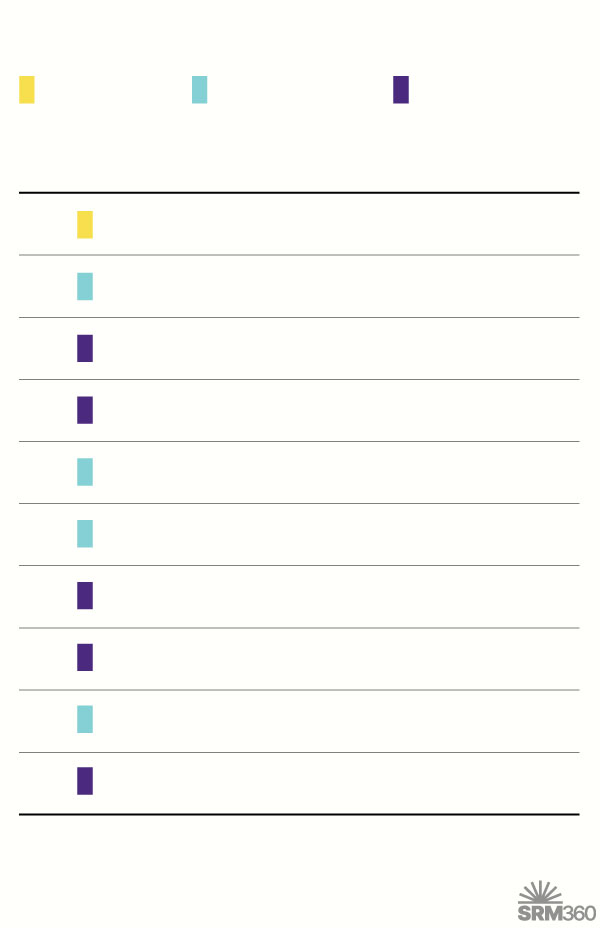
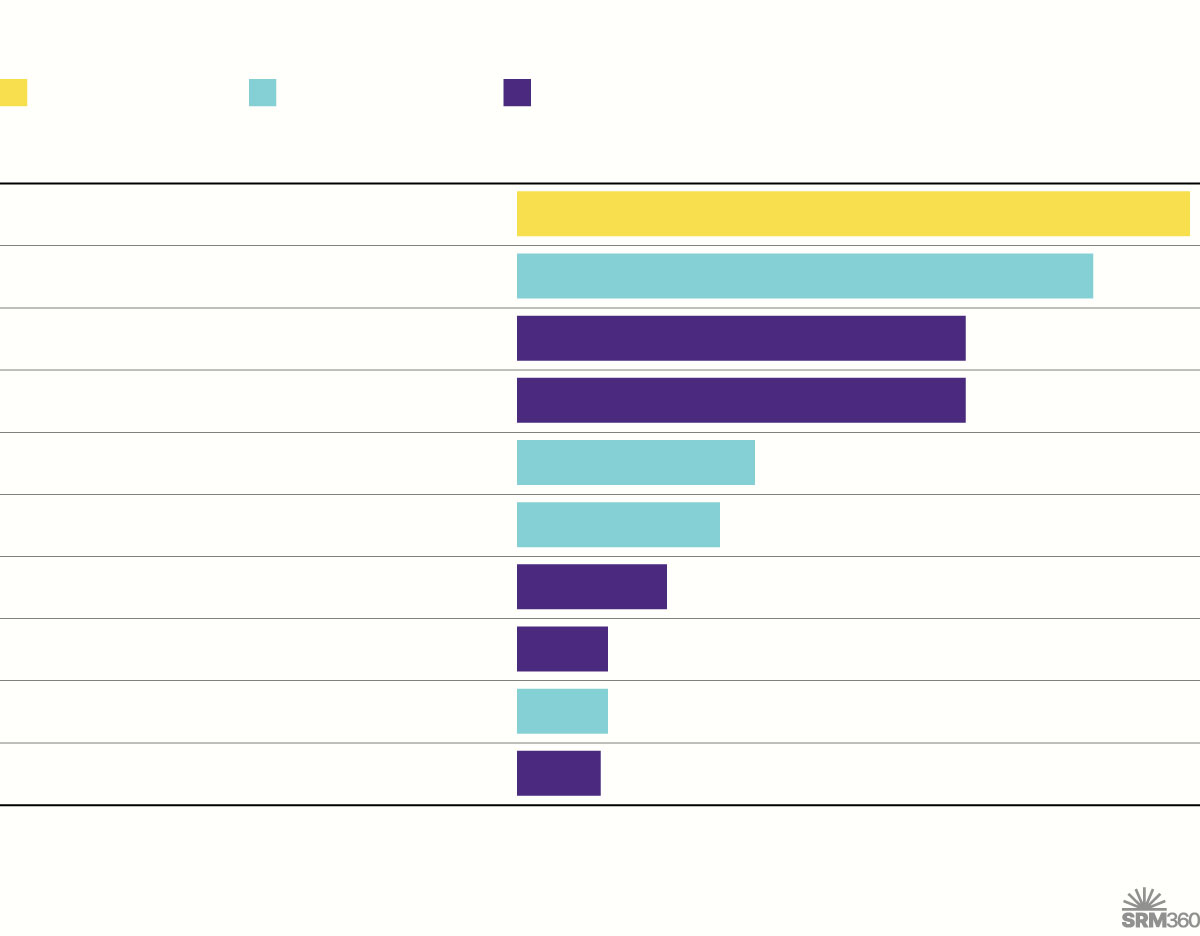
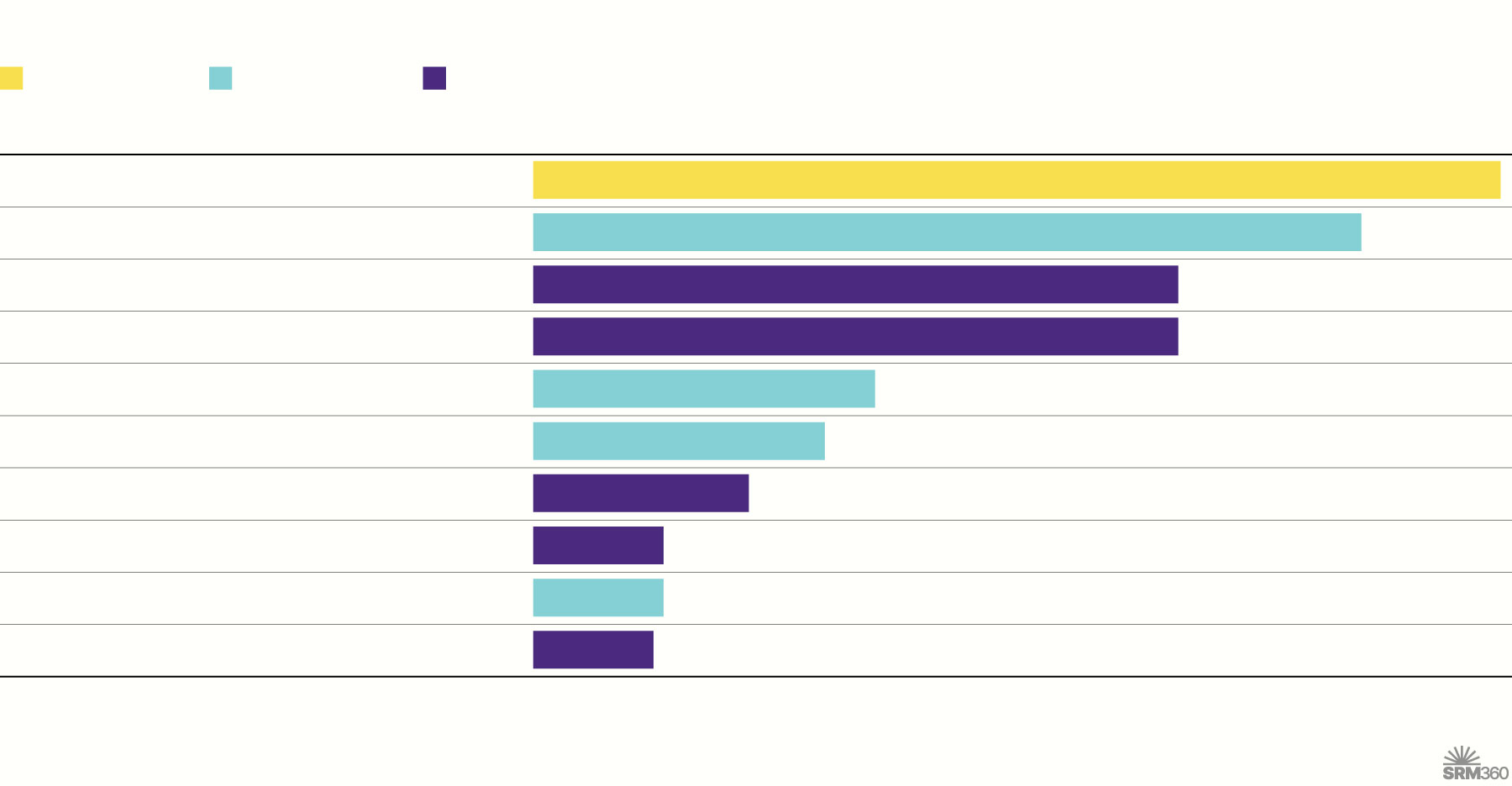
In terms of funding for the field, a few countries and philanthropies dominate. The UK,1 US, Australia, Germany, and the European Union have provided the vast bulk of total government funding through 2025 ($80.3 million, or about 92% of the total). The Simons Foundation, the Quadrature Climate Foundation (QCF), and Coefficient Giving (formerly Open Philanthropy), have led the way among philanthropies ($51.6 million combined, or just over 50% of all philanthropic funding through 2025).
Looking ahead, only the UK has committed significant amounts of government funding to SRM, at $49.3 million from 2026 forward; the EU ($2.3 million), France ($861,000), and the US governments ($397,000) have committed smaller amounts. QCF has another $34.7 million committed from 2026 onwards, followed by the Simons Foundation with another $29.4 million – both outpacing every government in the world except for the UK, at least based on what is known so far.
On the commercial side, Awz Ventures, a Canadian-Israeli-US firm with ties to defence agencies, supported Stardust in 2023 with $15.0 million. With additional investors from the US, UK, and across Europe, its 2025 fundraising round brought Stardust’s total investment to $75.0 million.
Philanthropies and Stardust’s investors outspend most nations on SRM
Only a few governments compete with big philanthropies on SRM funding, and recent fundraising by the for-profit company Stardust Solutions puts its investors at the top of the list in terms of total funding spent and committed.
10 LARGEST SRM FUNDERS
COMMERCIAL
GOVERNMENTAL
PHILANTHROPIC
TOTAL SPENT AND COMMITTED in millions of US dollars
RANK
FUNDER
$75.0
1
Stardust investors
$64.2
2
UK government
$50.0
3
Quadrature Climate Foundation
$50.0
4
Simons Foundation
$26.5
5
US government
$22.6
6
Australian government
$16.7
7
Coefficient Giving*
$10.1
8
LAD Climate Fund
$10.1
9
German government
10
$9.7
Bill Gates
*Formerly Open Philanthropy
Source: SRM360.org
10 LARGEST SRM FUNDERS
COMMERCIAL
GOVERNMENTAL
PHILANTHROPIC
FUNDER
RANK
TOTAL SPENT AND COMMITTED in millions of US dollars
$75.0
1
Stardust investors
2
UK government
$64.2
Quadrature Climate Foundation
3
$50.0
Simons Foundation
4
$50.0
US government
5
$26.5
6
Australian government
$22.6
7
Coefficient Giving*
$16.7
8
LAD Climate Fund
$10.1
9
German government
$10.1
Bill Gates
10
$9.7
*Formerly Open Philanthropy
Source: SRM360.org
10 LARGEST SRM FUNDERS
COMMERCIAL
GOVERNMENTAL
PHILANTHROPIC
FUNDER
RANK
TOTAL SPENT AND COMMITTED in millions of US dollars
$75.0
1
Stardust investors
2
UK government
$64.2
Quadrature Climate Foundation
3
$50.0
Simons Foundation
4
$50.0
US government
5
$26.5
6
Australian government
$22.6
7
Coefficient Giving*
$16.7
8
LAD Climate Fund
$10.1
9
German government
$10.1
Bill Gates
10
$9.7
*Formerly Open Philanthropy
Source: SRM360.org
The Global North dominates, though research is expanding around the world
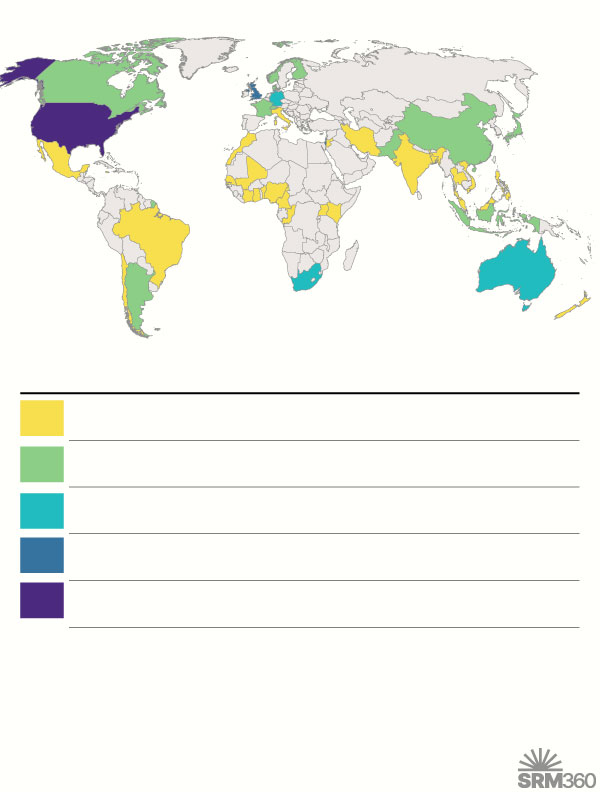
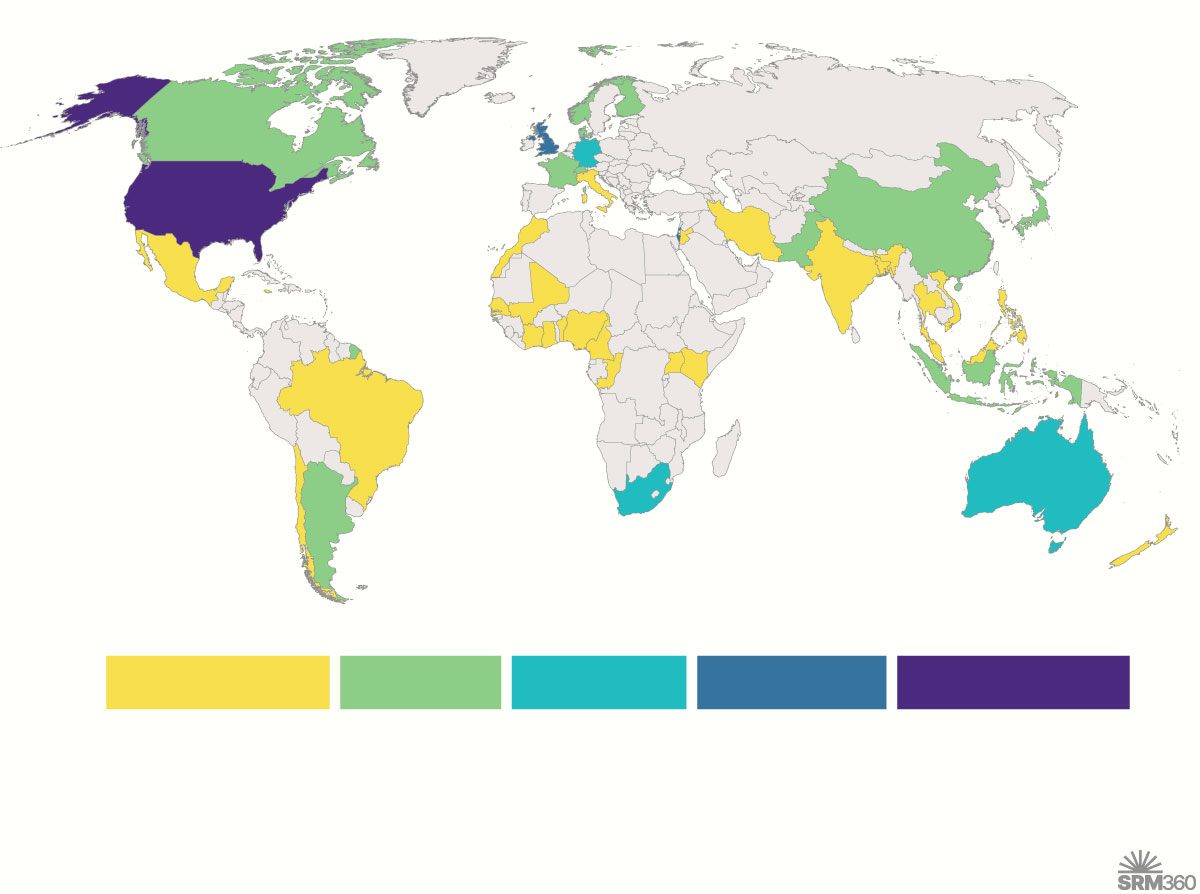
If SRM is ever deployed at planetary scale, the resulting changes to the climate would affect everyone on earth. Countries in the Global South are generally among the most vulnerable to the changing climate and may have the most at stake with SRM – but the Global North has dominated the funding that shapes the field.
More than 99% of the funds provided came from countries in the Global North – about $265 million versus $1.8 million. The Global North also received 97% of the total. Still, $7.8 million in funding has flowed to 22 countries in the Global South, in large part from the non-profit Degrees Initiative. This organisation plans to continue funding researchers in the Global South, with $5.1 million in future funding commitments.
The world’s second-largest economy, China, has publicly reported just $1.8 million in SRM funding, with no known plans for further investment, though information is generally scarce. Organisations in India have received small amounts of SRM funding (just over $200,000), but we have not seen evidence of government spending in the world’s most populous country.
SRM funding received, by country
Research is expanding across the Global South, but most funding is still concentrated in a few countries in the Global North.
NUMBER OF COUNTRIES
26
Up to $1 million
12
$1m–$10m
3
$10m–$50m
2
$50m–$100m
1
More than $100m
Note: Total funding received through 2025 and committed in the future; includes regranted funds.
Source: SRM360.org
More than $100m
$50m–$100m
$10m–$50m
$1m–$10m
Up to $1 million
26
countries
12
3
2
1
Note: Total funding received through 2025 and committed in the future; includes regranted funds.
Source: SRM360.org
In an age of increasing geopolitical competition – including for technological dominance – how will different powers respond to this mismatch? Efforts to create multilateral governance over geoengineering have been slow. Without it, countries may see a rising interest in determining who has their hand on a potential global thermostat.



Endnotes
- The UK’s Advanced Research + Invention Agency (ARIA) has announced an overall “climate cooling” programme budget of £56.8 million ($77.2 million), but not all of that has yet been allocated and some of its projects focus on approaches adjacent to SRM, like sea-ice thickening, that we did not include in our Tracker’s totals.