Graphic
Mixed-phase cloud thinning
Clouds that have a combination of ice and supercooled liquid tend to have a warming effect over the poles in winter. Thinning them out by seeding them with tiny particles may let some extra heat escape, potentially cooling the region somewhat.
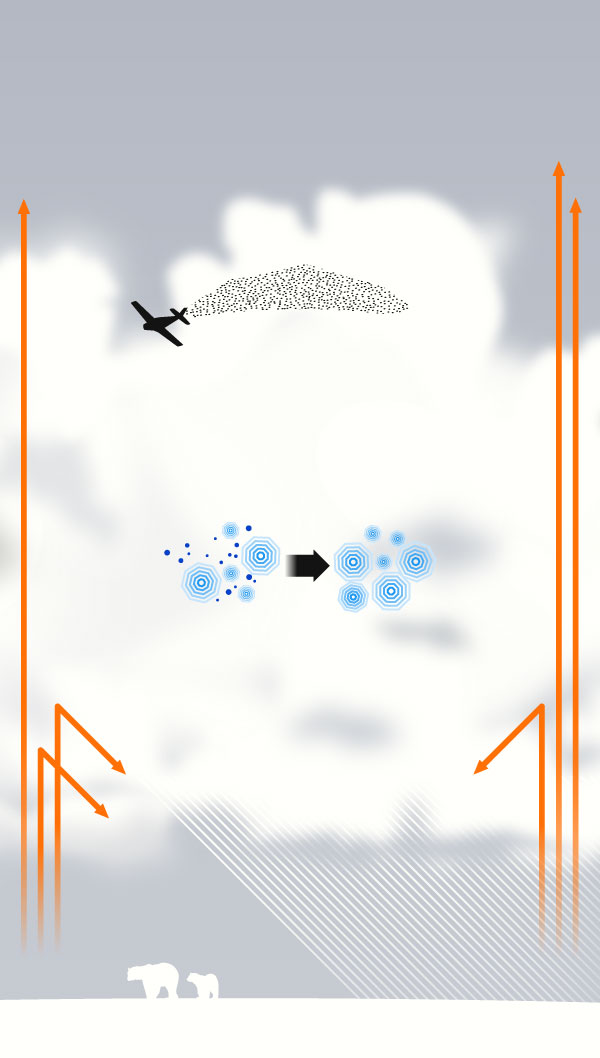
Mixed-phase clouds contain ice crystals and water droplets. They tend to have a warming effect in polar winters.
By seeding clouds with tiny particles, more ice crystals form.
Water droplets
Ice crystals
This leads to precipitation, thinning the clouds and allowing more heat to escape.
Heat
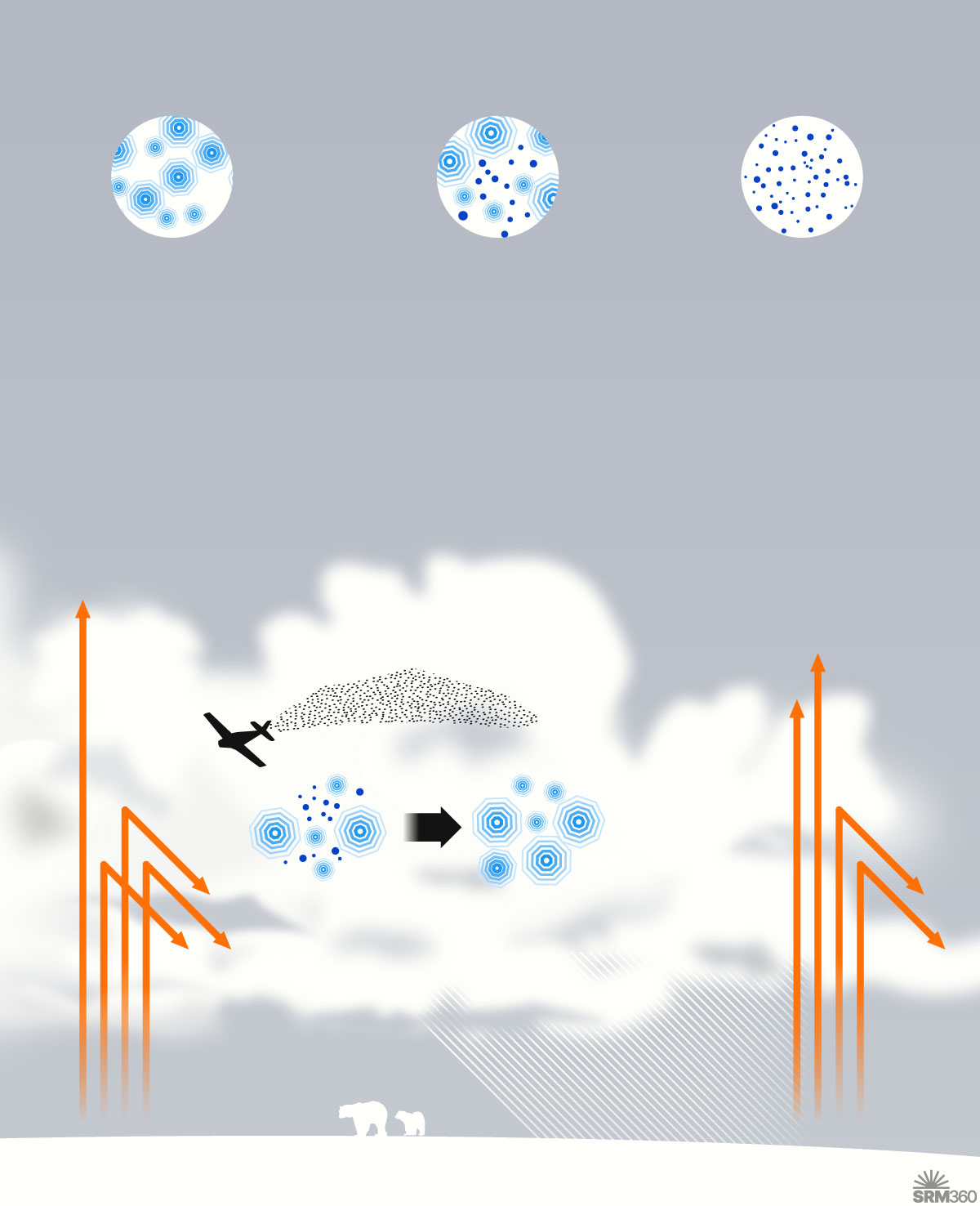
Cloud Phases
The water in clouds comes in different phases, which affects its properties.
Mixed phase
Clouds contain ice crystals and water droplets.
Ice phase
Clouds made entirely of ice crystals.
Liquid phase
Clouds composed of tiny water droplets.
MIXED-PHASE CLOUD THINNING
Mixed-phase clouds tend to have a warming effect in polar winters.
By seeding clouds with tiny particles, more ice crystals form.
This leads to precipitation, thinning the clouds and allowing more heat to escape.
Water droplets
Ice crystals
Heat
Source: SRM360
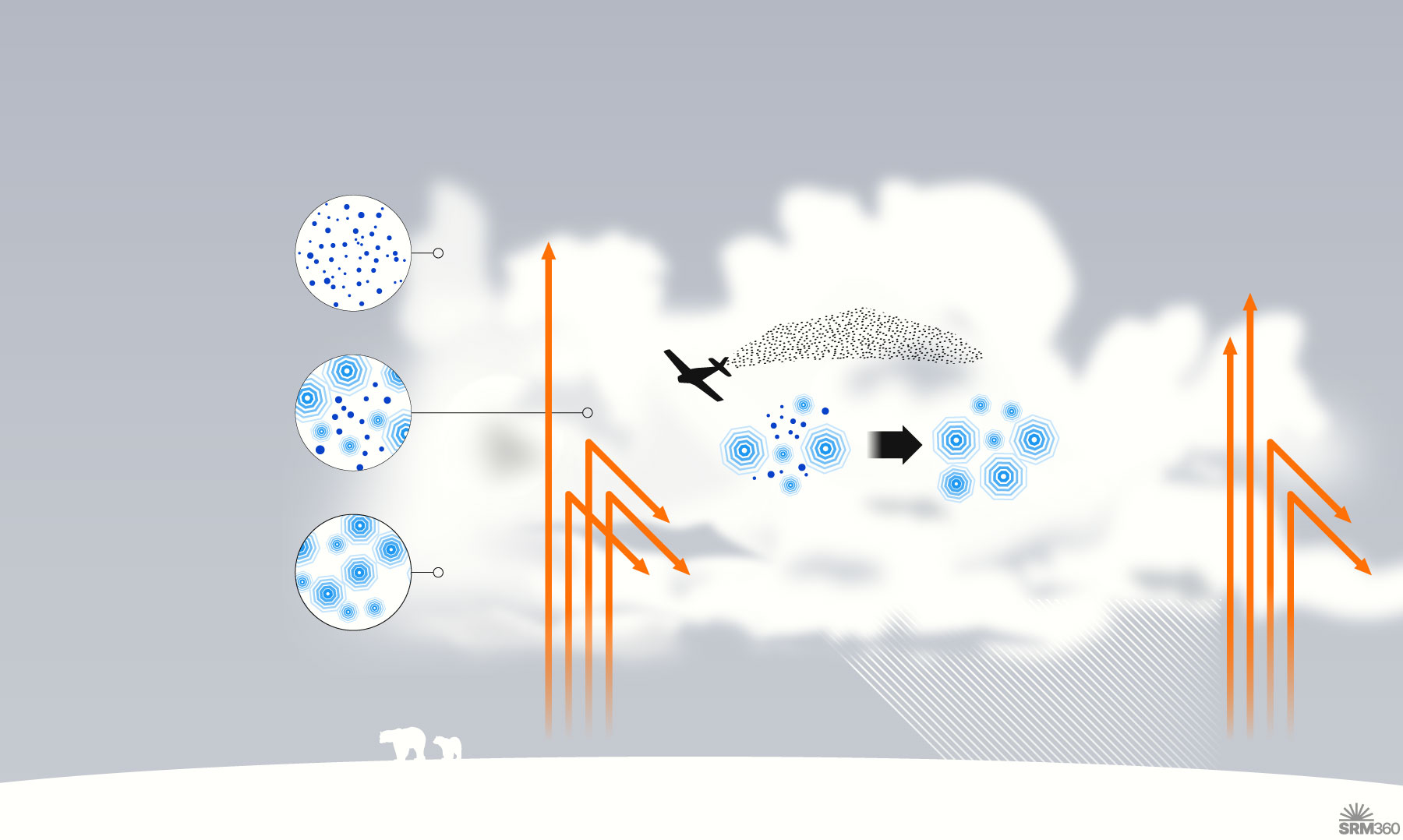
Cloud Phases
MIXED-PHASE CLOUD THINNING
The water in clouds comes in different phases, which affects its properties.
Mixed-phase clouds tend to have a warming effect in polar winters.
By seeding clouds with tiny particles, more ice crystals form.
This leads to precipitation, thinning the clouds and allowing more heat to escape.
Liquid phase
Clouds composed of tiny water droplets.
Mixed phase
Clouds contain ice crystals and water droplets.
Water droplets
Ice crystals
Ice phase
Clouds made entirely of ice crystals.
Heat
Source: SRM360