News Article
UNEP Avoids SRM in Report on “Inevitable” Overshoot of 1.5°C
For a decade after the signing of the Paris Agreement, 1.5 degrees remained as a North Star in climate circles. The ambitious 2015 goal would have required emissions to drop rapidly to zero. A United Nations report acknowledges the world’s failure to meet that mark and examines how to manage a world in “overshoot” – without mentioning sunlight reflection methods (SRM), or solar geoengineering, at all.

Photo: REUTERS

Exceeding 1.5°C is inevitable
The United Nations Environment Programme (UNEP) has issued a stark declaration: exceeding the ambitious climate goal set forth in the Paris Agreement is unavoidable. In a new report, UNEP says that the world will pass 1.5°C of warming, likely within the next few years.
This is not necessarily a surprise to climate scientists or other observers who have seen total emissions rise since the goal was set, but it is a change in UN messaging – as recently as two years ago, Secretary-General António Guterres was still making the case that 1.5°C was “still just about possible”.
No longer: UNEP now says that even an optimistic scenario, where every country lives up to its emissions reduction pledges and meets long-term net-zero targets, would see warming of at least 1.8°C. That means decades of what’s known as “overshoot” – when the world crosses the 1.5°C warming threshold before temperatures can, hopefully, be brought back down – is inevitable.
“This summer’s scorching heat, raging wildfires and deadly floods are a warning of what lies ahead”, Guterres said in a press release. “We must make the overshoot above 1.5 degrees as small and short as possible. That demands an overshoot of ambition.”
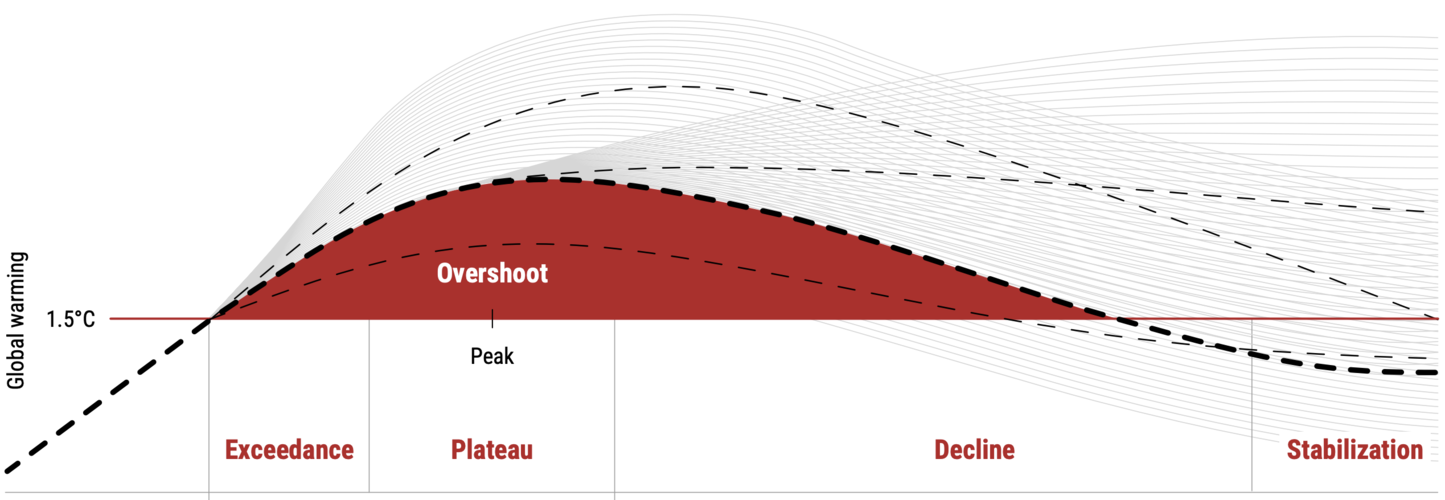
Diagram: United Nations Environment Programme
Can carbon dioxide removal scale up?
Though it is largely an arbitrary threshold and every fraction of a degree of warming increases impacts, UNEP warns that exceeding 1.5°C does carry specific risks. Those include “faster sea-level rise, a higher likelihood of collapse of ecosystems such as coral reefs, more extreme heat and wildfires, and profound changes to the cryosphere”.
To limit such risks, the UNEP report, titled “Limiting Overshoot”, stresses that rapid, deep, and sustained emissions cuts remain the first priority for managing the warming world. But given an inevitable period of overshoot, it also examines strategies for bringing the temperature back down, with a primary focus on carbon dioxide removal (CDR).
This can take “conventional” forms like afforestation to help store more carbon dioxide, but these have limitations – even if fossil fuel emissions fell to zero and all deforestation ended today, UNEP reports that it would take 100 years of dedicated afforestation and improved forest management to bring temperatures down by a single tenth of a degree.
Novel CDR methods involving geological carbon storage and advanced technology have received increasing attention in recent years, but scaling them to the size needed will not be a simple affair. “Even optimistic CDR scaling is unlikely to deliver a temperature reversal beyond a few tenths of a degree this century”, the report says, “and the feasibility of this depends strongly on concurrent further reductions of residual CO2 emissions”.
The absence of SRM
Given CDR’s constraints and the dire impacts UNEP outlines as temperatures warm, the report is perhaps notable for its omission of SRM. Though it stresses that “Peak warming must be minimized”, the potential for SRM to “shave” off that peak while emissions reductions are ongoing is unaddressed. SRM would not be a substitute for those emissions reductions, and would introduce its own novel set of risks, but there is little question that a global-scale deployment of stratospheric aerosol injection could lower the global average temperature.
Emissions cuts, carbon removal, and SRM
Emissions cuts and carbon dioxide removal (CDR) tackle the root cause of climate change, and sunlight reflection methods (SRM) could limit warming while they work.
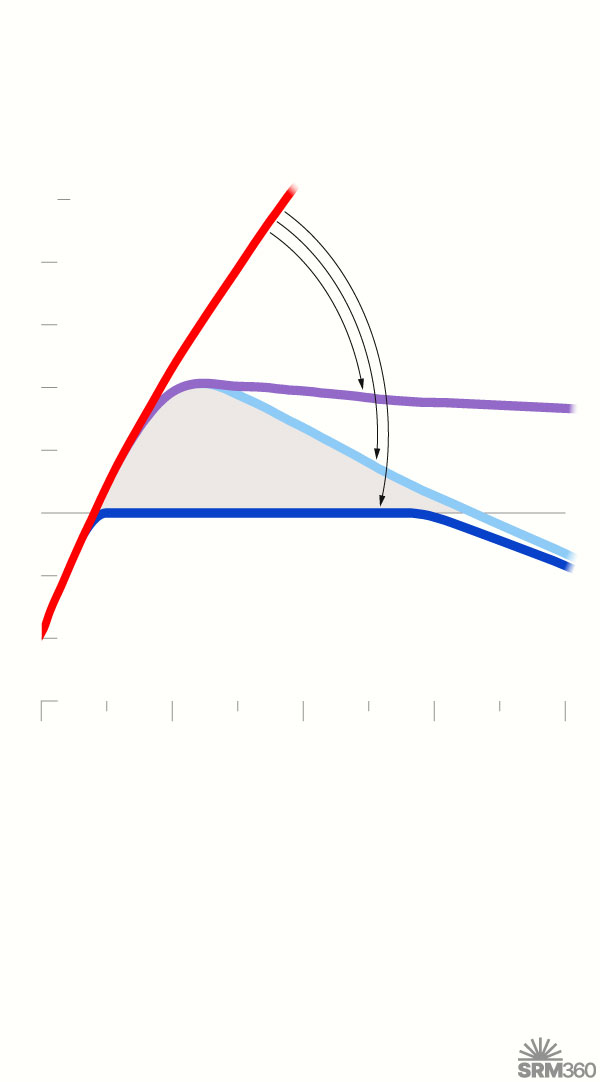
GLOBAL TEMPERATURE INCREASE
No emissions cuts
Temperatures would continue to rise.
Cut emissions
Eliminating CO2 emissions would stop global warming, but not reverse it.
4.0°C
3.5
3.0
2.5
2.0
1.5
1.0
0.5
0
2000
2100
2200
2300
2400
Reflect sunlight
SRM could offset global warming while emissions cuts and CDR work.
Remove carbon
CDR could then slowly lower temperatures.
Source: Based on Boselius et al. (2025), Oxford Open Climate Change
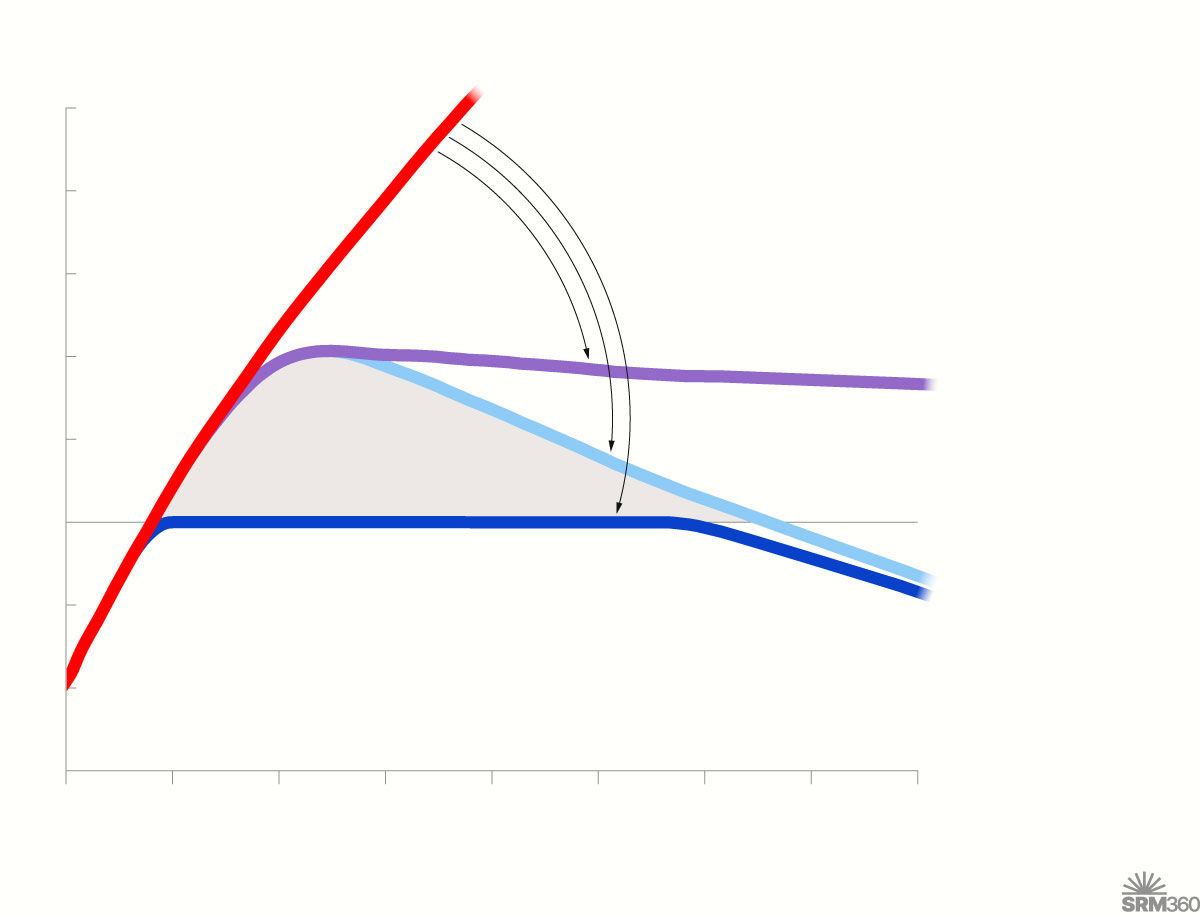
GLOBAL TEMPERATURE INCREASE
4.0°C
No emissions cuts
Temperatures would continue to rise.
CUT EMISSIONS
Eliminating CO2 emissions would stop global warming, but not reverse it.
3.5
3.0
2.5
2.0
REMOVE CARBON
CDR could then slowly lower temperatures.
1.5
REFLECT SUNLIGHT
SRM could offset global warming while emissions cuts and CDR work.
1.0
0.5
2000
2050
2100
2150
2200
2250
2300
2350
2400
Source: Based on Boselius et al. (2025), Oxford Open Climate Change
The omission is in line, though, with a UNEP working paper from May, which made its conclusions clear in its subtitle: “Scientific evidence does not support SRM as a viable climate solution.” The working paper highlighted several concerns with SRM, though it also had a nuanced discussion of governance issues and called for further research.
As former director of the Carnegie Climate Governance Initiative Janos Pasztor wrote in our News Reaction to that report: “[N]obody promotes SRM as a climate solution. Only emissions reductions and carbon removal are solutions; SRM, at best, could supplement these – and adaptation efforts – to limit temperature rises while the world decarbonizes.”
The lack of discussion of SRM in a thorough report on overshoot, by a body that has even recently produced other work on the topic, seems like more of a statement than an oversight. “Silence in an assessment is itself consequential”, wrote Michael Thompson, the managing director of the Alliance for Just Deliberation on Solar Geoengineering, in a post on LinkedIn. “It shapes, by default, how an option develops and who gets to shape it.”
UNEP’s warning that the world’s collective climate goals are falling out of reach is obviously an important one, but other corners of the climate world – academia, civil society groups, philanthropy, and now the private sector as well – are increasingly exploring SRM as a potential response. It will be interesting to see if UNEP’s position on the topic changes as the broader discussion advances.
Climate modelling scenarios
In related news, scientists have published a set of seven new scenarios that outline plausible futures for emissions and will be used to evaluate future climate risks. As Zeke Hausfather explained at Carbon Brief, the scenarios present a narrower range of possible future CO2 emissions than before, both lowering the warming of the worst-case scenario and raising the most optimistic scenario.
That best-case scenario, it turns out, lines up well with UNEP’s projection for a minimum amount of warming: a peak of 1.8°C, likely around the middle of this century, before temperatures begin to fall back down. And just as with UNEP’s assumptions, the only way significantly more warming is prevented in these scenarios is with hugely increased CDR.
The new scenarios will be used by scientists and will feature in the next major set of reports from the Intergovernmental Panel on Climate Change, set to be published by 2029 – and to include an analysis of SRM.
This news article also appeared as part of our weekly newsletter on LinkedIn. Subscribe for a curated digest of the stories, studies, and conversations that matter most.