Perspective
“Make Sunsets” in Mexico: Lessons for SRM Governance
In 2023, the for-profit startup Make Sunsets released small amounts of sulphur dioxide from balloons in Mexico as part of its “cooling credits” initiative. In this Perspective, Timothy Daly and colleagues reflect on the political and media response in Latin America and the Caribbean, and what lessons can be learned.
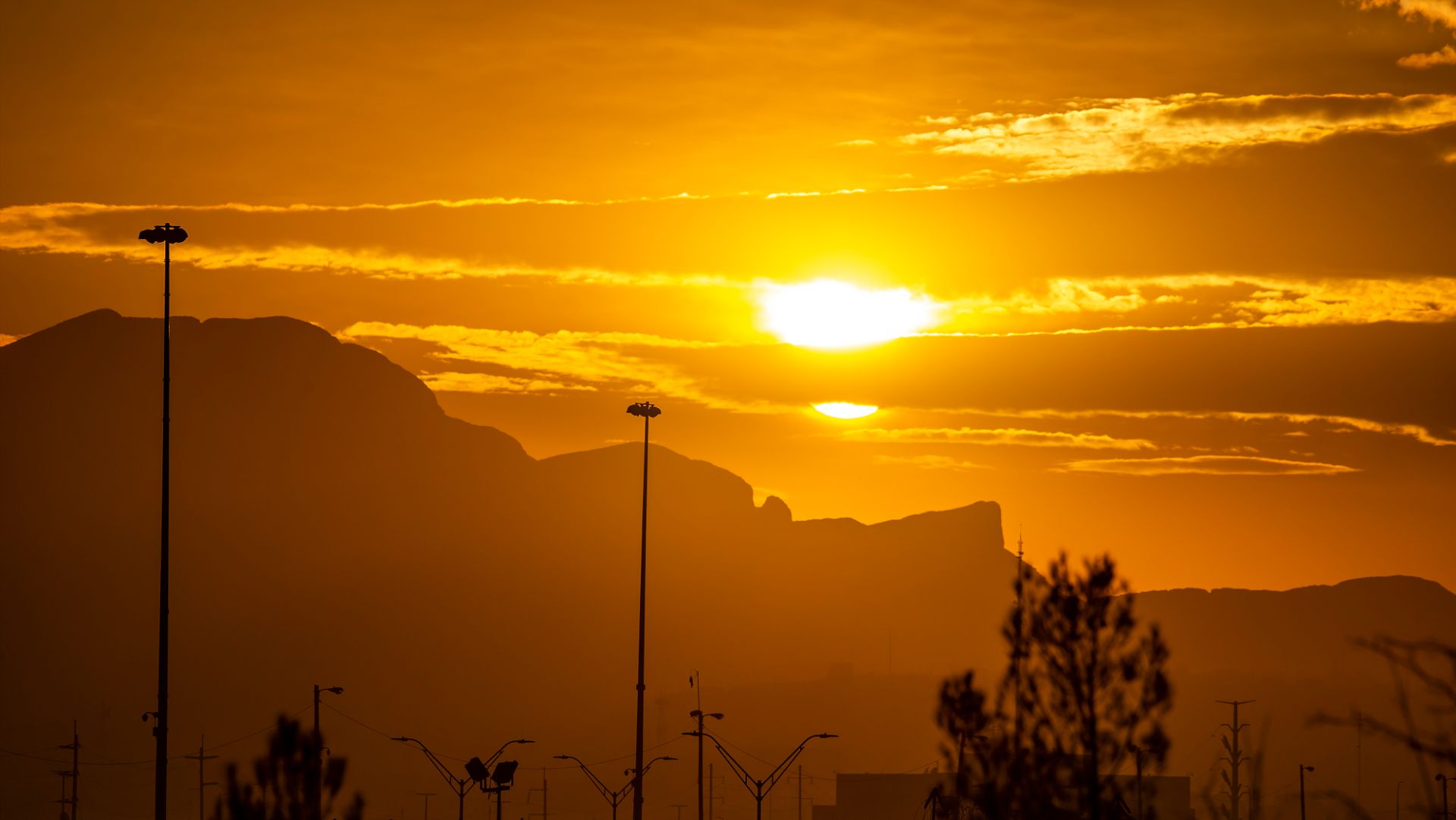
Photo: Francisco Vega


There are an increasing number of for-profit private actors taking advantage of the “lack of robust and formal SRM [solar radiation modification] governance”.1 These actors benefit from the governance vacuum, leading to “market-driven” climate governance2 with avoidable negative consequences, including the public losing trust in legitimate research efforts.
One relevant case is the US-based startup Make Sunsets, a company that sells experimental “cooling credits”. They release small, high-altitude balloons into the stratosphere containing tiny amounts of sulfur dioxide, a material which forms reflective aerosol particles. These releases do not have a scientific purpose; instead, they are effectively extremely small-scale deployments of Stratospheric Aerosol Injection (SAI), framed as a measure to address climate impacts.
While Make Sunsets has now conducted tens of these releases, the one which took place in April 2023 in Baja California, Mexico had significant political implications. Deploying their balloons without prior engagement with Mexican authorities, Make Sunsets triggered significant negative reactions, including Mexico’s government announcing its intention to ban all forms of SRM experiments, including research.
Evaluating the Make Sunsets case study
In our recent article,3 No Governance Is Governance: Mapping Solar Geoengineering Discussions in Latin America & the Caribbean (LAC) published in The European Journal of Risk Regulation in 2025, we focused our attention on the LAC region and the case study of the April 2023 Make Sunsets episode.
Mainly working in Argentina, our interdisciplinary team of experts from the human and climate sciences performed a media and ethical analysis of the Mexican Make Sunsets case study.
Our media coverage analysis highlighted the diversity of perceived risk associated with SRM. Dominant narratives emphasized that Make Sunsets acted irresponsibly, without consent or scientific legitimacy. The project’s “non-research experiment” of commercialization is perceived to undermine trust in SRM research experiments. Media coverage also highlighted the lack of governance and transparency, while some outlets voiced concerns regarding unilateral actions and “climate colonialism”.
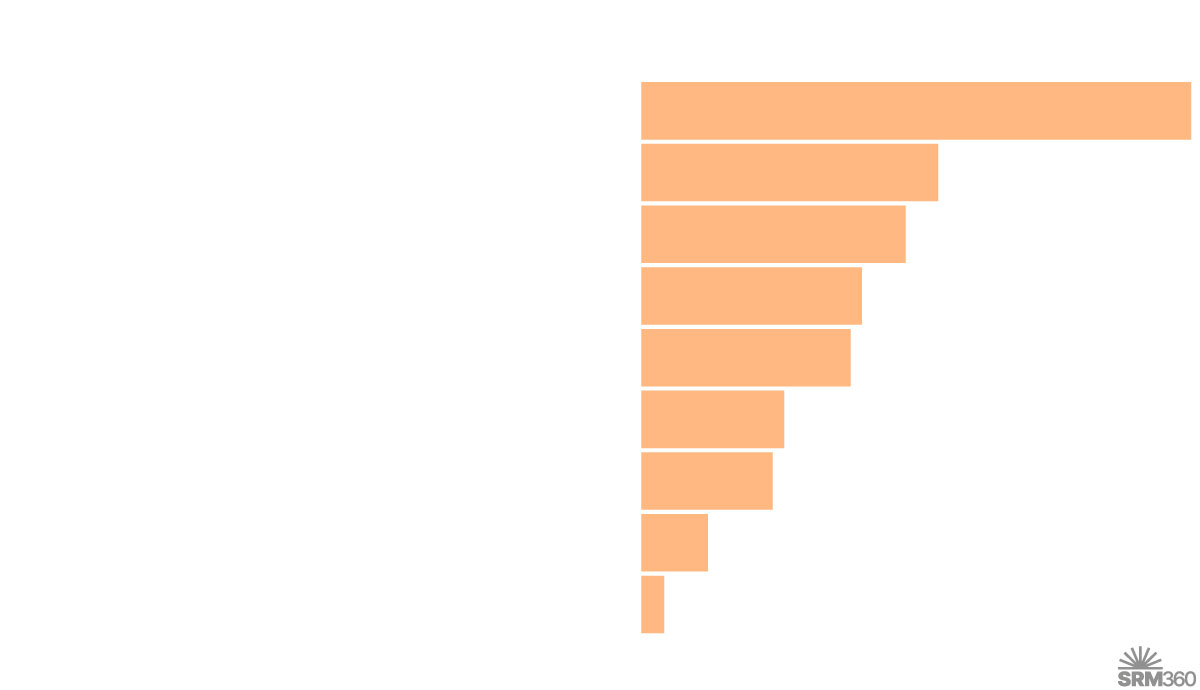
Media coverage of SRM risks
Researchers analysed media coverage of SRM and the for-profit startup Make Sunsets, which released small amounts of sulphur dioxide from balloons in Mexico as part of its “cooling credits” initiative.

A breakdown OF THE DIFFERENT TYPES OF RISKS EXPRESSED
Unintended planetary effects
29%
Lack of governance structures
16
Lack of scientific validation
14
Climate change impacts (risk-risk)
12
Geopolitical risk
11
Moral hazard
8
Lack of commitment to local communities
7
Termination shock
4
Health risks
1
Source: Carabajal et al. (2025), European Journal of Risk Regulation
A breakdown OF THE DIFFERENT TYPES OF RISKS EXPRESSED
Unintended planetary effects
Lack of governance structures
Lack of scientific validation
Climate change impacts (risk-risk)
Geopolitical risk
Moral hazard
Lack of commitment to local communities
Termination shock
Health risks
29%
16
14
12
11
8
7
4
1
Source: Carabajal et al. (2025), European Journal of Risk Regulation
Distinguishing research and non-research experiments
Because the proposed Mexican government ban aimed to prohibit all kinds of experiments, we focused on the contested meaning of the word “experiment”, and realized that a more precise term was needed. We defined an SRM experiment as:
“a deliberate use of an SRM intervention at any scale, with either a research or non-research main aim, and without sufficient evidence of safety and/or efficacy for its regular use in […] the Earth system”.3
We distinguished two kinds of SRM experiments:
- SRM research experiments whose main aim is to resolve uncertainties about the use or non-use of SRM and build generalizable knowledge.
- SRM non-research experiments, including SRM deployment, whose main aim is to cool the Earth’s surface to address climate impacts.
We highlighted two very different small-scale SRM experiments to explain the difference: Make Sunsets is a case of a non-research experiment of small-scale SRM deployment aiming to address climate impacts, whereas SCoPEx (Stratospheric Controlled Perturbation Experiment), which aimed to “advance understanding of the risks and efficacy of SRM”,4 should be understood as an SRM research experiment.
The example of the Mexican government announcing the ban of undefined “SRM experiments” risks conflating research and non-research as well as responsible and irresponsible experiments. It also shows there is an ethical requirement for a neutral definition of “SRM experiment” such as the one proposed above. This would enable case-by-case identification and evaluation, grounded in independent, public ethical principles, while allowing reasonable disagreement over whether any SRM research or non-research experiment is ethically responsible.
Conclusions
The media and political reaction to Make Sunsets and our ethical analysis reveal the vital importance of a governance framework for SRM research. But what would a good framework for governance of SRM research look like?
Our work suggests two main lessons for the SRM community:
- There is a need for an explicit and neutral definition of “SRM experiment” compatible with different sets of independent ethical principles. This would allow responsible and irresponsible SRM research and non-research experiments to be distinguished, which should help governments appropriately target their policies.
- There is also a need for relevant actors in the LAC region to discuss and take a position on SRM regulation, oversight, and policy. The Make Sunsets case illustrates that the absence of proper regulations becomes a form of governance itself – one that benefits commercial projects outside of democratic control5 and leads to avoidable negative consequences, including mistrust, perceptions of neo-colonialism, and bans on potentially valuable and responsible SRM research.
The LAC region should not remain on the sidelines, as such a position could increase its vulnerability to unfair treatment – including deception, coercion, exploitation, or marginalization – in the face of emerging SRM experiments conducted without regional oversight, participation, or inclusive governance frameworks.
To ensure meaningful participation in global SRM governance, the region should strengthen its capacity, assess scientific information, and build institutional expertise. In partnership with international organizations, the LAC region has a unique opportunity to shape its own pathway in relation to SRM and contribute meaningfully to the global discussion.
The views expressed by Perspective writers and News Reaction contributors are their own and are not necessarily endorsed by SRM360. We aim to present ideas from diverse viewpoints in these pieces to further support informed discussion of SRM (solar geoengineering).



Endnotes
- IPCC. (2023). Climate Change 2023: Synthesis Report. Contribution of Working Groups I, II and III to the Sixth Assessment Report of the Intergovernmental Panel on Climate Change [Core Writing Team, H. Lee and J. Romero (eds.)]. IPCC, Geneva, Switzerland, pp. 35-115. http://doi.org/10.59327/IPCC/AR6-9789291691647
- Surprise K, McLaren D, Möller I, et al. (2025). Profit-seeking solar geoengineering exemplifies broader risks of market-based climate governance. Earth System Governance, 23, 100242. https://doi.org/10.1016/j.esg.2025.100242
- Carabajal MI, Santi MF, Rodríguez Garat C, et al. (2025). No Governance Is Governance: Mapping Solar Geoengineering Discussions in Latin America & the Caribbean. European Journal of Risk Regulation, 1–17. http://doi.org/10.1017/err.2025.10025
- Dykema JA, Keith DW, Anderson JG, Weisenstein D. (2014). Stratospheric controlled perturbation experiment: a small-scale experiment to improve understanding of the risks of solar geoengineering. Philosophical transactions. Series A, Mathematical, physical, and engineering sciences, 372(2031), 20140059. https://doi.org/10.1098/rsta.2014.0059
- European Group on Ethics in Science and New Technologies. (2024). Opinion on solar radiation modification: Ethical perspectives. Publications Office of the European Union. https://data.europa.eu/doi/10.2777/951016
Acknowledgments: The authors are lead members of an Advanced Research and Invention Agency (ARIA)-funded project on ethics and governance within the Exploring Climate Cooling programme, as well as members of ongoing projects on ethics and governance of SRM in the Global South funded by The Degrees Socio-Political Fund, and the potential health implications of SRM technologies funded by the World Health Organization (WHO).