Perspective
Spotlighting the Amazon Could Clarify SRM Research and Governance Questions
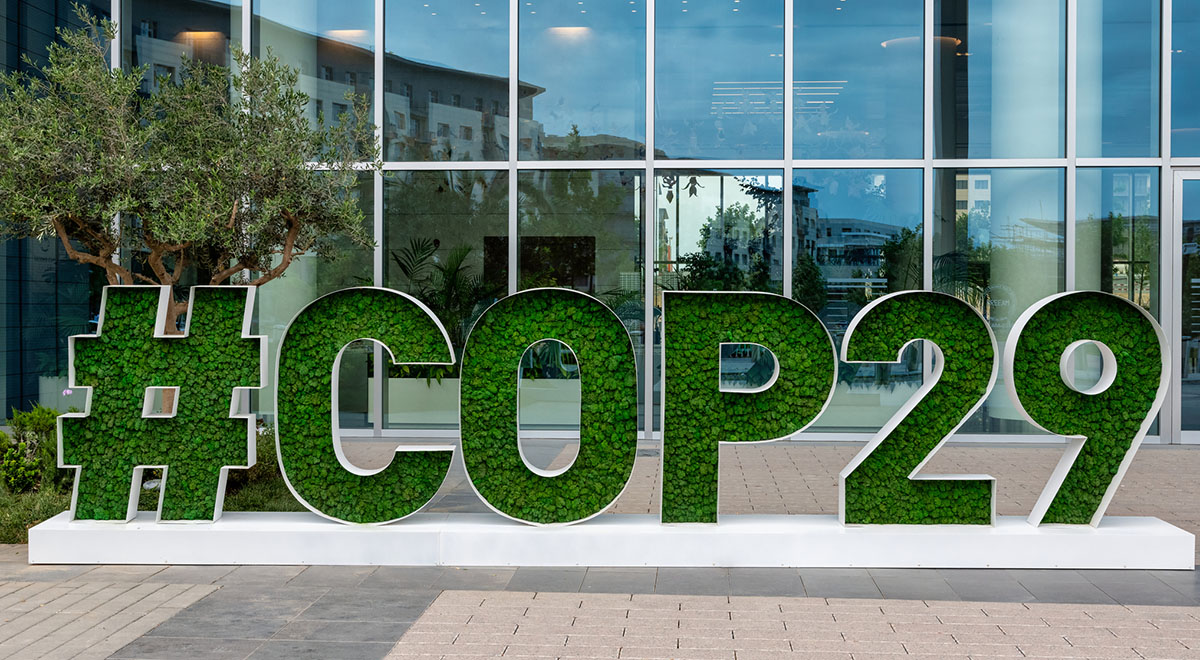
As the world gathers in Amazonia for COP30, Marcos Regis da Silva says it is time to ask whether sunlight reflection methods (SRM) could help protect the rainforest from collapse. He outlines three routes for international governance to address these emerging technologies.

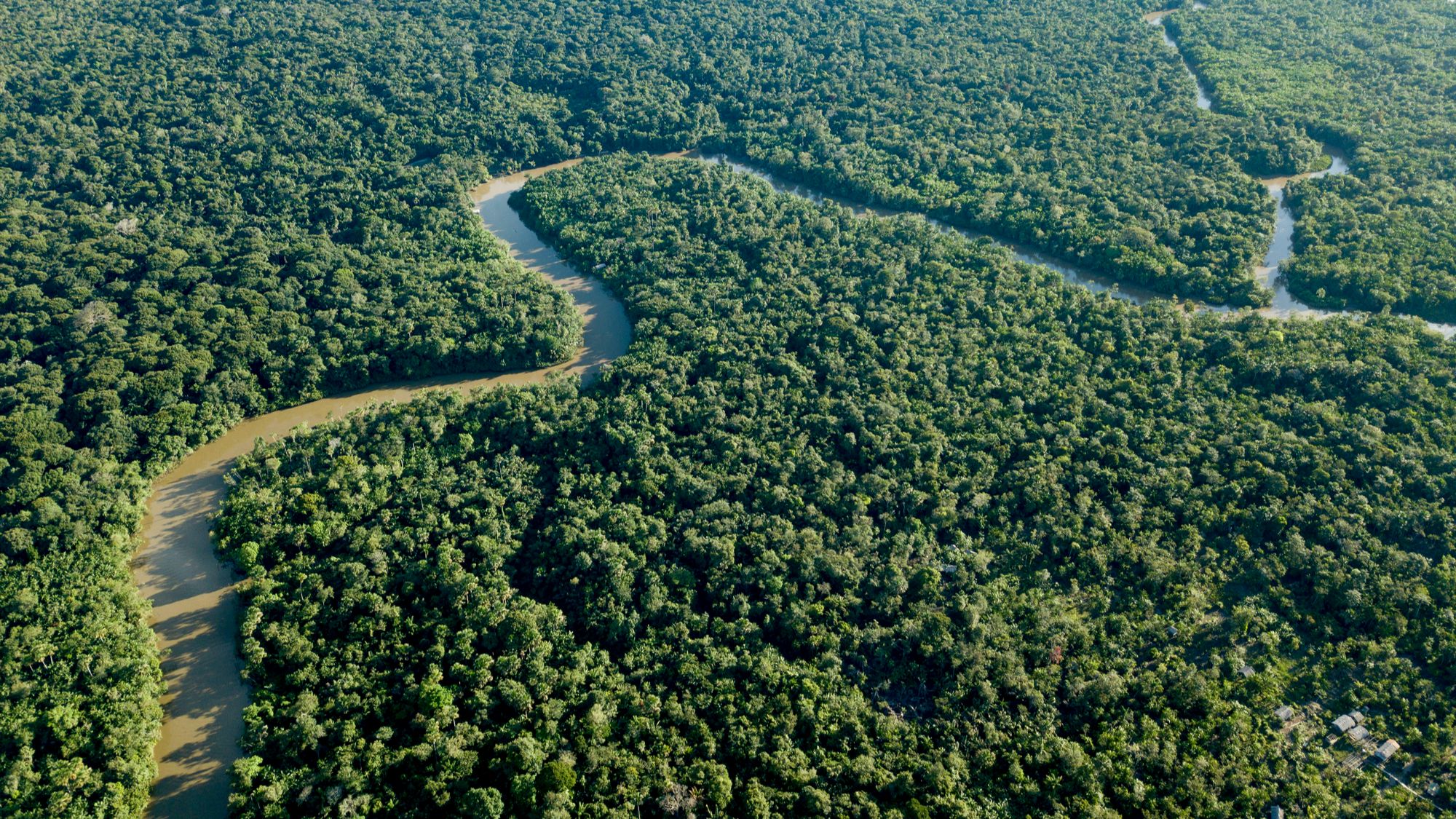
Photo: Wagner Meier

Brazil’s selection of Belém, in the state of Amazonia, as the host city for the 30th session of the Conference of the Parties (COP30) to the United Nations Framework Convention on Climate Change (UNFCCC) has intensified global attention on the urgent need to conserve and sustainably use the Amazon rainforest.
This convening of international policymakers from around the world has brought renewed focus to rising temperatures and persistent challenges in meeting international climate targets. Combined with the threat from deforestation, climate change could push parts of the Amazon past ecological tipping points, potentially resulting in irreversible shifts from tropical forest to savanna ecosystems.
In light of this threat, emerging climate intervention technologies like solar radiation modification (SRM) are moving onto the scientific and policy agenda. At the time of writing, however, it is unlikely that Parties to the UNFCCC, which organizes the COP, will formally consider SRM.
However, given the significant challenges many countries face in meeting their climate and other environmental commitments, the topic of SRM has come up in side conversations in official meetings and in public gatherings, and could still indirectly shape decision-making outcomes.
Framing conversations
What might these side conversations among negotiators look like? There are three different but inextricably linked routes through which such discussions may evolve.
Calls for greater multilateral alignment: First, although SRM has not been part of the official UNFCCC process, it has been raised in discussions under different Multilateral Environmental Agreements, resulting in a “patchwork” of adopted decisions and resolutions on the topic. This fragmentation has led to calls for greater alignment, and the possibility of a draft decision at a later time across these agreements.
Calls for more research: Second, because SRM is the only known means to rapidly lower global temperatures, at least in the short term; their real-world feasibility, side-effects, and governance remain under active study. But SRM is not a solution. In theory, it would provide countries with a temporary window to take the necessary steps to lower emissions. Given the urgency of rising temperatures, and the existential dangers posed, countries may wish to seek more information on SRM.
Calls for regional dialogue: Third, regional governance frameworks, such as the Amazon Cooperation Treaty Organization (ACTO), play a significant role in shaping Amazon policy. If ACTO members request regionally relevant evidence on climate–biodiversity trade-offs, the body could host dialogue on SRM research coordination and safeguards.
Foregrounding biodiversity and Indigenous voices
These three paths may be touched on in informal discussions at COP30, though tangentially. The following highlights some relevant past decisions:
- Calls for increased research to understand SRM and the Amazon under a mitigation-first, risk-risk approach may be justified under Convention on Biological Diversity (CBD) decision XIII/14, which explicitly notes that “more transdisciplinary research and sharing of knowledge among appropriate institutions is needed to better understand the impacts of climate-related geoengineering on biodiversity.”
- CBD decision XIII/14 also recognizes the importance of “taking into account sciences for life and the knowledge, experience and perspectives of indigenous peoples and local communities when addressing climate-related geoengineering and protecting biodiversity.” Given the Amazon region has 420 distinct groups of Indigenous Peoples speaking 86 languages and 650 dialects, this may provide the seed for far greater involvement based on free, prior, and informed consent of Indigenous Peoples in negotiations related to the Amazon and SRM research.
- Awareness of Indigenous rights and the nexus of climate and biodiversity is reinforced by UNFCCC decision 14/CP.29: Local Communities and Indigenous Peoples Platform, which acknowledges “the role and contributions of Indigenous Peoples and of local communities in nature stewardship and climate leadership, as well as the disproportionate effects of climate change on Indigenous Peoples and on local communities.”
- CBD decision X/33 emphasizes the precautionary principle and exceptions for small-scale scientific research studies that would be conducted in a controlled setting. The decision also invites Parties and governments to consider guidance that “no climate-related geo-engineering activities that may affect biodiversity take place, until there is an adequate scientific basis on which to justify such activities and appropriate consideration of the associated risks for the environment and biodiversity effectively.”
These seemingly disparate decisions all interact when it comes to the Amazon. The CBD’s focus on the impacts of SRM on biodiversity points to its relevance to the Amazon region and the need for greater consideration of the climate–biodiversity nexus in decision-making.
Calls for greater synergies by Parties among the many different climate and biodiversity conventions and the United Nations Environment Programme (UNEP) and other UN organizations may increase clarity regarding more independent and authoritative research on SRM and the Amazon, per CBD decision XIII/14.
Stitching together the patchwork of decisions
To make real progress on SRM governance, however, there needs to be broader agreement.
A multilateral governance framework: Among intergovernmental bodies, Parties to the CBD have adopted the greatest number of decisions on this topic, thereby providing a kernel that could eventually develop into a framework for governance in synergy with other conventions and organizations. UNEP, directly or as Chair of the Environment Management Group – which brings together 51 United Nations agencies, organizations, and conventions – may provide the mechanisms to achieve this goal.
A regional perspective: While the ACTO could present the first line of governance on SRM and the Amazon, it has not yet considered SRM, but it would be safe to assume that research on SRM will soon be brought to the attention of ACTO state members. A regional perspective on SRM research by the eight Amazonian countries may provide the context for discussions at the entire Latin American and Caribbean level, leading to a more cohesive view from countries in the region.
The need for research: Three linked routes highlight the need for research on SRM in the Amazon region:
- Existing decisions on the need for research by the preeminent biodiversity Convention, the CBD;
- the continuous calls for synergies among agreements and UNEP, which could provide greater cohesiveness in negotiations related to SRM research in the Amazon;
- the need for a greater regional voice for more SRM research, possibly through the ACTO, which may provide the framework for larger regional consideration.
These three factors could raise the profile of informal discussions at COP30 on the Amazon and guide discussions more generally towards the need for increased research.
Conclusion
Belém’s symbolic role as host city of COP30 underscores the Amazon’s global importance.
While SRM will not be formally negotiated, informal discussions could shape future governance. By linking CBD decisions, UNEP synergies, and ACTO’s regional leadership, COP30 can move from a patchwork of resolutions toward a precautionary, biodiversity-centered framework for urgently needed SRM research in the Amazon.
The views expressed by Perspective writers and News Reaction contributors are their own and are not necessarily endorsed by SRM360. We aim to present ideas from diverse viewpoints in these pieces to further support informed discussion of SRM (solar geoengineering).