Navigating Plan C
AN INTRODUCTION TO THE IDEAS EXPLORED IN PLAN C FOR CIVILIZATION
Is solar geoengineering already happening?
The short answer is no. A small number of outdoor research experiments have taken place, but the distance between where things stand today and anything resembling planetary-scale intervention is enormous.
What the evidence shows
Claims that solar geoengineering is being carried out secretly – often linked to the “chemtrails” conspiracy theory – have circulated for years, but there is no evidence of large-scale deployment. The cloud-like streaks behind aircraft are condensation trails, a well-understood result of jet exhaust interacting with cold, humid air. Weather modification efforts like cloud seeding also get confused with SRM, but they are distinct: SRM is about changing long-term climate outcomes.
If large-scale deployment of the most researched approach – stratospheric aerosol injection – were underway, it would require hundreds of specialised aircraft each flying hundreds of times per year. Existing satellites could detect aerosol injections in the stratosphere before they produced a significant climate impact. It would not be possible to keep such a programme secret.

Credit: Pixabay
The state of outdoor research
Only a handful of outdoor experiments have been conducted or proposed. The SRM360 Outdoor Experiments Tracker counts 14 known projects since 2008 – including scientific studies like the E-PEACE cloud experiment off California in 2011, engineering tests of spray equipment on Australia’s Great Barrier Reef, and the cancelled SCoPEx experiment in Sweden, which was shut down after public opposition. Outdoor testing of SRM is still in its early stages, though several new experiments are planned for the coming years.
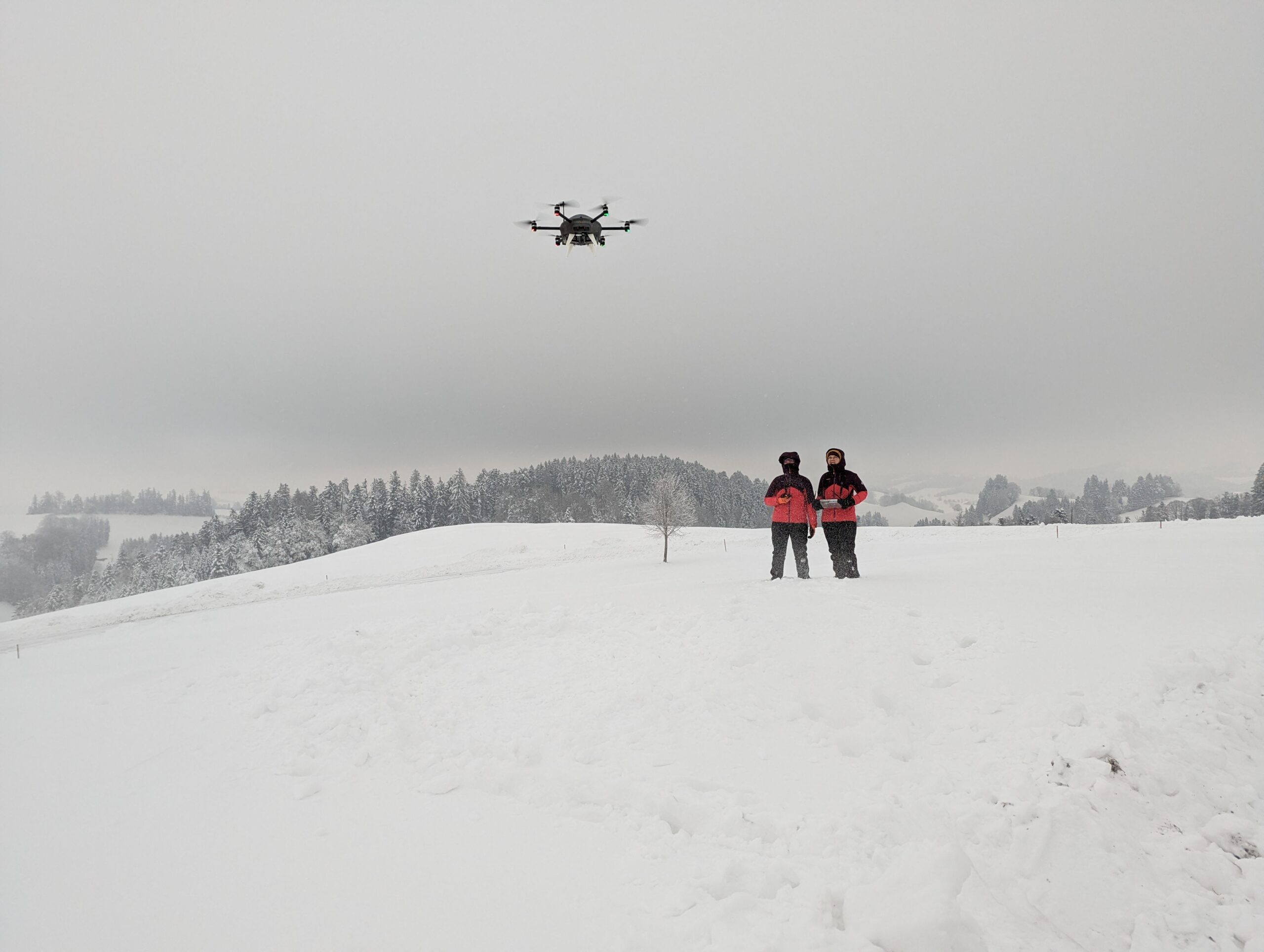
Researchers launch a drone to check conditions before an experiment for the CLOUDLAB project. Photo: CLOUDLAB.
How the methods would work
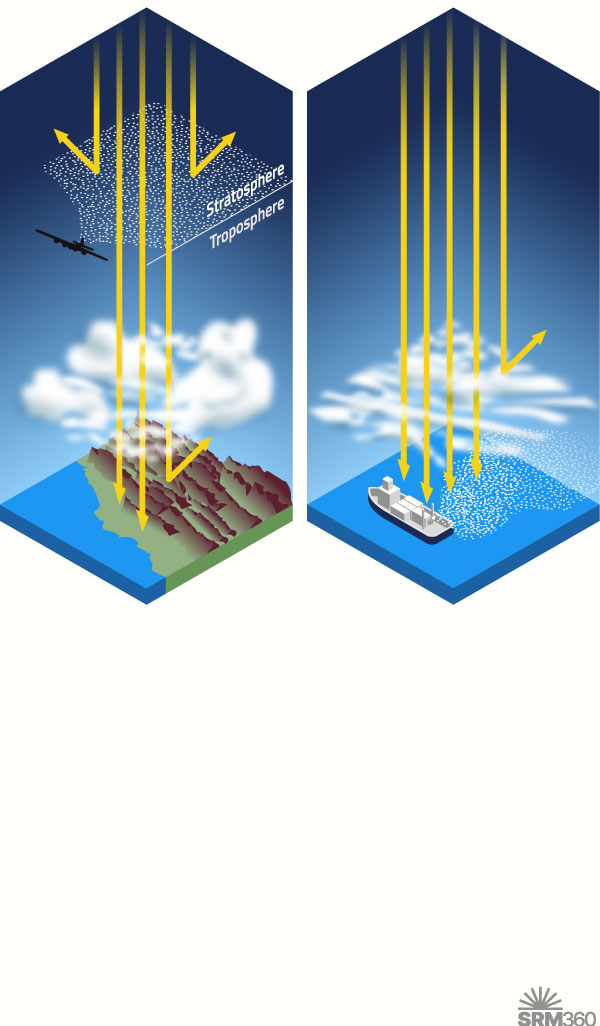
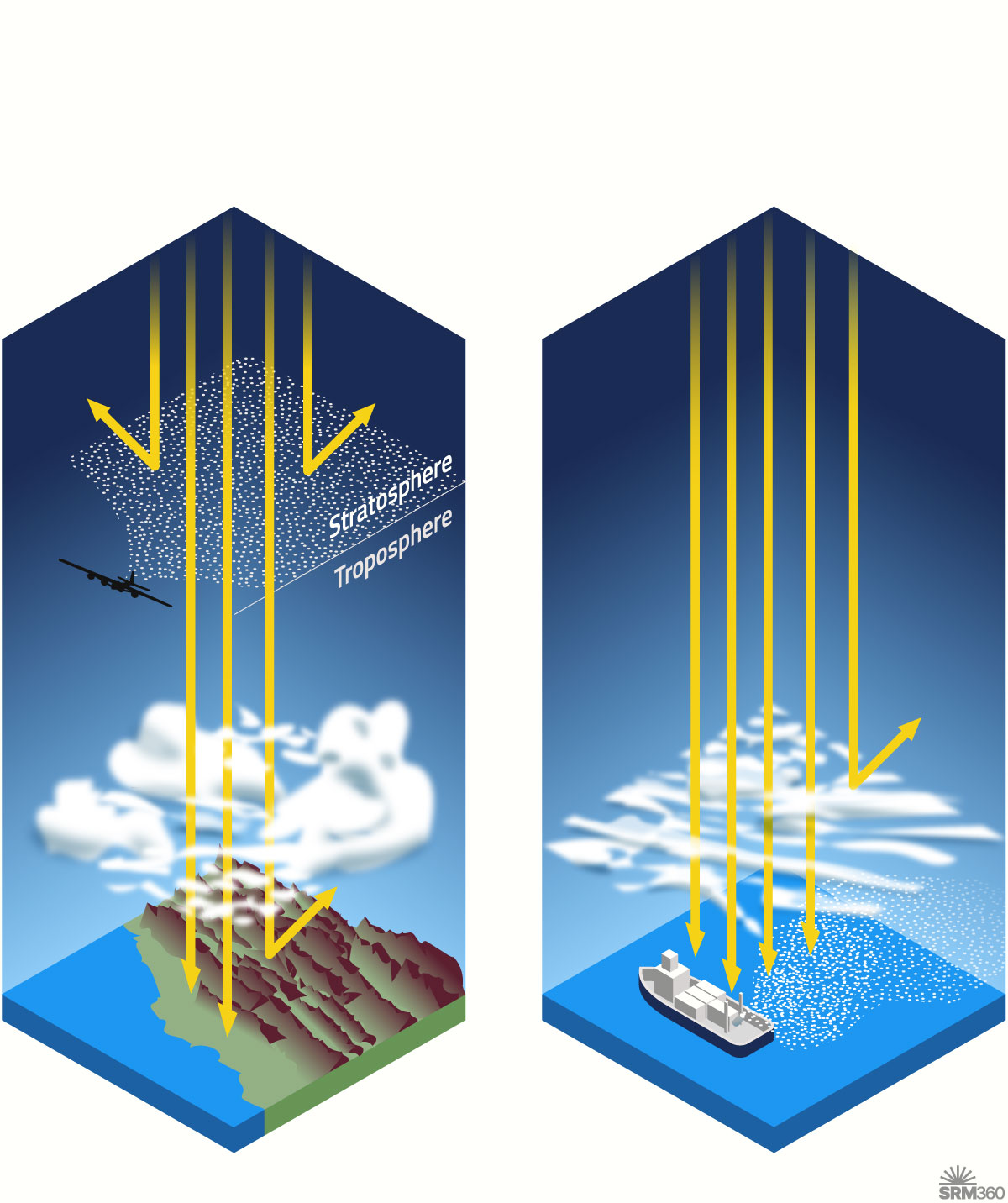
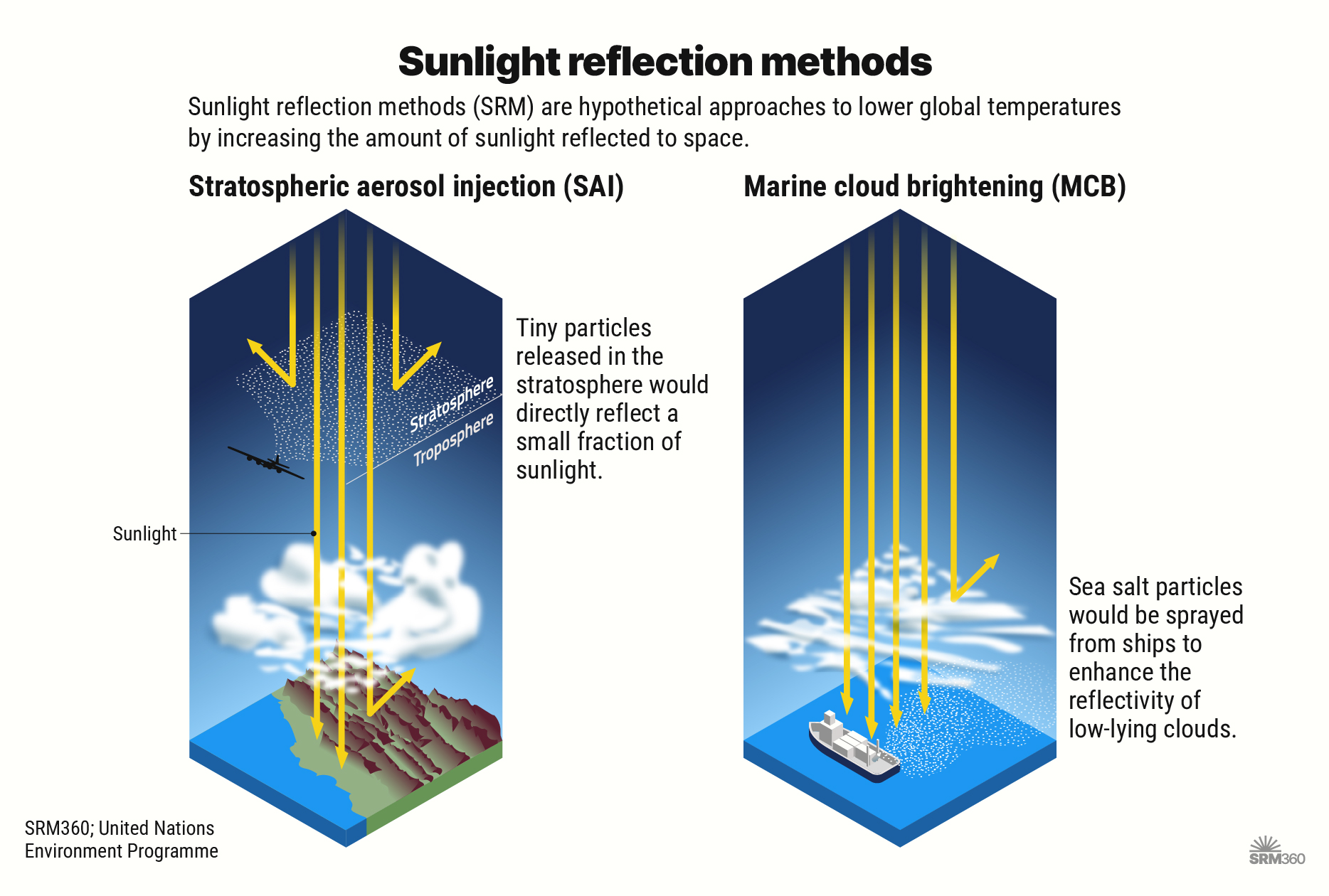
The two most-discussed approaches are stratospheric aerosol injection (SAI) and marine cloud brightening (MCB). SAI would involve releasing tiny reflective particles into the upper atmosphere, where winds would spread them globally to form a thin layer that reflects a small fraction of sunlight. The concept is grounded in something we’ve seen happen naturally: major volcanic eruptions like Pinatubo in 1991 produced a similar cooling effect that lasted several years.
MCB would involve spraying fine sea-salt particles into low-lying ocean clouds to make them more reflective – an idea inspired by “ship tracks”, visible cloud brightening caused by pollution from passing vessels. However, engineers have not yet developed sprayers efficient enough for deployment at scale, and significant uncertainties remain about how the particles would interact with clouds in practice.
Sunlight reflection methods
Sunlight reflection methods (SRM) are hypothetical approaches to lower global temperatures by increasing the amount of sunlight reflected to space.
Sunlight
Stratospheric aerosol
injection (SAI)
Tiny particles released in the stratosphere would directly reflect a small fraction of sunlight.
Marine cloud brightening (MCB)
Sea salt particles would be sprayed from ships to enhance the reflectivity of low-lying clouds
Source: SRM360.org
Sunlight reflection methods
Sunlight reflection methods (SRM) are hypothetical approaches to lower global temperatures by increasing the amount of sunlight reflected to space.
Stratospheric aerosol injection (SAI)
Tiny particles released in the stratosphere would directly reflect a small fraction of sunlight.
Marine cloud brightening (MCB)
Sea salt particles would be sprayed from ships to enhance the reflectivity of low-lying clouds
Sunlight
Source: SRM360.org
Stay up to date with the latest from SRM360 and the Plan C team
Dig deeper on this topic
- Under the Lens: “Large-scale SRM is already being deployed – FALSE”
- Interactive Tool: SRM Outdoor Experiments Tracker
- Guide: The Sunlight Reflection Methods