Perspective
Different Takes: Reflections on Paul Crutzen’s SRM Paper, 20 Years On
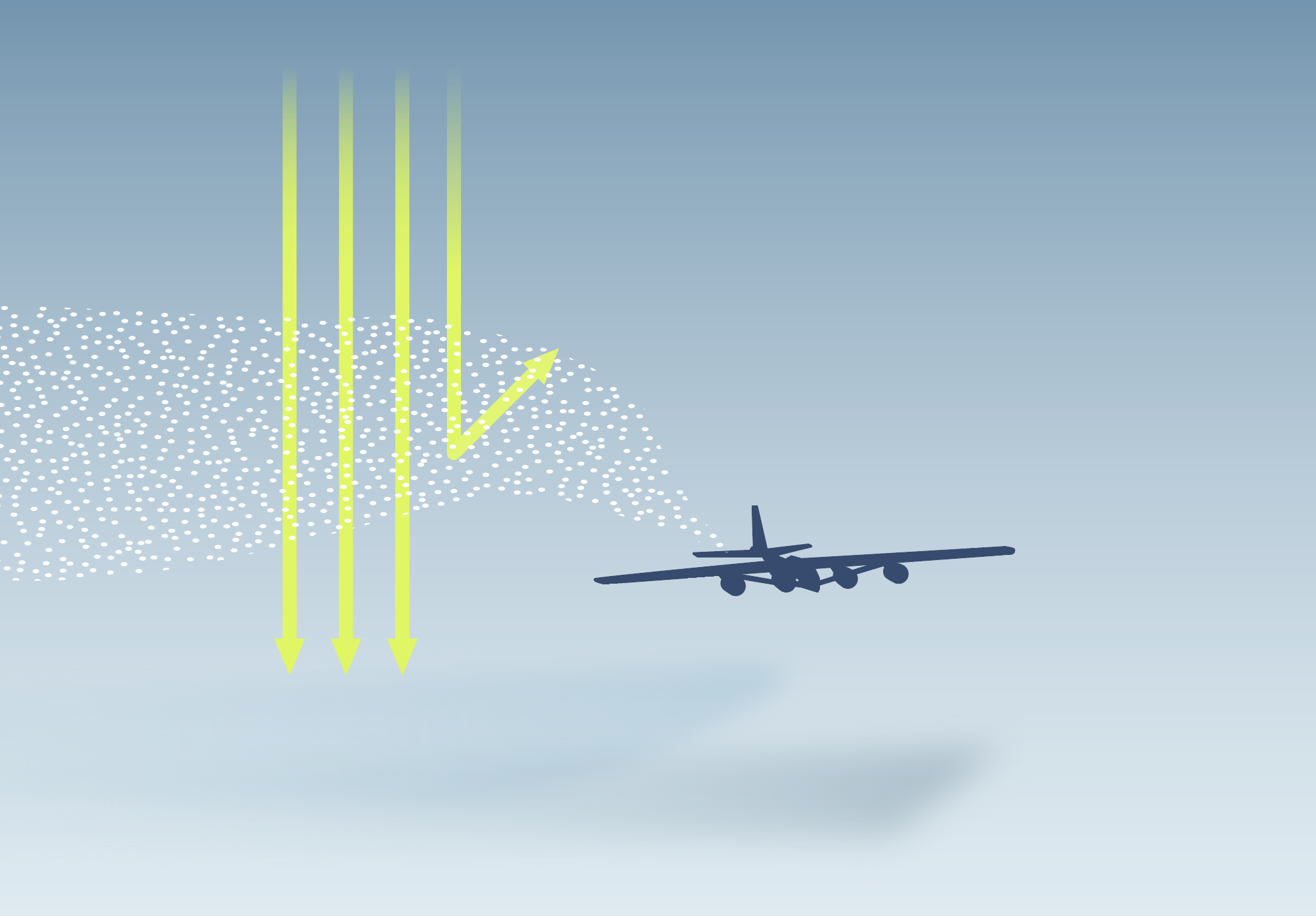
Two decades ago, Nobel laureate Paul Crutzen published a landmark paper on the potential of stratospheric aerosol injection, a form of sunlight reflection methods (SRM) or solar geoengineering. We asked experts to look back on that paper and its importance to where the field sits today.
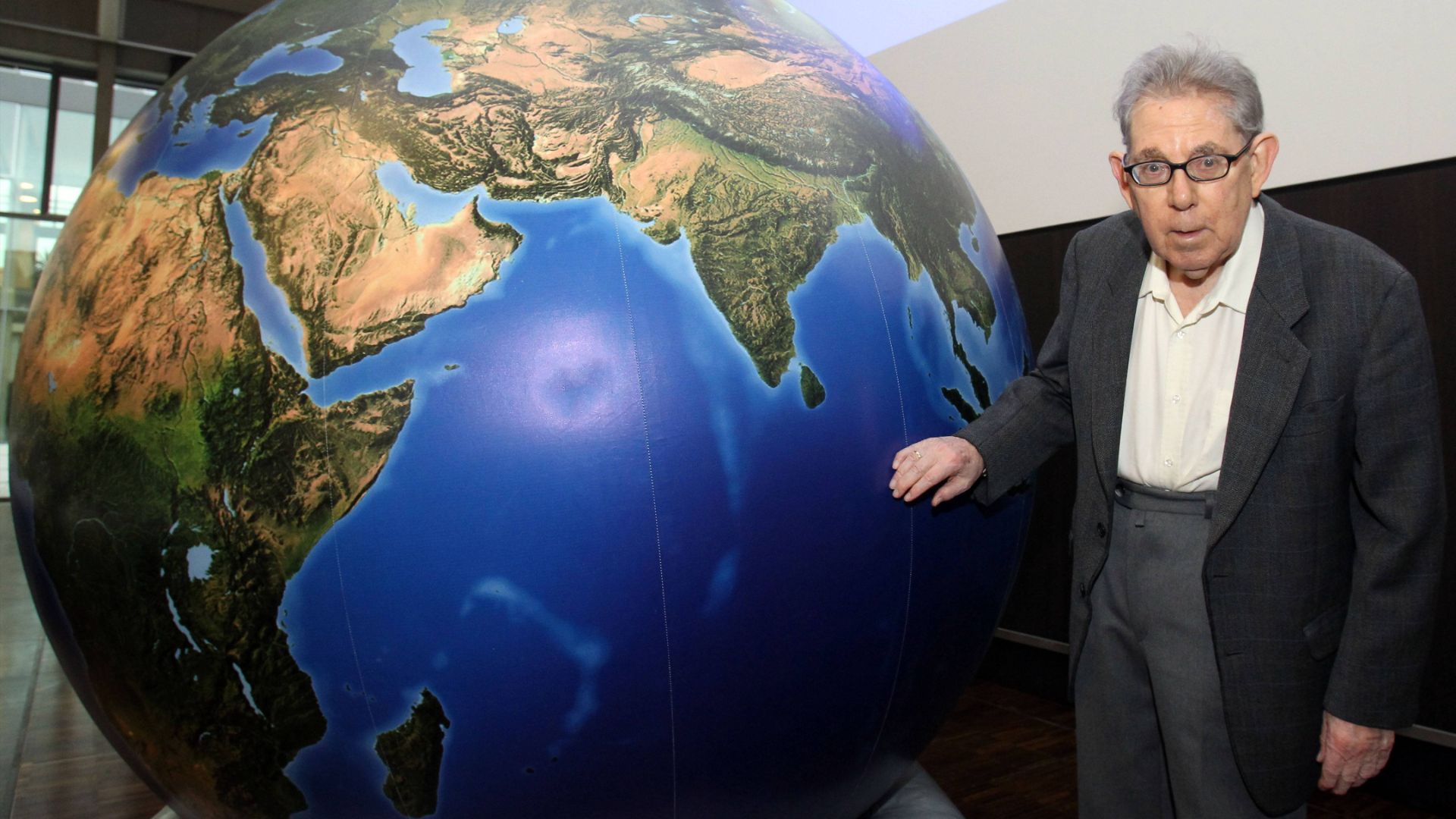
Paul Crutzen in 2012 (Photo: imago images/Sämmer via Reuters Connect)
Live Discussion
The History of Solar Geoengineering
In 2006, the idea of SRM was very much on the fringes of climate conversations and research. That started to change when Paul Crutzen, who had shared the 1995 Nobel Prize in chemistry for work on atmospheric chemistry and ozone, published a seminal editorial essay on the topic in the journal Climatic Change: “Albedo Enhancement by Stratospheric Sulfur Injections: A Contribution to Resolve a Policy Dilemma?”
The “dilemma” in question lay in the need to reduce pollution that was contributing to health and ecological problems but also constraining the warming caused by greenhouse gases. Stratospheric aerosol injection (SAI), he suggested, might be a way to offset the increased warming that a reduction in pollution would bring.
“[T]he very best would be if emissions of the greenhouse gases could be reduced so much that the stratospheric sulfur release experiment would not need to take place,” Crutzen wrote. “Currently, this looks like a pious wish.”
Two decades later, his prediction has been borne out: carbon dioxide emissions rose again in 2025 to their highest levels ever, now more than 25 percent above where they sat the year Crutzen published his paper. We asked experts in the field to reflect on the legacy of that paper and Crutzen’s role in shaping the nascent field of SRM.
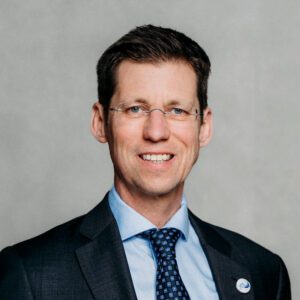
Mark Lawrence
Scientific Director at the Research Institute for Sustainability
GFZ Helmholtz Centre for Geosciences
Research and discussions around proactively geoengineering the Earth’s atmosphere in order to cool the climate date back to at least the 1960s. However, research on the topic was very limited in scope before Crutzen’s 2006 paper on injecting aerosol particles into the stratosphere, published in a special section of Climatic Change, alongside six critical commentaries (one of which I had the privilege of contributing).
The discussions around Crutzen’s paper demonstrated how contentious the topic was. The special section of Climatic Change contributed to breaking the sense of a “taboo” on albedo modification research that many of us perceived at that time. Following the paper, scientific publications on Solar Radiation Modification (SRM) have proliferated, as described by Lawrence and Crutzen in 2017. This research has been supported by several large national and international funding initiatives and has been accompanied by the publication of several assessment reports over the last two decades, starting with the Royal Society report of 2009. Furthermore, the journal Earth’s Future published a special issue in 2016/17 which included perspectives on the first decade of developments after 2006.
Over the last decade, research has continued to support the initial notion that it may be possible to use SRM techniques to substantially cool the global climate, reducing mean surface temperatures by a degree Celsius or more. Several studies also indicate that this could potentially be achieved at a much lower cost than the same amount of cooling through carbon dioxide removal (CDR). However, extensive technological and scientific uncertainties remain, particularly concerning the regional distribution of the cooling, its impact on precipitation and other climate variables, and potential environmental side effects, such as stratospheric ozone loss.
What is perhaps most important is the advancing research into the societal aspects, ranging from geopolitics and governance to ethics and public opinion. Unlike research on several other major historical and contemporary technological developments, for SRM the societal research aspects have generally directly accompanied the technical and scientific research since the earliest large funding programs. It will be important for this inter- and transdisciplinary research to continue in order to make well-informed decisions about possible future implementation at climate-relevant scales, and to be able to judge someday whether it was wise for Paul Crutzen to “break the taboo” when he did.
Prof. Dr. Mark Lawrence is scientific director at the Research Institute for Sustainability at GFZ. His recent research focus includes air pollution, climate change, climate geoengineering, environment-related governance, creation of transdisciplinary spaces, and the sustainability-oriented interfaces between the sciences and other key knowledge-holder communities such as the arts, religions and indigenous peoples.

Ina Möller
Assistant Professor
Wageningen University
To reflect on the significance of any single event, it is useful to situate it in time and space. While Paul Crutzen is credited with breaking a taboo on what is often perceived to be a ‘novel’ technology, increasing planetary reflectivity has been discussed as a response measure since the beginnings of climate policy.
In 1965, the United States President’s Scientific Advisory Committee suggested that spreading reflective particles across the oceans could counteract the greenhouse gas effect. In 1983, the US Environmental Protection Agency concluded that major mitigation was economically and politically unfeasible, that atmospheric CO2 removal would be too costly, that stratospheric SO2 injection would be too uncertain, and that adaptation was the best way forward. In 1992, the US National Academy of Sciences included an entire section on ‘geoengineering’ – including stratospheric aerosol injection and space mirrors – arguing that these technologies could be cheaper, and more easily coordinated, than widespread emissions reductions.
Historical scholar James Fleming points out that the ‘third wave’ of interest in geoengineering – the one allegedly kicked off by Paul Crutzen’s essay – was already picking up speed in 2003/2004, with workshops and reports organized by the US National Research Council, the UK Tyndall Centre, and the US Defense Department. In 2006, the year of Crutzen’s essay, Fleming was invited to participate in a conference sponsored by NASA Ames and the Carnegie Institution on ‘Managing Solar Radiation’. These activities that took place at the heart of structurally important research and defense organizations were probably as (if not more) important as the publication of Crutzen’s brief intervention in mobilizing research on this topic. Yet Crutzen’s scientific legitimacy as a Nobel Prize winner and his eminent position as the coiner of the ‘Anthropocene’ make him the ideal figurehead to justify and explain the significant increase of academic output after the mid 2000s.
Ina Möller is assistant professor at the Environmental Policy Group of Wageningen University in the Netherlands. She has a PhD in political science and has focused much of her research on the evolution of geoengineering as a concept, and its reception in the context of climate science and policy making.
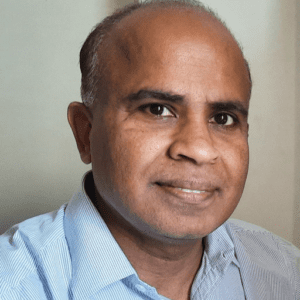
Govindasamy Bala
Professor at the Centre for Atmospheric and Oceanic Sciences
Indian Institute for Science
I met Paul Crutzen at the 2009 Asilomar Conference on SRM, and I was aware of his influential 2006 editorial essay on SRM in Climatic Change at that time. He was highly appreciative of the solar geoengineering modelling papers in the early 2000s by me and my colleague Ken Caldiera. Indeed, he had cited our first two climate modelling papers in his essay.
What an incredible influence Crutzen’s essay has had on SRM research in the last two decades! Talking about geoengineering was a taboo those days. I believe Crutzen’s sentence, “Given the grossly disappointing international political response to the required greenhouse gas emissions… research on the feasibility and environmental consequences of climate engineering of the kind presented in this paper, which might need to be deployed in future, should not be tabooed”, changed the SRM research landscape abruptly. The number of SRM research publications went through the roof in the years following his essay.
In a casual conversation, when we started our model simulations in 1999, I recall Ken saying that either our SRM modelling paper would be forgotten or will be celebrated as the first SRM climate modelling work in the distant future when SRM is considered as a viable option to offset climate change. Wow, we didn’t have to wait long because of Crutzen’s essay.
I was a young researcher in the 2000s, and this excerpt from the Nobel laureate’s essay brings joy to me to this day: “Researchers at the Lawrence Livermore Laboratory are so far the only ones who have modelled the stratospheric albedo modification scheme. In a first study, Govindasamy and Caldeira (2000) simulated this by reducing the solar luminosity by 1.8%, to balance future climate warming by a doubling of CO2… Further studies, following those conducted by Govindasamy et al. (2003), should address the biological effects of the albedo modification scheme.”
I thank Paul Crutzen for recognizing the potential climate change planetary emergency early on and urging us to research the SRM emergency response options.
Govindasamy Bala is a Professor at the Indian Institute of Science. His main research interests are modelling climate change, carbon and water cycles, solar geoengineering, and the global and regional monsoon systems. He has published over 130 peer-reviewed papers and has served as a Lead and Contributing Author in the AR5 and AR6 IPCC WG1 reports.

Declan Fahy
Associate Professor at the School of Communications
Dublin City University
Paul Crutzen’s essay has had an enduring influence primarily because it was written by Paul Crutzen.
He wrote it more than ten years after he shared the 1995 Nobel Prize in Chemistry for his research in atmospheric chemistry, especially for his work on the chemical processes behind the formation and destruction of ozone that protects the Earth from dangerous solar radiation.
The Nobel vaulted him into what sociologist of science Harriet Zuckerman’s book Scientific Elite called the “scientific ultra-elite”, earning an unrivalled status in science that translated to power, authority, and influence.
As science writer Oliver Morton wrote in The Planet Remade, his book on geoengineering, the essay’s importance “was that everything it said was said by Paul Crutzen, saviour of the ozone layer”.
Yet as I detailed in an article on Crutzen as a public intellectual, he had a long history of contributing to political-scientific debates in articles that reached highly-attentive elite audiences. Throughout his public career, he adopted a technocratic perspective in his writing, arguing for scientists and engineers to lead society towards sustainable futures.
In the 1970s, he argued in Ambio against the deployment of supersonic aircraft because their emissions would damage ozone. In the 1980s, he catalysed the nuclear winter debates when he co-authored an article in Ambio on the environmental effects of atomic explosions. In a 2002 Nature article, he introduced into broad intellectual life the idea of the Anthropocene, arguing that large-scale climate engineering may well be a necessary response to escalating environmental damage.
The 2006 article marked his last major intervention in environmental politics. It featured a shift from his earlier public writings in that part of the problem, as he constructed it, was the “grossly disappointing international political response to the required greenhouse gas emissions”. Against such political inaction, solar climate engineering, he argued, remained the “only available option” to avert severe climate impacts.
While such sentiments had been voiced elsewhere, the essay had influence and impact because it was written by a Nobel laureate who had a demonstrated record of influencing elite audiences around pressing scientific-political problems. With the essay, Crutzen essentially spoke in the name of atmospheric science.
Declan Fahy is an Associate Professor at the School of Communications, Dublin City University, where he researches science journalism, and scientists as celebrities and public intellectuals.

Ben Kravitz
Associate Professor
Indiana University
In 2010, when I was still a graduate student, I remember David Keith asking Paul Crutzen, “Do you think we’ll ever have to do it,” referring to geoengineering. Paul replied, “I’m afraid, yes.”
When I started in this field in 2007, I read every paper that had ever been published on geoengineering. There weren’t many; it took me a couple of days. Since then, we have seen the Paris Agreement and “1.5 to stay alive” come and, at least in the United States, go. As disappointing as it is to watch society fail at reducing greenhouse gas emissions, we’ve also seen an organic community of SRM researchers rise to meet the challenge of staying hopeful, fostered by several large community efforts like the Geoengineering Model Intercomparison Project, DEGREES, and the World Climate Research Programme.
Ultimately, I don’t know if we’ll ever deploy SRM. But what I do know is that any decisions will have available to them an amazingly smart, kind, dedicated community that has produced, and will continue to produce, a significant body of research. Thanks to my friends from all over the world, many of whom I am lucky enough to see at international meetings year after year, policy makers will have no excuse for making uninformed decisions about whether and how SRM might be deployed.
I could have easily turned this essay into an indictment of modern society, providing a cascading litany of how we have failed the planet and each other. But that’s not how I remember Paul. He built his career on showing the resilience of humanity against the prospect of truly devastating impacts: the ozone hole, the threat of nuclear war, and climate change. Rather than give up or become cynical, he fought back with research and understanding, his papers a perpetual gift to humanity. And throughout all of that, he was a kind, soft-spoken man with a razor-sharp sense of humor, who was delighted to share a pizza and beer with a graduate student who was just starting out in this field. Thanks for your wisdom, Paul; I hope we’re doing justice to your legacy.
Ben Kravitz is an associate professor in the Department of Earth and Atmospheric Sciences at Indiana University and an expert in climate modelling studies of solar geoengineering. He is the coordinator of the Geoengineering Model Intercomparison Project (GeoMIP), a worldwide effort to understand common climate model responses to various geoengineering scenarios.
The views expressed by Perspective writers and News Reaction contributors are their own and are not necessarily endorsed by SRM360. We aim to present ideas from diverse viewpoints in these pieces to further support informed discussion of SRM (solar geoengineering).