Article
How Would SRM Affect Sea-Level Rise?
Climate change is pushing sea levels around the world higher, which is already causing increased flooding, more devastating storm surges, damage to water supplies and agriculture, and other risks for hundreds of millions of people. The future of sea-level rise is uncertain – what impact might solar geoengineering, or sunlight reflection methods (SRM), have on sea levels if ever deployed?
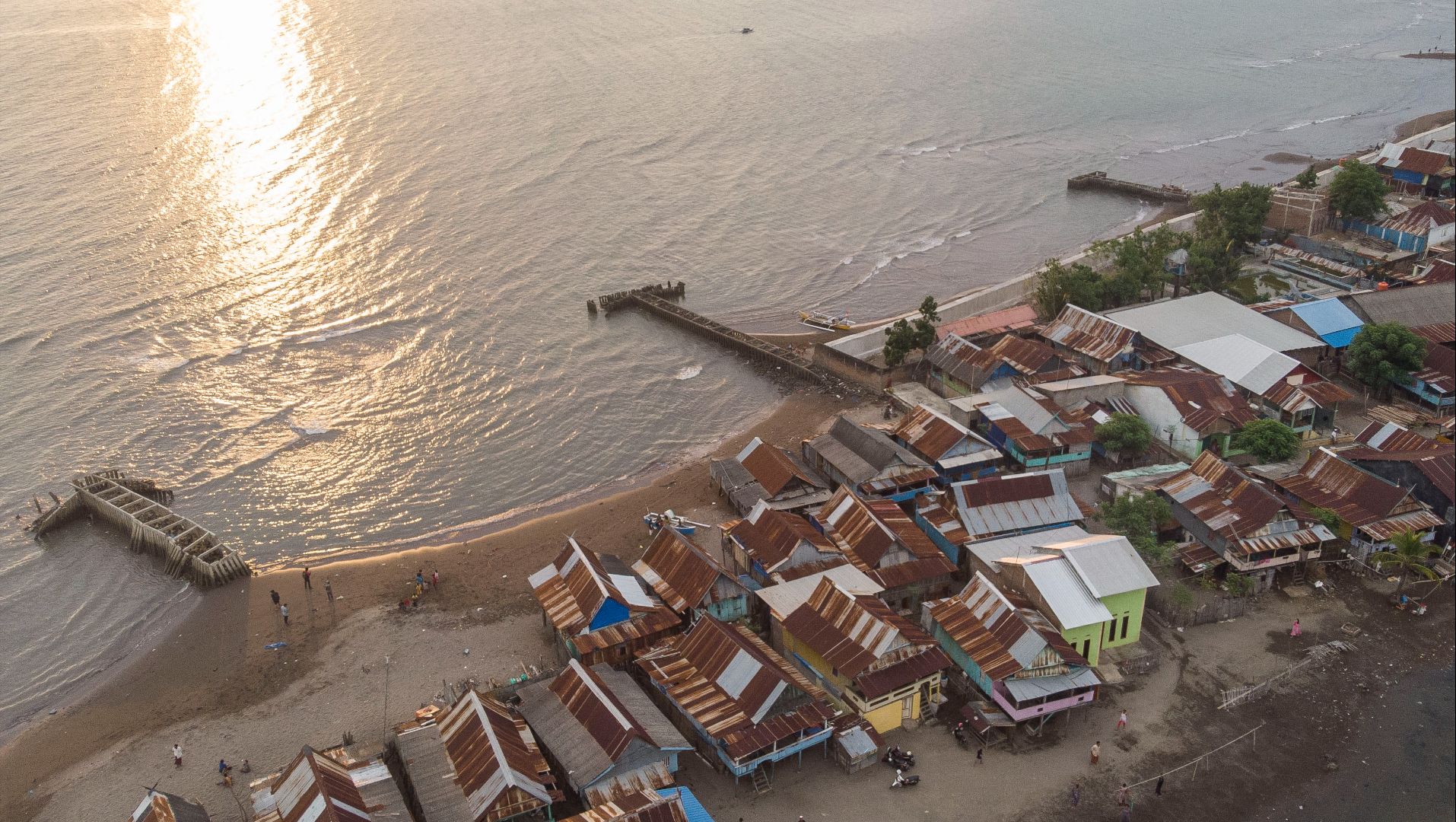
Photo: Agoes Rudianto via Reuters Connect

Key takeaways
- Global sea levels are rising due to climate change, as warming ocean water expands and melting land ice adds water to the oceans.
- Future sea-level rise will depend on how much the planet warms among other factors, though complicated ice sheet dynamics make it difficult to predict.
- SRM could likely slow, but not halt, global sea-level rise, though its impact on ice sheets in particular remains highly uncertain.
Sea-level rise is among the most potentially catastrophic of climate change impacts, and among its most viscerally frightening effects – how do you hold back the ocean? The details of current and future sea-level rise, however, remain complicated and highly dependent on several factors. What are the causes and impacts, and how might SRM alter the future of the world’s coastlines?
Why is the sea level rising – and how fast?
As the world warms, the sea level rises for two reasons. The first is the thermal expansion of the oceans. Over 90 percent of the excess heat trapped by greenhouse gases in the atmosphere is absorbed by the oceans; as water warms, it expands and takes up more space. This is known as thermosteric sea-level rise, and it has accounted for around half of recent sea-level rise.1
The second reason is the melting of ice on land. As the world warms, glaciers and ice sheets are shrinking, and much of their melting water ends up in the ocean – more water in the same bathtub means a higher water level.
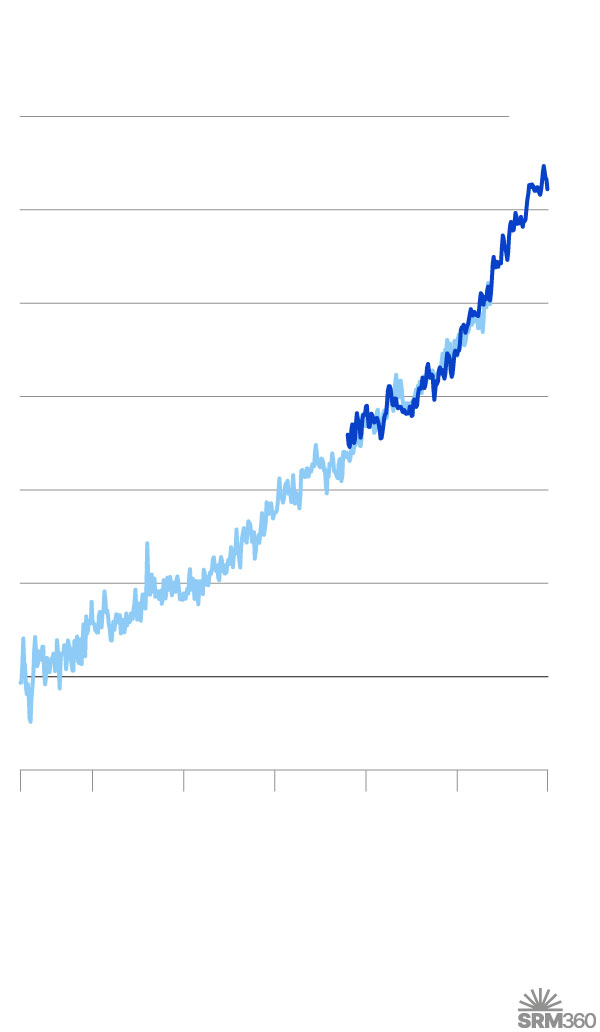
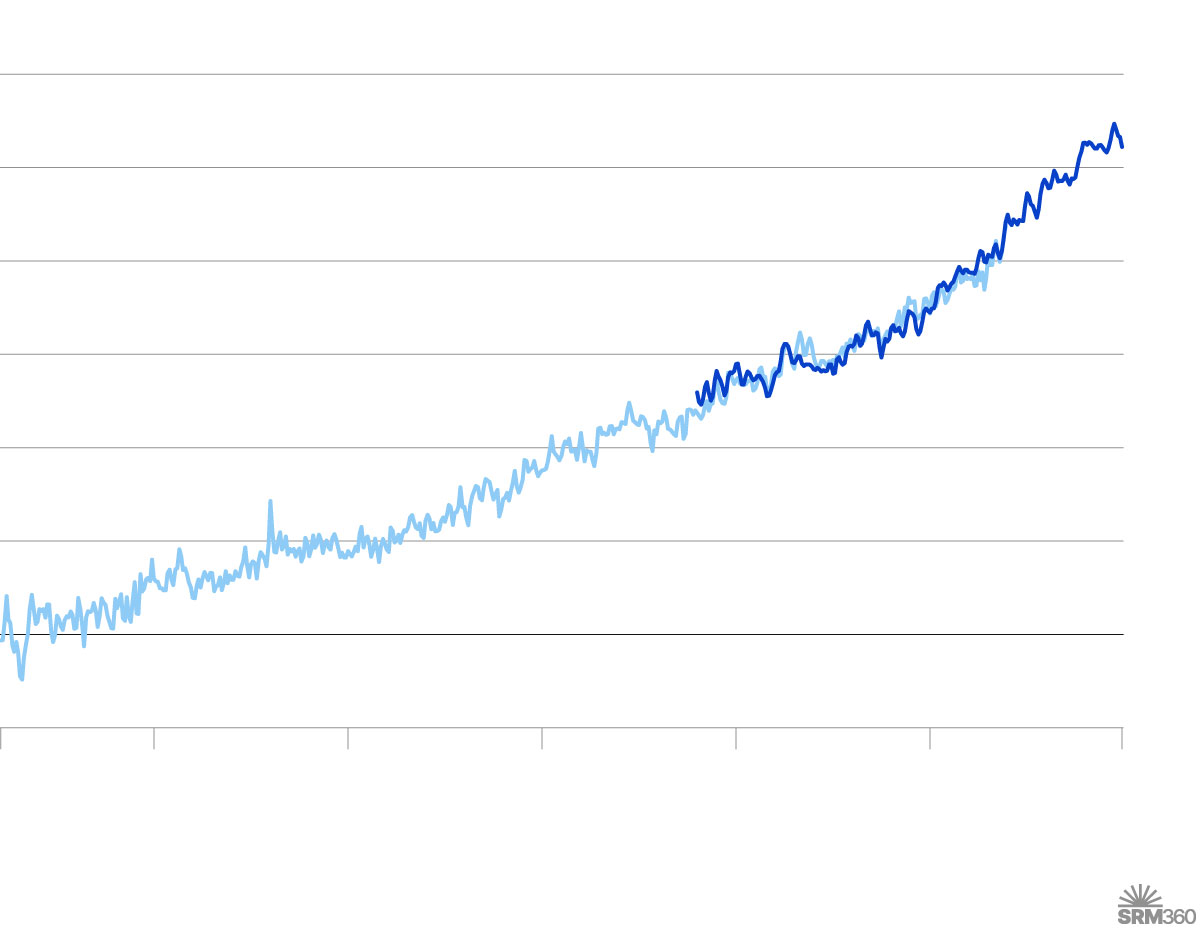
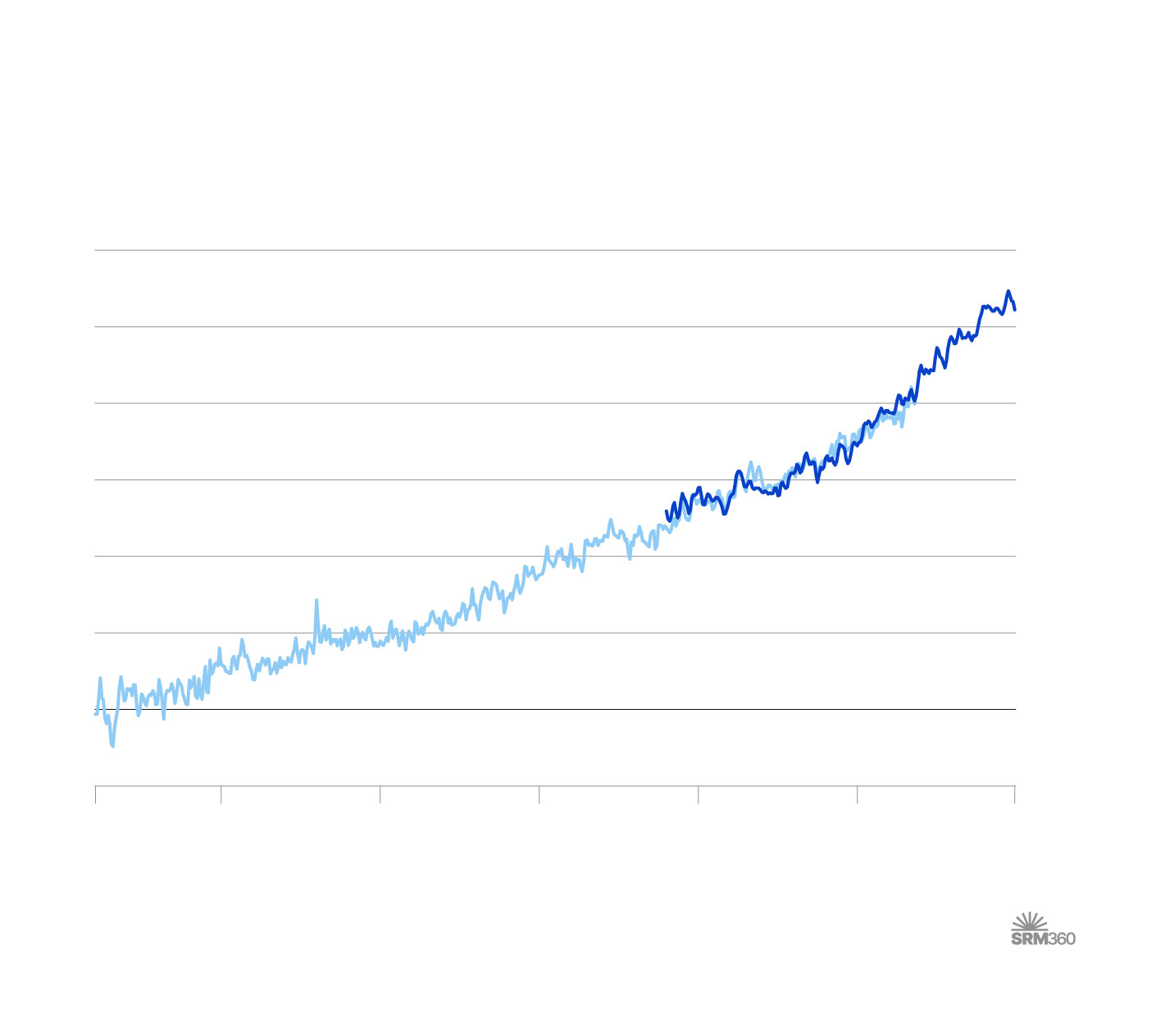
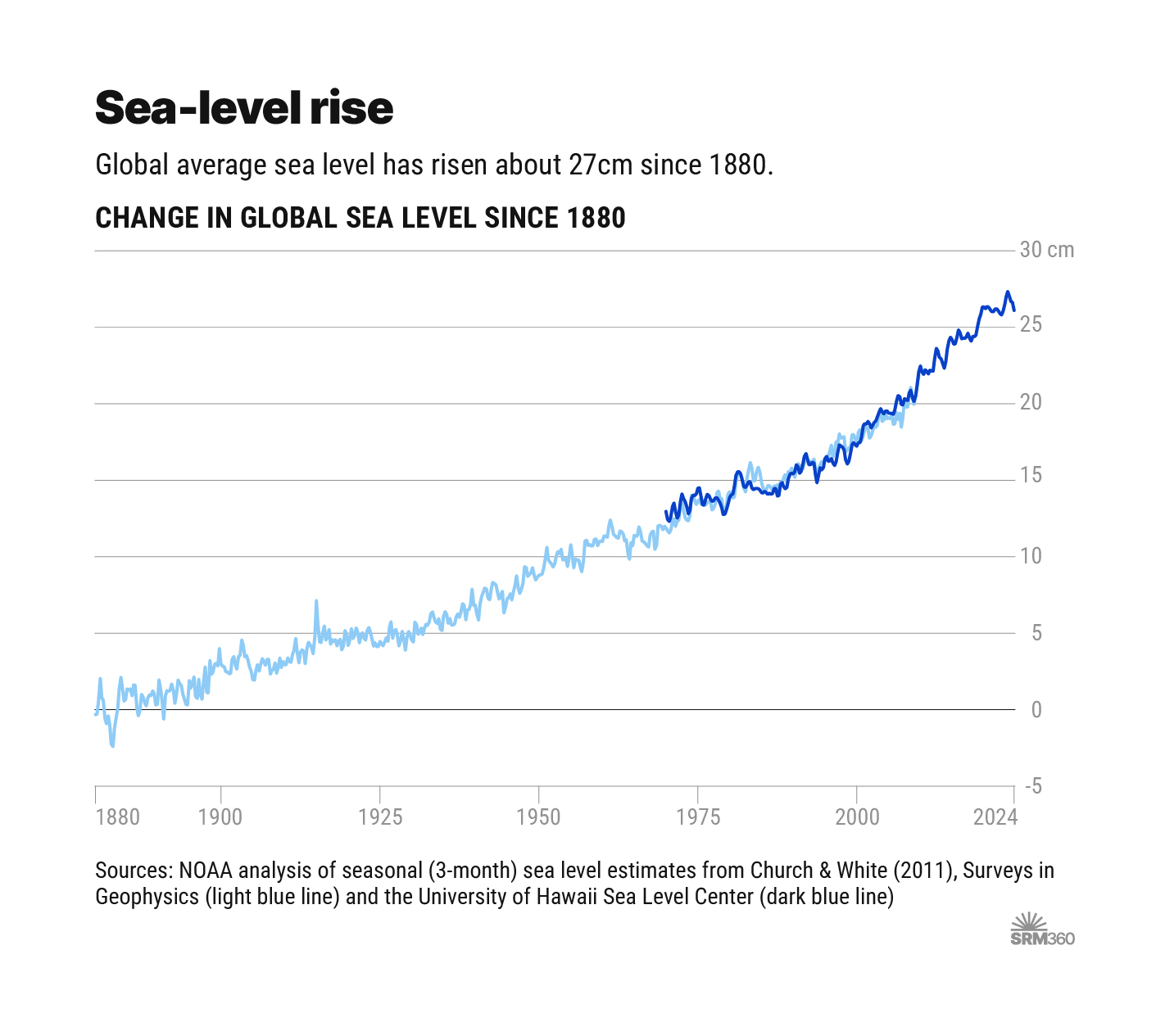
In total, the sea level has risen by about 27 cm since 1880. The rate of that rise has been increasing in recent decades: According to one study, the rate was about 2.1 mm per year in 1993, and 4.5 mm per year in 2023.2
Sea-level rise
Global average sea level has risen about 27cm since 1880.
CHANGE IN GLOBAL SEA LEVEL SINCE 1880
30
cm
25
20
15
10
5
0
-5
’80
’25
’50
’75
2000
’24
1900
Sources: NOAA analysis of seasonal (3-month) sea level estimates from Church & White (2011), Surveys in Geophysics (light blue line) and the University of Hawaii Sea Level Center
(dark blue line)
CHANGE IN GLOBAL SEA LEVEL SINCE 1880
30
cm
25
20
15
10
5
0
-5
1880
1900
1925
1950
1975
2000
2024
Sources: NOAA analysis of seasonal (3-month) sea level estimates from Church & White (2011), Surveys in Geophysics (light blue line) and the University of Hawaii Sea Level Center (dark blue line)
Sea-level rise
Global average sea level has risen 26.6 cm (10.5 inches) since 1880.
CHANGE IN GLOBAL SEA LEVEL SINCE 1880
30
cm
25
20
15
10
5
0
-5
1880
1900
1925
1950
1975
2000
2024
Sources: NOAA analysis of seasonal (3-month) sea level estimates from Church & White (2011), Surveys in Geophysics (light blue line) and the University of Hawaii Sea Level Center (dark blue line)
How much sea levels rise in the future will depend on how quickly greenhouse gas emissions are eliminated, though some further rise is guaranteed even if humans stopped burning fossil fuels tomorrow.3 Under a medium-emissions scenario, the Intergovernmental Panel on Climate Change (IPCC) projects about half to three-quarters of a metre of rise by 2100, relative to the 1995–2014 period.3
There is some chance the total could exceed that as the complexity of the Greenland and Antarctic ice sheets makes firm predictions difficult. Beyond 2100, sea levels are expected to continue rising for centuries as the deep ocean warms and ice sheets continue to melt and disintegrate.3 In some scenarios, ice sheet collapse could lead to many metres of sea-level rise over the next few hundred years,4 with the potential for catastrophic impacts on the world’s coastlines.
Impacts of sea-level rise
Though millimetre or centimetre rises may sound like small amounts, the rising seas have already started to have impacts on humans and the places we live. According to the United Nations, at least 770 million people live in coastal areas less than five metres above the high-tide line; many of the world’s biggest cities, including Dhaka, Guangzhou, and New York, are particularly vulnerable to rising seas.
And importantly, the global average sea-level rise is not felt at the local level – some regions will see substantially greater sea-level rise than others.5 That is thanks to regional differences in wind patterns, rates of land subsidence, and more, and means that some coastal areas will experience severe impacts well beyond what the global average would suggest.
With higher sea levels, major storms will be more likely to cause severe flooding, as storm surges begin from a higher baseline. Saltwater intrusion into freshwater sources is a major problem as the seas rise, harming ecosystems, agriculture, water supplies, and those who rely on these systems.6 And “nuisance flooding” in coastal cities and regions, where even a typical high tide can lead to flooded streets and infrastructure, is already increasing dramatically.7 Eventually, some coastal areas and low-lying islands may become uninhabitable due to the rising seas.
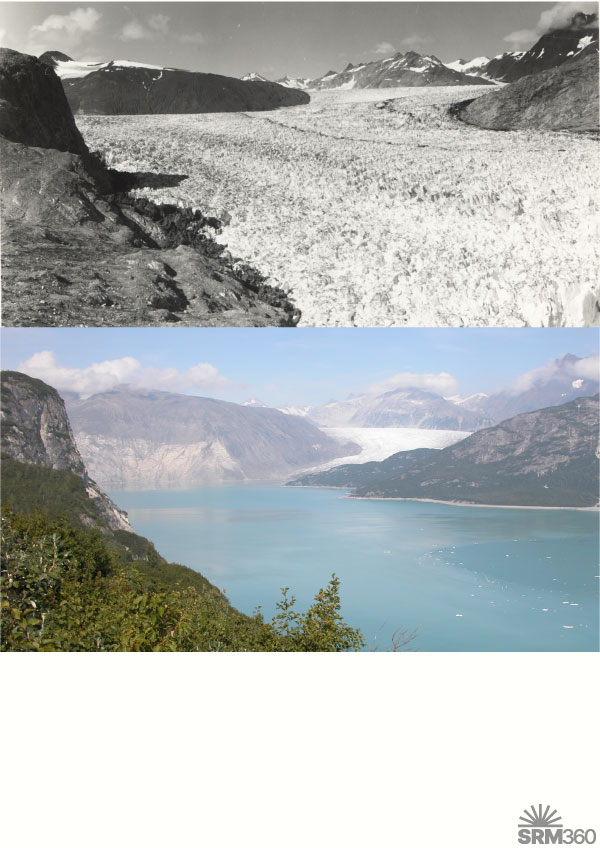
1941
2004
Two images taken in August at the same location, 63 years apart, in Glacier Bay National Park and Preserve, Alaska. (US National Snow and Ice Data Center)
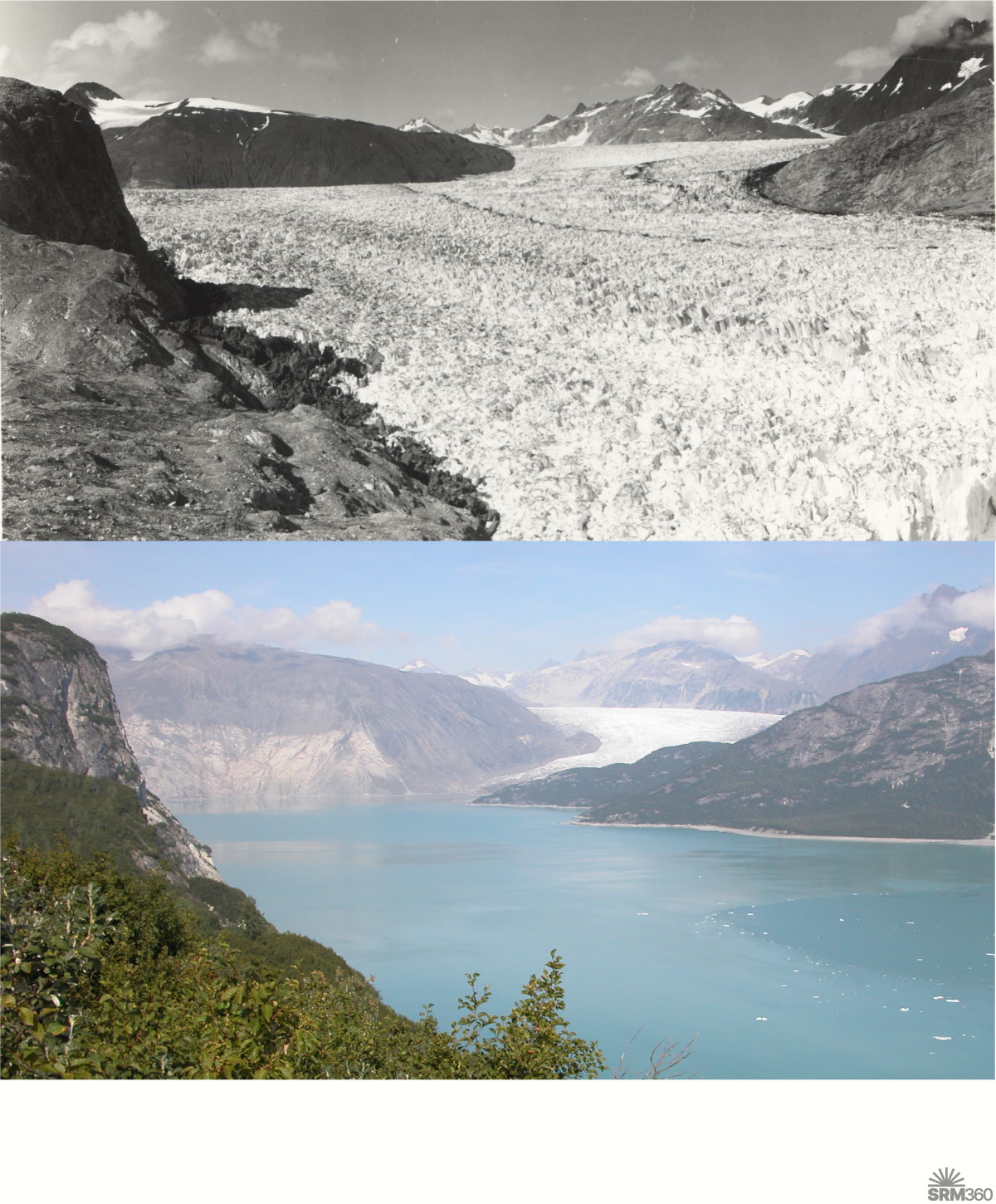
1941
2004
Two images taken in August at the same location, 63 years apart, in Glacier Bay National Park and Preserve, Alaska. (US National Snow and Ice Data Center)
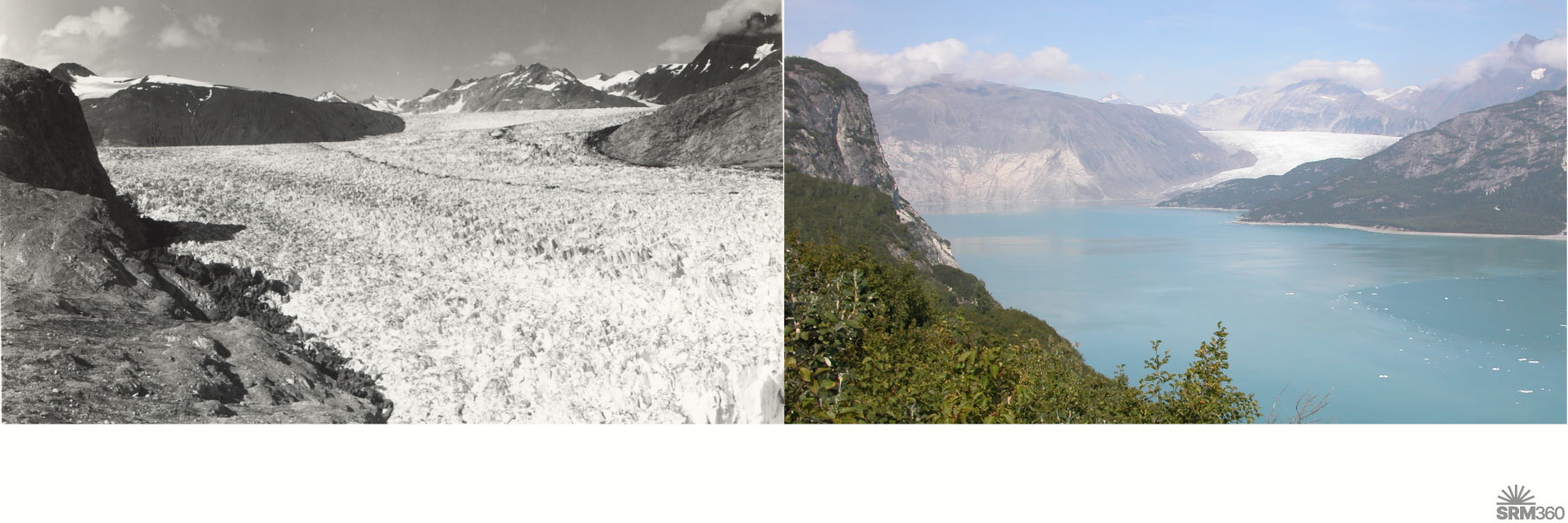
1941
2004
Two images taken in August at the same location, 63 years apart, in Glacier Bay National Park and Preserve, Alaska. (US National Snow and Ice Data Center)
What impact would SRM have?
If SRM were ever deployed at a global scale, it would lower the planet’s average temperature, among other effects. What would this mean for sea-level rise? The short answer is that the lower temperatures would likely slow, but not stop, sea-level rise. The various contributions to sea-level rise are complicated, however, and SRM’s effects on them are still relatively poorly understood.
The simplest impact would be on thermosteric rise, the result of the thermal expansion of ocean water. By lowering the Earth’s temperature, that expansion would slow. According to one study, which modelled a stratospheric aerosol injection (SAI) scenario that maintained global temperatures at 1.5°C of warming relative to pre-industrial temperatures, the rate of thermosteric sea-level rise would be roughly half that of a future with medium emissions.8
The potential impact of SAI on sea-level rise from melting land ice is much more complex, and study results are highly dependent on the specific SAI scenario used. However, for the Greenland ice sheet, it seems clear that a deployment could generally reduce some of the surface melt caused by climate change.9,10
In Antarctica, surface melting is less of an issue because of the extreme cold. Instead, glacier calving and collapsing ice shelves (platforms of floating ice connected to and often holding back the huge masses of ice on land) play the biggest role in ice sheet loss. These are extremely complex processes involving subsurface ocean changes that have a less direct connection to a potential SAI deployment, making assessments of SRM’s potential impacts difficult.
Studies have found that, in general, SAI could likely delay but not prevent the thinning and eventual collapse of the West Antarctic Ice Sheet.11,12 Along with the amount of cooling from SAI, the latitude of deployment would also make a difference: Deploying only at the equator or predominantly in the Northern Hemisphere could actually raise ocean temperatures around the ice sheet, while a Southern Hemisphere deployment could slow ice loss to some degree.13
Less research has been done on how ice would respond to marine cloud brightening (MCB). Some modelling suggests that it could reduce the melting of ice sheets,14 while other modelling finds regionally variable impacts on sea-level rise due to altered wind patterns and changes to sea-level pressure, leaving some areas worse off than under climate change alone.15
Research is also ongoing on other interventions that are not exactly SRM techniques but could still help repair polar ice and prevent further collapse. These include methods to change the albedo, or reflectivity, of glaciers and ice sheets to slow their melt, as well as ideas like seabed curtains aimed at slowing the subsurface warming of ice shelves and glaciers. It is possible that such interventions may work in concert with SRM to help slow sea-level rise, if ever deployed.
Given the catastrophic potential associated with a large amount of sea-level rise, further research is needed to better understand SRM’s potential impacts on the ice sheets. As the IPCC has stated, some amount of sea-level rise this century is “virtually certain”,3 but the details – and the highly variable impacts on many millions of people – are yet to be determined.
Open questions
- How will the Greenland and Antarctic ice sheets respond to various projected emissions pathways over the coming century?
- What SRM and emissions scenarios are the most important and useful to study in terms of the potential impact on sea-level rise?
- How would regional SRM deployments impact sea levels, and what secondary effects would they have elsewhere?
Endnotes
- Liang TY, Hsiao SC, Wu HL, et al. (2025). Accelerated Ocean thermal expansion and its contribution to Global Sea-level rise. Journal of Sea Research. 205:102589. https://doi.org/10.1016/j.seares.2025.102589
- Hamlington BD, Bellas-Manley A, Willis JK et al. (2024). The rate of global sea level rise doubled during the past three decades. Communications Earth & Environment. 5, 601. https://doi.org/10.1038/s43247-024-01761-5
- Intergovernmental Panel on Climate Change (IPCC). (2021). Ocean, Cryosphere and Sea Level Change. In: Climate Change 2021 – The Physical Science Basis: Working Group I Contribution to the Sixth Assessment Report of the Intergovernmental Panel on Climate Change. Cambridge: Cambridge University Press; 2023. p. 1211–362. https://doi.org/10.1017/9781009157896.011
- Seroussi H, Pelle T, Lipscomb WH, et al. (2024). Evolution of the Antarctic Ice Sheet over the next three centuries from an ISMIP6 model ensemble. Earth’s Future, 12, e2024EF004561. https://doi.org/10.1029/2024EF004561
- Yue C, Jevrejeva S, Qu Y, et al. (2023). Thermosteric and dynamic sea level under solar geoengineering. NPJ Climate and Atmospheric Science. 6(135). https://doi.org/10.1038/s41612-023-00466-4
- Adams KH, Reager JT, Buzzanga BA, et al. (2024). Climate-induced saltwater intrusion in 2100: Recharge-driven severity, sea level-driven prevalence. Geophysical Research Letters. 51(e2024GL110359). https://doi.org/10.1029/2024GL110359
- Jeong J, Barbosa SA, and Goodall JL. (2025). Quantifying the impact of nuisance flooding on urban coastal communities under present and future climatic conditions: Norfolk, Virginia as a case study. Journal of Hydrology: Regional Studies. 59(102304). https://doi.org/10.1016/j.ejrh.2025.102304
- Bonou F, Hounsou-Gbo A, Dossa AN, et al. (2025). Global and regional thermosteric and dynamic sea level change under stratospheric aerosol injection. Environmental Research: Climate. 4(4) 045013. https://doi.org/10.1088/2752-5295/ae15b6
- Moore JC, Yue C, Zhao L, et al. (2019). Greenland ice sheet response to stratospheric aerosol injection geoengineering. Earth’s Future. 7(1451–1463). https://doi.org/10.1029/2019EF001393
- Fettweis X, Hofer S, Séférian R, et al. (2021). Brief communication: Reduction in the future Greenland ice sheet surface melt with the help of solar geoengineering. The Cryosphere. 15(3013–3019). https://doi.org/10.5194/tc-15-3013-2021
- Sutter J, Jones A, Frölicher TL, et al. (2023). Climate intervention on a high-emissions pathway could delay but not prevent West Antarctic Ice Sheet demise. Nature Climate Change. 13(951–960). https://doi.org/10.1038/s41558-023-01738-w
- Moore JC, Yue C, Chen Y, et al. (2024). Multi-model simulation of solar geoengineering indicates avoidable destabilization of the West Antarctic ice sheet. Earth’s Future. 12(e2024EF004424). https://doi.org/10.1029/2024EF004424
- Goddard PB, Kravitz B, MacMartin DG, et al. (2023). Stratospheric aerosol injection can reduce risks to Antarctic ice loss depending on injection location and amount. Journal of Geophysical Research: Atmospheres. 128(e2023JD039434). https://doi.org/10.1029/2023JD039434
- Hirasawa H, Hingmire D, Singh H, et al. (2023) Effect of regional marine cloud brightening interventions on climate tipping elements. Geophysical Research Letters. 50(20):e2023GL104314. https://doi.org/10.1029/2023GL104314
- Haywood JM, Jones A, Jones AC, et al. (2023). Climate intervention using marine cloud brightening (MCB) compared with stratospheric aerosol injection (SAI) in the UKESM1 climate model. Atmospheric Chemistry and Physics. 23(24):15305-24. https://doi.org/10.5194/acp-23-15305-2023