News Reaction
Stardust Publishes New Details on Its Climate Cooling Plans
Stardust Solutions, a for-profit venture seeking to develop the technology needed to implement stratospheric aerosol injection (SAI), has shared new details about its work, including its guiding principles and proposals for the safety and controllability requirements for its technology. We reached out to experts for their views on these developments.

Photo: CFOTO via Reuters Connect

Stardust Solutions is a US–Israeli venture that has raised $75 million to develop the technology needed to make SAI a reality. Backed by several venture capital and other funders, it is seeking to develop a proprietary particle, deployment technology, modelling tools, and monitoring capability to enable the deployment of SAI.
While the company is still tight-lipped about the particle it intends to patent, which it claims will have much lower risks than the sulphates that most of the research community focuses on, it has recently updated its website. This update includes a new set of guiding principles for its work and a set of technical proposals for the safety and controllability requirements that it hopes its full deployment system will one day meet.
We reached out to experts and Stardust for comment on these announcements.

Shuchi Talati
Founder and Executive Director
The Alliance for Just Deliberation on Solar Geoengineering
Releasing principles is better than not releasing them, but I’m not sure this changes the fundamental picture. These guiding principles are extremely broad and self-authored – there are no mechanisms for independent verification, no processes for implementation, and crucially, the core technology itself remains proprietary and undisclosed. You can’t claim a commitment to transparency while keeping your particle secret.
We’ve seen consistently – both in SRM and across emerging technology domains – that ad-hoc, self-authored governance doesn’t produce the kind of public trust this field requires. Writing your own standards after years of operating without transparency or engagement doesn’t retroactively create legitimacy. This is further indication that we need consistent, credible, and independent research governance in SRM – which is exactly what a growing coalition of institutions is now building with the Solar Geoengineering Research Governance Platform.
Shuchi Talati is a climate technology governance expert and founder of The Alliance for Just Deliberation on Solar Geoengineering (DSG), a nonprofit organization working towards just and inclusive deliberation about research and potential use of solar geoengineering.

Janos Pasztor
Former Executive Director
Carnegie Climate Governance Initiative
Stardust has published a revised version of its guiding principles – one which now provides details we have not seen before. This is welcome, but insufficient for the world to understand the details of how Stardust is undertaking its work.
Publishing guiding principles is an important part of transparency. However, what is needed now is details on how Stardust has – and plans to – put into practice each of the principles. Otherwise, this exercise is more PR than real transparency.
This is particularly so for the section on “International Cooperation, Transparency, and Knowledge Sharing”. The principles are fine, but how Stardust is implementing these is what we need to know – and especially as Stardust’s for-profit approach is often in conflict with a number of the principles. For example, it would be useful to see how Stardust deals with “knowledge sharing” or “stakeholder consultation”, and most importantly the details of how its intellectual property strategy “will serve the public interest”.
Time has come for Stardust to go much further and address the specific actions it needs to undertake, consistent with the report I wrote in 2024 – a report that Stardust endorsed. Otherwise, that endorsement is meaningless.
Janos Pasztor is recently retired after four decades of work in the areas of energy, environment, climate change, and sustainable development. He was executive director of the Carnegie Climate Governance Initiative, an organization that sought to catalyse the creation of effective governance for SRM by engaging with international policymakers.

Marianna Linz
Head of Research
Reflective
Many of the guiding principles and safety requirements from Stardust are reasonable and echo what has been stated by others in the past, but Stardust is currently in clear violation of those principles. They have yet to share any specific information about research and development, yet they claim a commitment to transparency about the science. With contained outdoor experiments supposedly beginning this month, that lack is especially glaring.
The safety requirements document articulates well known concerns about SAI implementation and puts forth a number of somewhat arbitrary thresholds. There are a few technical oddities, such as the misconception that temperatures between 16–20 km across the entire tropics set stratospheric water vapor, when it is just the temperature in a narrow region in latitude and altitude. These documents do not increase my confidence that Stardust will contribute meaningfully in the near future.
Marianna Linz is the Head of Research at Reflective, a nonprofit organization dedicated to accelerating research on stratospheric aerosol injection. She is an expert in stratospheric physics, and she has recently left her position as Assistant Professor of Environmental Science and Engineering at Harvard University.
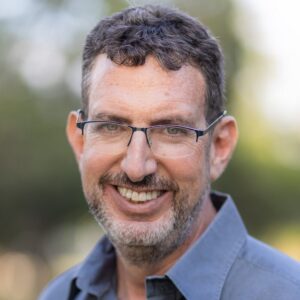
Yanai Yedvab
CEO
Stardust Solutions
Our mission at Stardust is to turn Sunlight Reflection Technology (SRT) from a theoretical concept into a safe, responsible, real-world option – and give governments the tools and information they need to decide whether, when, and how to deploy this technology.
Until now, the conversation about SRT has focused on whether it should be researched at all. We think the question should shift. With climate risk accelerating and more communities impacted every year, governments need a different answer: what would a safe, responsible SRT option actually look like?
We’re excited to release two documents that propose concrete answers. Our technical paper addresses the “what” question – which specific requirements an SRT system must meet to be safe and controlled. Our updated guiding principles address the “how” question – which ethical and governance standards this work must meet, developed with leading experts and grounded in accepted international frameworks.
We’re putting these forward for dialogue, input, and improvement, and we welcome thoughts and suggestions from the SRM360 community. Over the coming months, we’ll publish our scientific work, disclose our particle composition and core technologies, and continue opening our work to independent validation, allowing people to assess it against the requirements we’ve laid out and determine if we meet them.
Dr. Yanai Yedvab is CEO of Stardust Solutions. He previously spent three decades in senior roles at Israeli national laboratories and R&D organizations. He holds a Ph.D. in experimental nuclear physics from Ben-Gurion University and an MPA from Harvard Kennedy School.
The views expressed by Perspective writers and News Reaction contributors are their own and are not necessarily endorsed by SRM360. We aim to present ideas from diverse viewpoints in these pieces to further support informed discussion of SRM (solar geoengineering).