News Reaction
Stardust Reveals Its Particles for Climate Cooling
The for-profit venture, which has so far operated behind closed doors, has released several academic papers with details of its proposed method and particles for stratospheric aerosol injection (SAI). We reached out to experts for their reactions to these developments.

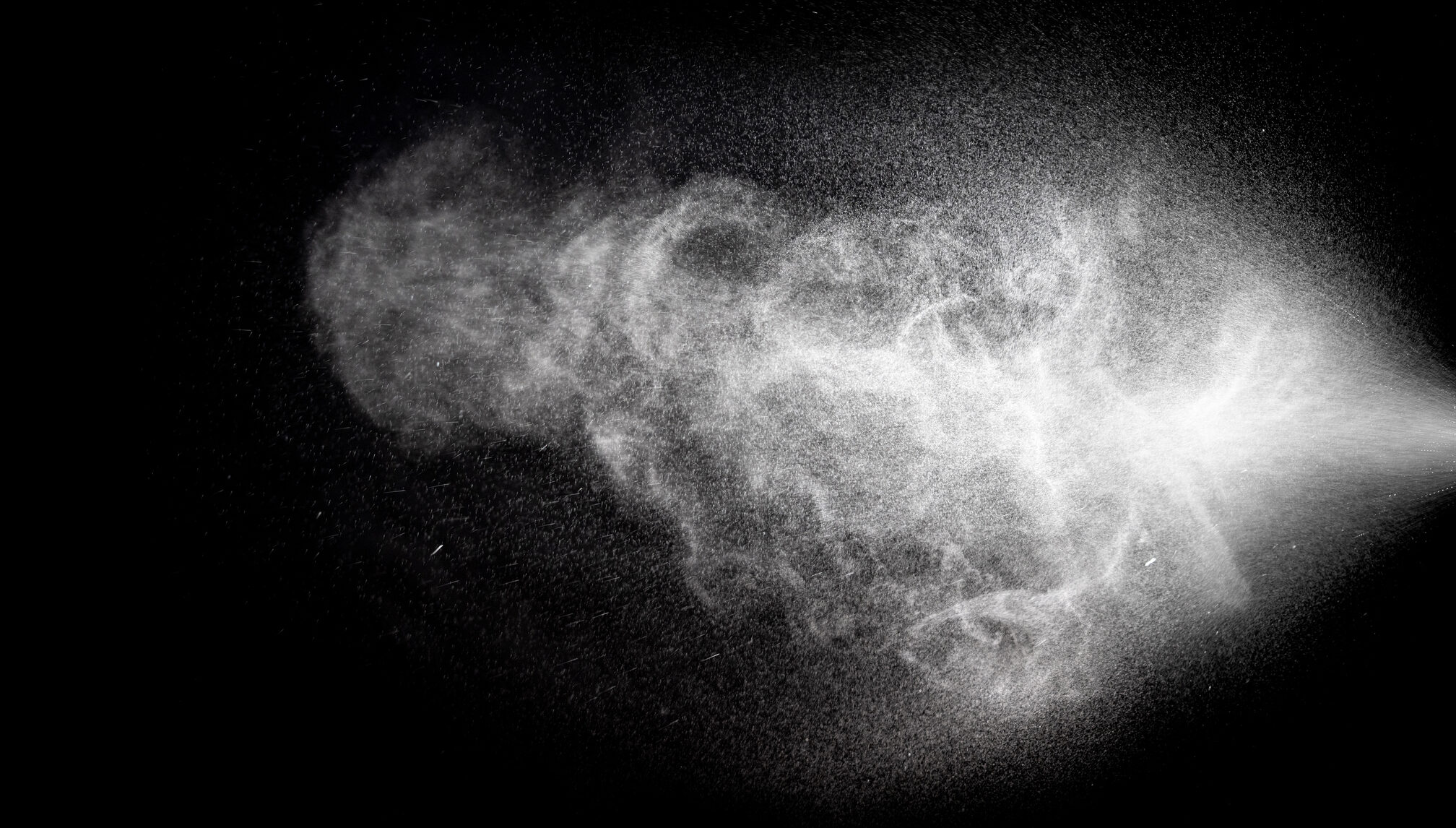
Photo: DPA/Picture Alliance via Reuters Connect
Stardust Solutions, the US–Israeli for-profit company that has raised $75 million in funding to develop SAI technology, has released several preprints of academic papers regarding its previously secretive efforts. The company was also featured in an exclusive story with the New York Times.
They reveal that Stardust is focusing on tiny solid particles to reflect sunlight, made of amorphous silica – commonly used as a food additive and found naturally as well – and calcium carbonate – found in some rocks, shells, and other places.
This differs from the more thoroughly studied SAI concept of using sulphate aerosols as the reflective material, and though the alternative particles may offer advantages, there are still many open questions regarding their effectiveness and potential impacts.
The papers, which have not yet been peer reviewed, also discuss technical details of how the particles might be dispersed effectively in the stratosphere, their potential to react with other molecules once released, and some aspects of monitoring and governance of a potential SAI deployment.
Since its entry into the SRM field, Stardust has garnered considerable attention and criticism, in part because of its secretive approach. As the company steps a bit farther into the sunlight, we reached out to experts to get their thoughts on the science and sociopolitical implications of Stardust’s progress.
Daniele Visioni
Assistant Professor of Earth and Atmospheric Science
Cornell University
Stardust’s preprints reveal all the limitations of a for-profit endeavor in this space. Their large, glossy overconfidence based on preliminary, patchy results arises from a need to justify the large influx of money to their investors, rather than from genuine scientific interest or caution. Two years of hype over new, bespoke particles turned into an announcement of something in between silica and calcite (with the GEN2 particle still nowhere to be seen), two materials already studied in the literature – despite what the preprints would lead you to believe – and for which potential non-reactiveness and purported safety are way more contested than what Stardust’s brochure would lead you to believe.
Transparency is not about releasing PDFs when it suits you, especially in a field sorely in need of more trust-building. As we detailed in the AGU Ethical Guidelines for climate intervention research, it must involve full clarity about funding, aims, and plans in order to avoid the potential burying of negative results.
SAI should never turn into a beauty contest between the presumed perfection of different particles, especially if the rules for such a contest are set by the same company that has the most to profit from winning it.
Daniele Visioni is a climate scientist with expertise in the behaviour of stratospheric aerosols and how they interact with atmospheric chemistry and the climate. He is currently an Assistant Professor at Cornell University in the Department of Earth and Atmospheric Science and a Cornell Atkinson Faculty Fellow.
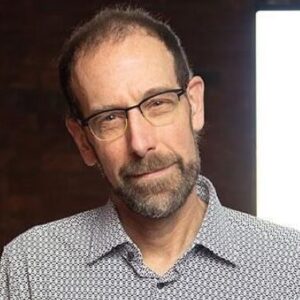
David Keith
Professor of Geophysical Science and founding Faculty Director at the Climate Systems Engineering Initiative
University of Chicago
I like the work Stardust has done on amorphous-silicon coatings for particles. It’s terrific that they’ve started looking at chemical interactions. Playing with wettability and surface energy makes sense, and they’ve shown that it can be useful. Perhaps the biggest technical barrier to using solid aerosols is dispersal. If we are reading their dispersal paper correctly, they have made less progress than I hoped and are still a few orders of magnitude away from where they need to be for practical deployment. If this were all open academic work, I’d be excited, as it’s an important new set of studies.
I’m worried that, as a company, they will oversell. As I explained in this extended blog post, the direct health and physical risks from sulfate (as sulfuric acid) are surprisingly small in the early phases of SRM deployment. There’s no reason to believe that the risks from Stardust’s particles would be any lower. Rather, the uncertainty and risks of unknown-unknowns from Stardust’s particles would certainly be larger than the risks of sulfate-based SAI. It would be very hard to construct a risk-based rational case for starting SAI with anything other than sulfates. I worry that a well-funded company may over-promote, and the glitter of something new will be attractive to technophiles, pushing this development out of proportion to its actual utility.
David Keith has worked at the interface of climate science, energy technology, and public policy since 1990. He is a Professor of Geophysical Science and founding faculty director of the Climate Systems Engineering initiative at the University of Chicago. He has authored more than 200 academic publications and the book ‘A Case for Climate Engineering’.

Quentin Scott
Federal Policy Director
Chesapeake Climate Action Network
The vacuum left by the federal government’s failure to invest in real solar radiation management research has allowed private actors to shape the trajectory of this field. Thursday’s announcement makes that governance gap impossible to ignore.
No nation has the authority to unilaterally alter global sunlight – and companies certainly do not. Decisions of this magnitude must be made democratically, in public view, not in a boardroom. Commercial incentives and planetary stewardship are not naturally aligned, and it should concern everyone that private experiments are moving faster than public science.
If nothing else, Stardust’s work shows that aerosol research is technically feasible and advancing more quickly than many assumed. That is exactly why the U.S. government’s research needs to catch up. We cannot outsource global climate decisions to private firms. SRM affects all of us. Public investment, public oversight, and public accountability must lead the way.
Quentin Scott is the federal policy director at Chesapeake Climate Action Network. His work builds political will for groundbreaking national climate and climate justice policies. He was formerly chief of staff for an Illinois state representative and a legislative correspondent in the U.S. House of Representatives.

Sandro Vattioni
Post Doctoral Researcher in the Atmospheric Physics Group
ETH Zurich
The research presented by Stardust proposes an alternative, engineered particle type that had not previously been considered for potential use in stratospheric aerosol injection (SAI). While many of their ideas are novel and potentially promising, substantial uncertainties remain regarding whether the use of solid particles is technically feasible and whether it would pose lower risks than conventional sulfuric acid aerosols.
The main advantage of alternative materials, compared to sulfuric acid aerosols, is the potential for reduced stratospheric heating due to weaker absorption of radiation. However, the presented research appears to place greater emphasis on minimizing surface chemistry, which, in my view, is not among the most critical drawbacks of sulfuric acid aerosols.
It is also important to note that the studies presented by Stardust have not yet undergone peer review. While some of the work is of high quality, other contributions suggest gaps in the authors’ understanding of basic concepts of stratospheric chemistry. Independent studies are therefore needed to validate and critically assess their findings.
Decades of coordinated international research have been required to quantify the impacts of naturally occurring stratospheric sulfuric acid aerosols and polar stratospheric clouds on stratospheric chemistry and ozone. A similarly extensive effort would be necessary to evaluate a novel particle type that does not naturally occur in the stratosphere. Such research efforts should not be led by a for-profit company with competing interests, particularly when key findings are not fully disclosed for such a long time. Transparency, open scientific scrutiny, and broad community involvement are essential prerequisites for assessing the viability and risks of any proposed SAI approach.
Sandro Vattioni’s research focuses on assessing the risks and benefits of stratospheric aerosol injection (SAI) of solid particles as an alternative to sulfur-based SAI, using both global modelling and experimental methods.

María Inés Carabajal
Researcher
CONICET
Research on Solar Radiation Modification remains at an early stage, and many uncertainties persist regarding its potential environmental, social, and geopolitical implications. More robust and independent scientific research is needed to better understand both the risks and the limitations of these technologies, particularly when there is no governance infrastructure in place to monitor and regulate current developments.
Echoing the pioneering Oxford Principles, I believe SRM must be governed in the public interest. This means that scientific research should be conducted under strict scrutiny, following open and transparent processes, and with broad public participation to ensure inclusive deliberation about a technology that could affect people and ecosystems worldwide.
In this context, the emergence of for-profit organizations such as Stardust, pursuing intellectual property rights without full disclosure of research and independent assessment, is deeply problematic and poses additional challenges to the field. The need for governance mechanisms and institutional oversight is more urgent than ever. SRM governance cannot be reduced to technical risk management alone. Questions of legitimacy, justice, participation, and public accountability should also be included in risk assessments as they are central to discussions about the present and future of these technologies.
Dr. María Inés Carabajal is an Argentine anthropologist and researcher at the National Research Council (CONICET). Her work focuses on the human dimensions of climate change, transdisciplinary science, and knowledge co-production. Her latest research examines the sociopolitical and ethical implications of solar radiation modification in Latin America.
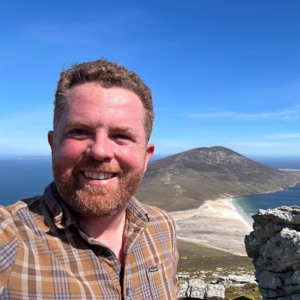
Craig Segall
Senior Director
Climate Hub
Stardust’s announcement underscores the moment we’re in: climate overshoot is here, and the risks are enormous. That means governments need to widen the set of tools they’re actively examining – not someday, but now – and expand public research and risk‑management capacity to match the moment. Venture capitalists are moving ahead, and our government can’t afford to fall behind.
No one is deploying SRM anytime soon, and no one should. But inquiry can’t stall. Companies like Stardust are positioning themselves as future public contractors, which only holds if their work is conducted within transparent, publicly governed research frameworks. Sharing early results is useful; what matters next is accelerating public research and public oversight in tandem. Decisions about altering Earth’s radiative balance must involve governments, scientists, and the public – not just investors.
Going forward, governments need to move faster – both to ensure new ideas get real scrutiny and to make sure societies are prepared for the risks already unfolding. The choice isn’t between rushing ahead or shutting everything down. It’s building the public capacity now so we can make informed, democratic decisions later.
Craig Segall is senior director at Climate Hub, former deputy executive officer and assistant chief counsel of the California Air Resources Board, former senior VP of Evergreen Action, and an attorney for Sierra Club. He is an honorary fellow at the University of Edinburgh Law School. Views are his own.

Yvette Ramos
PhD Candidate
University of Lisbon
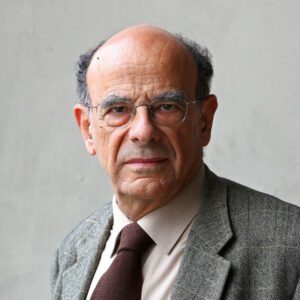
Filipe Duarte Santos
Professor of Physics and Environmental Sciences
University of Lisbon
The analyzed technical documents highlight a coherent set of innovations developed within the Stardust project.
Major contributions include the design of submicrometer particles dedicated to Stratospheric Aerosol Injection (SAI), the development of second-generation core-shell particles, and hydrophobic surface treatments using silanization.
The NYT article mentions the filing of one patent application, not yet accessible in the explored databases (European Patent Office), indicating this patent was filed less than 18 months ago. This situation currently limits a detailed analysis of the intellectual property strategy.
Nevertheless, several lessons emerge from Stardust’s approach:
- The company adopts a notable level of transparency: scientific results are published with a high degree of detail, which is unusual in a field where patent protection is often central.
- Patents do not appear to be a major strategic focus for Stardust, despite the numerous protection opportunities offered by its work, from our point of view. Unlike some other companies, Stardust does not seem to be seeking to finance its research through the exploitation of IPR (Intellectual Property Rights), but relies on a different economic model. The importance given to intellectual property therefore appears secondary in its current approach.
A more comprehensive analysis can be conducted once the patent application is made public.
Yvette Ramos is a PhD candidate working on SRM governance with a background in engineering. She is also the managing director of an intellectual property law firm.
Prof. Santos’ current field of research is sustainability, global change, and climate change, with a focus on mitigation, adaptation, and geoengineering. He has published more than 150 papers in SCI-indexed scientific journals and several books.
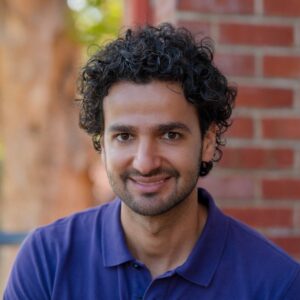
Ali Akherati
Data Scientist
Reflective
Stardust’s work represents a step forward, and the preprint papers on particle engineering are well written and thoughtful. But several of the safety and chemistry conclusions are not yet mature enough to support the proposed particles as a viable alternative.
The lab measurements underpinning the chemistry claims are made at room temperature without any chamber experiments, far from stratospheric conditions, where reaction kinetics behave very differently. More critically, once injected at scale, the proposed particles will coagulate with the existing stratospheric aerosol background with non-trivial amount of sulfate, and sulfuric acid will condense onto them, fundamentally transforming their surface properties. At that point, the particles would have a surface like sulfate aerosols, with the same associated problems. The dispersal experiments face a similar gap, having been conducted at scales far below what real-world deployment would require.
What this points to is not a failure of the work, but a reminder of how much remains to be understood. These are not peripheral questions. They go to the heart of whether the safety case holds, and they will require a sustained, independent research effort to resolve. Technologies like aerosol particles proposed by Stardust with the potential to alter the climate for everyone on the planet deserve that level of scrutiny, along with peer review and full transparency, from the very beginning.
Ali Akherati is an applied scientist at Reflective, where he works on aerosol microphysics and modeling for stratospheric aerosol injection research. He holds a PhD in aerosol microphysics and chemistry from Colorado State University.
The views expressed by Perspective writers and News Reaction contributors are their own and are not necessarily endorsed by SRM360. We aim to present ideas from diverse viewpoints in these pieces to further support informed discussion of SRM (solar geoengineering).