News Reaction
What Does Trump’s Withdrawal From Climate Organisations Mean for SRM?
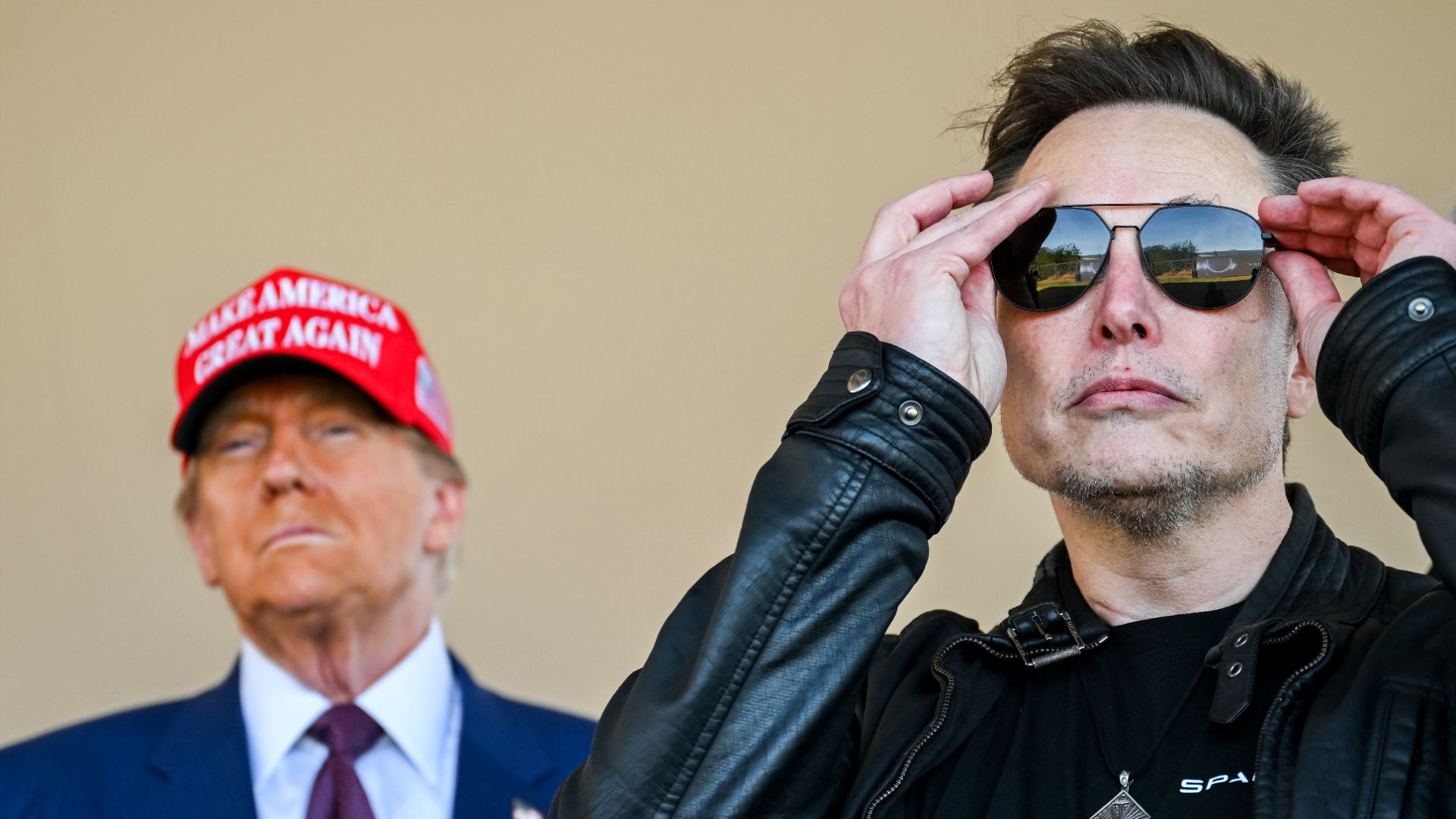
The president announced the US withdrawal from dozens of organisations, about half of which are United Nations-associated groups and many of which address climate change or related issues. Experts respond on what these moves might mean for the future of solar geoengineering, also known as sunlight reflection methods (SRM).
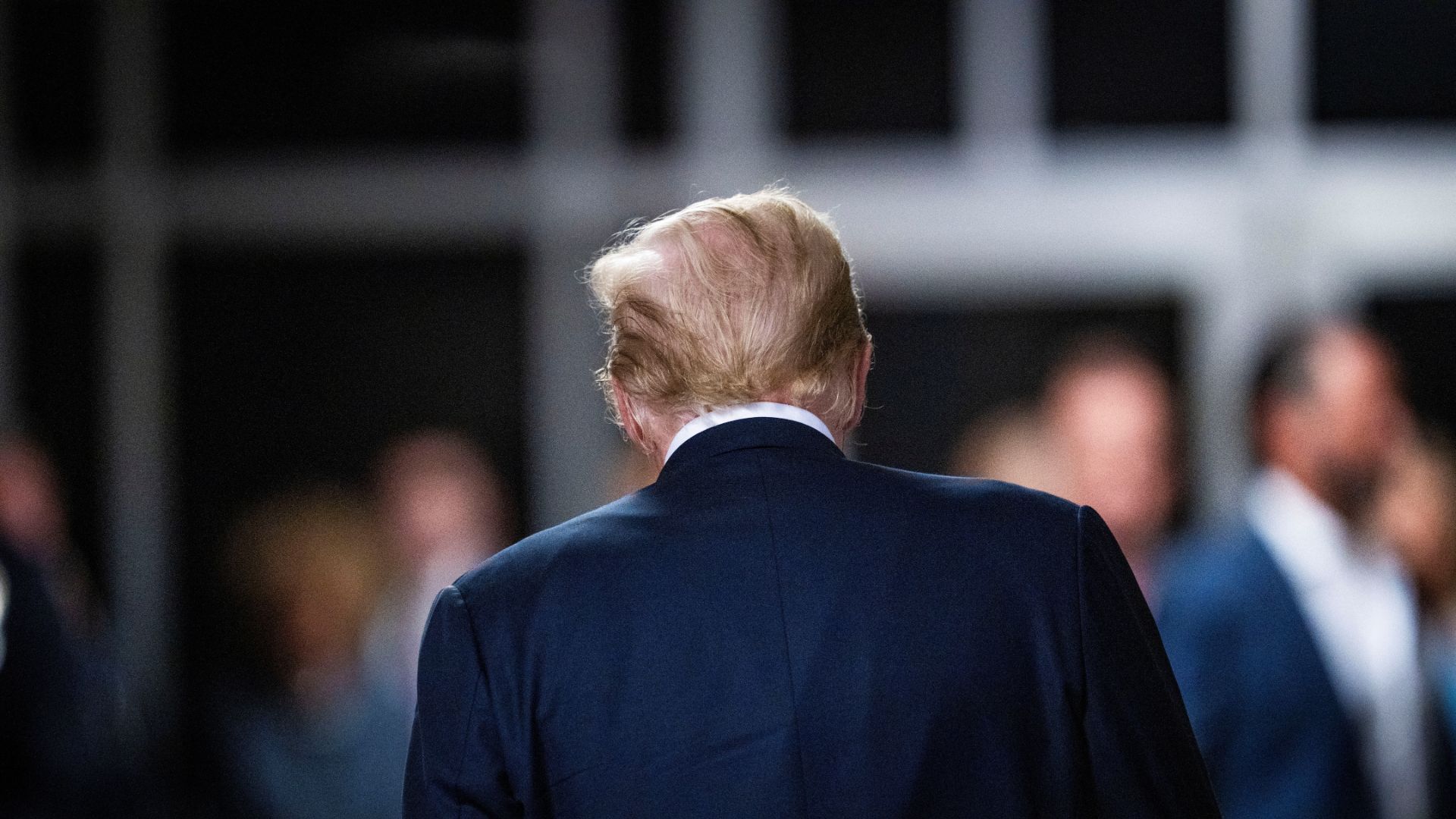
Photo: Doug Mills/Pool via Reuters

In a presidential memorandum issued on 7 January, Donald Trump announced that the US would remove itself from a host of UN and other organisations. These included the UN Framework Convention on Climate Change (UNFCCC), the 1992 treaty that serves as the basis for all international action on the issue; and the Intergovernmental Panel on Climate Change (IPCC), the UN’s global effort to assess the relevant science.
The memorandum bases the move on the idea that it is “contrary to the interests of the United States” to continue to participate in or financially support the various organisations. In an accompanying fact sheet, the White House said that continued support of the organisations would amount to “wast[ing] taxpayer dollars on ineffective or hostile agendas”.
This development, alongside the US’s recent actions in Venezuela and the administration’s and other government officials’ comments regarding Greenland, suggest a further weakening of the longstanding rules-based international order. This could have implications not only for climate change cooperation but SRM as well; we reached out to experts for their response to these moves from the Trump administration.

Jesse Reynolds
Chief of Staff
Degrees Initiative
US President Trump’s withdrawal from 66 intergovernmental entities is a powerful blow against international cooperation, which would be critical for effective governance of SRM.
Although most media attention has focused on the UN Framework Convention on Climate Change, the direct effect on climate action there is modest. The UNFCCC treaty’s explicit obligations are variously vague, unspecific, and aspirational.
Instead, the real impacts of these bodies and agreements are often indirect and social. They create norms and spaces for the creation of more powerful instruments (such as the Paris Agreement) and responses to new knowledge and emerging technologies (such as SRM). These deliberations will struggle when the most important actor is not in the room.
What’s more, even solely from the view of US’s self-interest, its withdrawals create space for its rivals – most obviously China – to fill the vacuum.
Furthermore, the US’s withdrawal from various treaties will have some direct and damaging impacts. For example, the US co-hosts the Technical Support Unit for the IPCC’s Working Group III and finances most of the budget of the Inter-American Institute for Global Change Research. These means of support will presumably end, with replacements slow and perhaps difficult to secure.
I eagerly await a different sort of presidency.
Jesse Reynolds is an expert in international environmental policy and emerging technologies. He is currently Chief of Staff at the Degrees Initiative, an NGO dedicated to putting the Global South at the centre of the SRM conversation. He wrote the 2019 book The Governance of Solar Geoengineering: Managing Climate Change in the Anthropocene.

Olaf Corry
Professor of Global Security Challenges
University of Leeds
US willingness to submit to global climate governance has always been patchy. Now Trump is withdrawing completely from a raft of international organisations deemed “contrary to the interests of the United States”. His ethno-nationalist assault on everything from migrants to the UN and climate science is dangerous – but not unique or surprising.
More surprising is how histories of geopolitics, exploitation and irrationality have played a peripheral role in explorations of SRM. Climate modelling of solar modification often presumes, for simplicity, a single global planner taking a ‘God’ position pursuing ‘a single global program that pursues the interests of the entire planet’ (p. 278). This facilitates interesting experiments but is misleading as a basis for assessing SRM’s feasibility in a world of rival powers, spiralling misinformation and a ruthless billionaire class. Technical illustrations and idealised diagrams in which, for centuries on end, SRM neatly and rationally dovetails with mitigation to minimise global risk reinforce this, belying more sober accounts in which it becomes embroiled in toxic security dynamics and shores up special interests.
SRM requires an adequate theory of the climate. But equally relies on an adequate theory of the world. Trump inadvertently points that out in the starkest terms.
Dr. Olaf Corry works on the international relations of the environment, specialising in the politics of climate change, particularly its security dimensions and the global governance of emerging technologies.

Nils Gilman
Senior Advisor
Berggruen Institute
While the Trump regime’s retreat from international institutions is largely a performance for the MAGA home crowd, U.S. exit from the UNFCCC and IPCC carries genuine weight. It mirrors the USSR’s 1950 UN walkout, which inadvertently enabled the UN-led defense of South Korea in the Korean War – a move Moscow would have vetoed. Similarly, a Washington-free climate process can finally hit its stride.
Removing the primary spoiler improves the process in four ways. First, U.S. delegations can no longer scrub “Summary for Policymakers” of fossil fuel phase-out language. Second, without U.S. leverage watering down binding targets, an emergent Green Entente can set ambitious standards previously deemed non-starters. Third, the path to a global carbon market becomes a technical challenge rather than a geopolitical standoff. Fourth, U.S. absence removes a major barrier to the multilateral governance of SRM; without Washington’s insistence on unilateral control over “planetary thermostat” research, the global community can formalize high-stakes geoengineering protocols.
In sum, a pact without the world’s second-largest emitter is physically incomplete, but a smaller, cooperative coalition is strategically superior to a global one permanently stalled by American obstruction.
Read more of Nils’ thoughts in his blog post: Addition by Subtraction: The upside of US exit from international institutions
Nils Gilman is an historian and futurist, Senior Advisor to the Berggruen Institute, and the co-author, with Jonathan S. Blake, of Children of a Modest Star: Planetary Thinking for an Age of Crises (Stanford, 2024).

Michael Thompson
Managing Director
The Alliance for Just Deliberation on Solar Geoengineering
As an American, I am saddened and embarrassed.
Aside from that, working on SRM governance has long involved explaining why this topic warrants scarce attention, albeit minimal, amid other priorities. But we have to be real. SRM is not in the top ten list of concerns with regard to the week-long decade we just lived through. Especially for an outward-facing reaction, it would be a mistake to center SRM or to ask “what does this mean for SRM?”
The core issue is the devolution of multilateral thinking and norms – and the weakening of the institutions that enable shared evidence, coordination, and accountability. Yes, we (in the small community of people thinking about this issue) can all name the SRM-adjacent concerns – unilateralism, fragmentation, conflict – but those are symptoms of a wider collapse in cooperative capacity, not SRM-specific dynamics.
In this moment, I think we’d do better to add voice to the concern about the loss of science cooperation and capacity.
Michael Thompson is Managing Director of the Alliance for Just Deliberation on Solar Geoengineering (DSG). Formerly he has worked with the U.S. Department of Energy and the Carnegie Climate Governance Initiative.

Janos Pasztor
Former Executive Director
Carnegie Climate Governance Initiative
The United States’ withdrawal from both the IPCC and the UNFCCC represents a major rupture in international climate governance. While not unexpected given prior signals, it effectively amounts to a rejection of climate change as a shared international scientific and policy challenge, shifting responsibility onto the rest of the world.
Combined with domestic policies that favor fossil fuels and constrain renewables, this move makes higher US emissions in coming years likely, increasing global emissions and the risk of crossing irreversible climate tipping points. The decision also risks weakening global ambition more broadly, as countries already hesitant about climate action may further reduce their commitments. This also creates a fundamental fairness problem, forcing other countries to do more and pay more to sustain existing climate goals and institutions, even as US support for key renewable-energy organizations is withdrawn.
As mitigation slows and impacts intensify, adaptation limits become clearer, increasing pressure to consider controversial global cooling options such as stratospheric aerosol injection, including the risk of unilateral action. In response, the rest of the world – governments and non-state actors alike – must strengthen cooperation and continue pursuing shared sustainable development objectives despite US withdrawal.
Janos Pasztor is recently retired after four decades of work in the areas of energy, environment, climate change, and sustainable development. He was executive director of the Carnegie Climate Governance Initiative, an organization that sought to catalyse the creation of effective governance for SRM by engaging with international policymakers.
The views expressed by Perspective writers and News Reaction contributors are their own and are not necessarily endorsed by SRM360. We aim to present ideas from diverse viewpoints in these pieces to further support informed discussion of SRM (solar geoengineering).