Perspective
When SRM Meets MAGA – Conspiracies, Politics, and Potential Profits
In this Perspective, Josh Horton provides a snapshot of the current politics of sunlight reflection methods (SRM) among US conservatives. He finds competing impulses, with anti-geoengineering activism rooted in the chemtrails conspiracy theory on one side, and an initial foray into SRM “to prevent global warming” by Elon Musk on the other – all in the context of a Republican Party remade by Donald Trump.
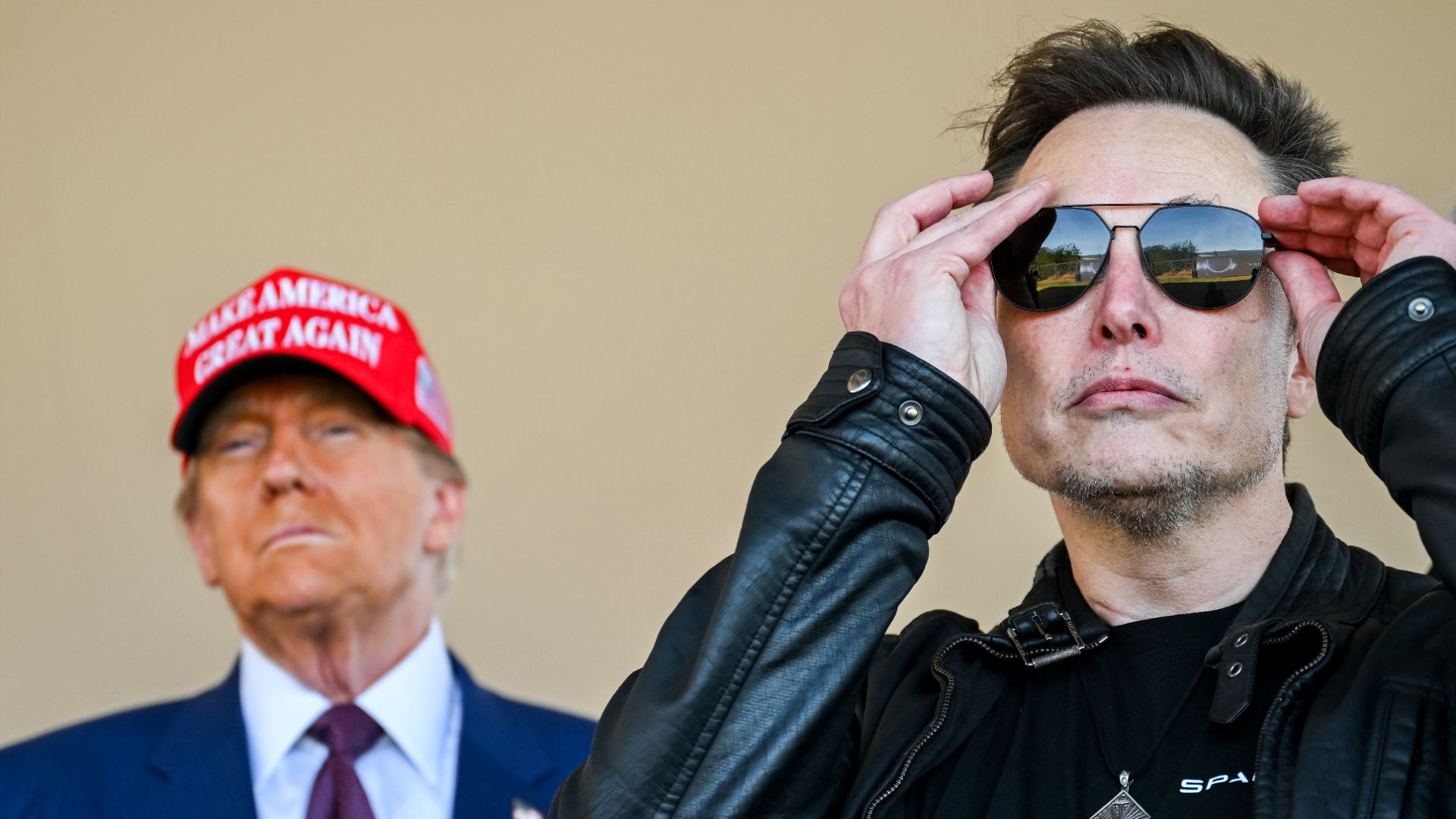
US President Donald Trump and billionaire businessman Elon Musk (Photo: Brandon Bell)

SRM is only starting to enter the political debate in the US. Its high-water mark so far may have been a primarily state-level campaign to ban SRM. This activism appears curious, however, when considered from the broader perspective of conservative politics and previously received wisdom about what political conservatives would likely do after encountering ideas about these technologies.
Conservatives, climate, and chemtrails
At a fundamental level, US conservatives tend to be skeptical about climate change. From this perspective, SRM – as a possible response to climate change – appears either unnecessary or misguided. For this reason, SRM was essentially ignored by the Republican Party and other elements of the conservative establishment throughout the 2010s.
Some commentators1 worried that characterizations of SRM as cheap, quick, and easy might lead some conservatives to back the technology as a substitute for onerous climate regulations or to facilitate continued fossil fuel production, but meaningful support along these lines never materialized.
In the background, however, belief in the chemtrails conspiracy theory was spreading. This theory holds that governments or other elite actors are releasing chemicals into the air, masked as aircraft contrails, for malign purposes such as mind control, mass sterilization, weather manipulation, or something else. Over time, believers have increasingly equated chemtrails with weather modification and, more recently, with SRM.
Initially, belief in chemtrails, including their supposed connection to SRM, was not associated with party affiliation or political leaning. But this began to change when Donald Trump, already an active promoter of falsehoods like birtherism,2 openly welcomed conspiracy theory communities into his Make America Great Again (MAGA) movement.
These communities pushed a wide range of claims and varied in their connections to the establishment, but they shared a sense of grievance and a mistrust of mainstream institutions. They were also interconnected through a complex web of overlapping networks. Now admitted into the MAGA fold, conspiracy theorists – including chemtrails conspiracy theorists increasingly focused on SRM – were encouraged and emboldened to pursue their goals from inside a refashioned and friendlier Republican ecosystem.
Bans and conspiracies
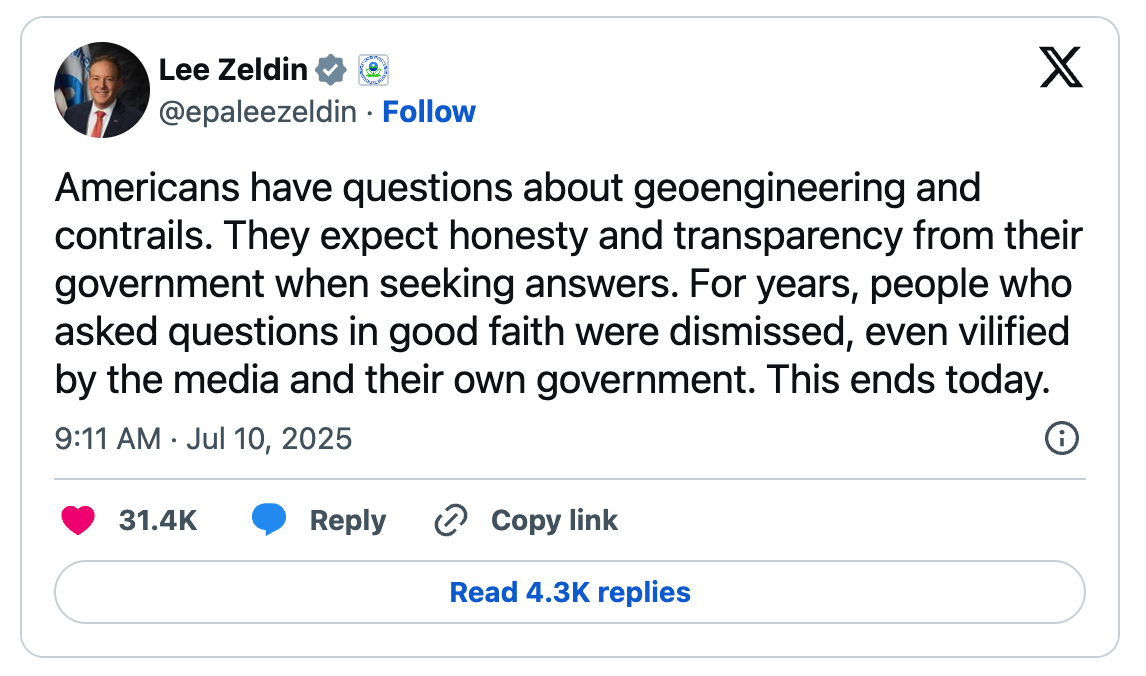
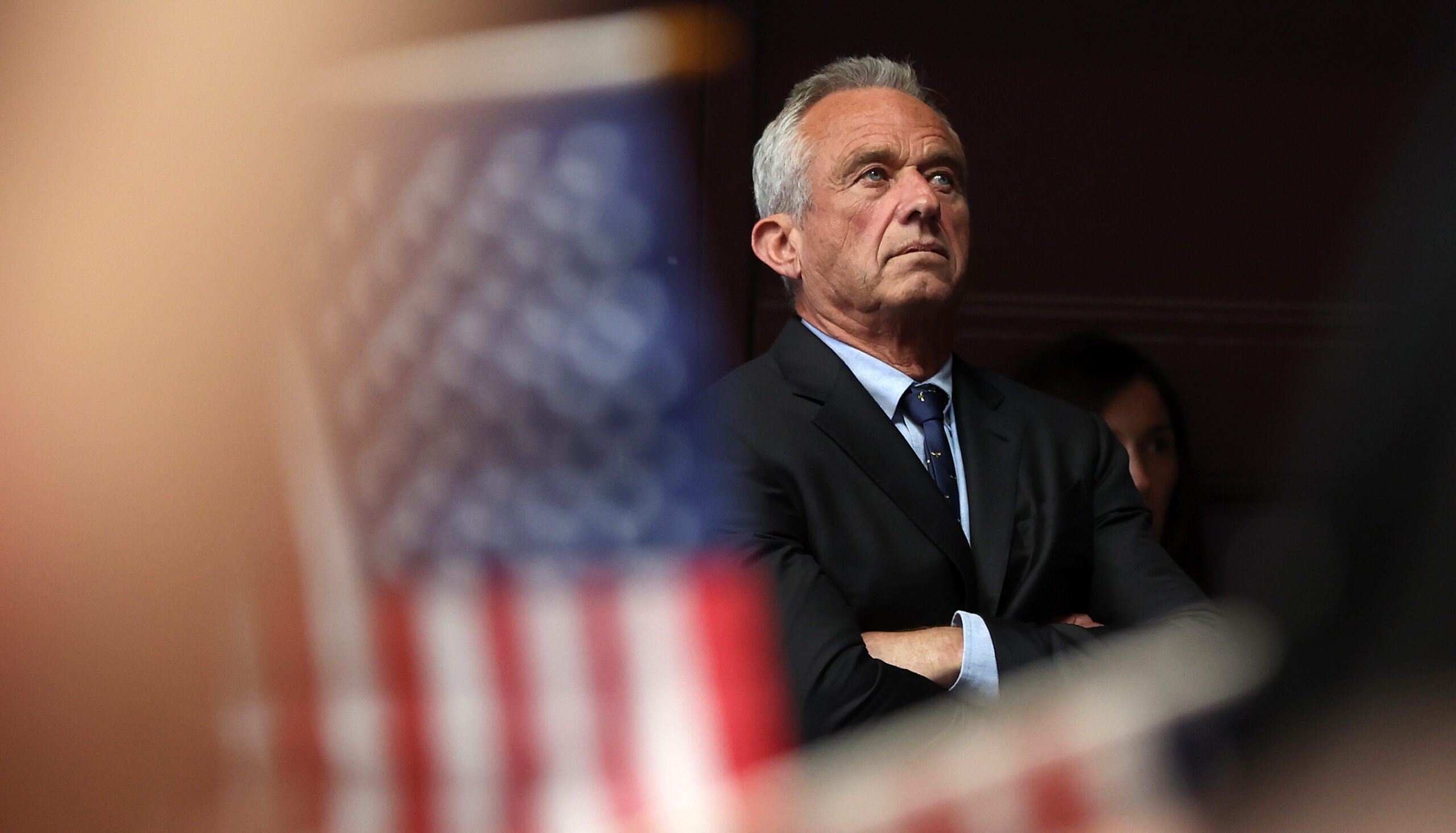
The chemtrails community – with a group called Zero Geoengineering in the lead – set to work by partnering with Republican lawmakers in statehouses across the country (34 and counting) to introduce bills that would ban SRM, cloud seeding, and similar activities they believed were linked to chemtrails.3 As these efforts accelerated, chemtrails conspiracy theorists became more likely to identify as conservatives. Prominent MAGA allies like Robert F. Kennedy Jr., Lee Zeldin, and Ron DeSantis voiced varying degrees of support.
The ban movement culminated (at least for now) with Representative Marjorie Taylor Greene (MTG) introducing the Clear Skies Act in Congress. This bill would have prohibited “weather modification,” defined to include “solar radiation modification and management,” anywhere in the US, under threat of criminal penalty including up to $100,000 per violation and/or up to five years imprisonment. Lacking sufficient support, the bill has failed to advance.
Ban bills got on the agenda in no small measure due to Trump’s embrace of conspiracy theories. Such theories have gradually coalesced around suspicions and allegations related to the crimes and death of convicted pedophile Jeffrey Epstein; as an expert on MAGA puts it, “If you look at Epstein, he’s where many of the conspiracy theories converge: Stop the Steal, The Big Lie, lawfare, deep state, replacement theory. Epstein kind of hits all of these, that there’s this elite cabal that’s orchestrating things that ultimately are against the interests of we the people.”
Chemtrails obviously strike this note as well and are strongly connected to the Deep State conspiracies crystallizing around Epstein, which now threaten Trump. Trump’s efforts to downplay, dismiss, or redirect claims of wrongdoing linked to the Epstein files – including his effort to drive MTG out of MAGA – have in fact fueled the furor.
SRM, of course, is not connected to the Epstein saga. But Trump’s turn against actors from the broader conspiracy theory community – including but not limited to MTG – calls into question whether ban activists can sustain their recent momentum, particularly at the national level. For the moment, the answer is likely no, since Trump and his advisors now view this broader movement as problematic at best and will probably be less inclined to empower activists associated with fringe theories like chemtrails.
Enter Elon
In the midst of these developments, Elon Musk recently surprised many with a seemingly impromptu tweet:
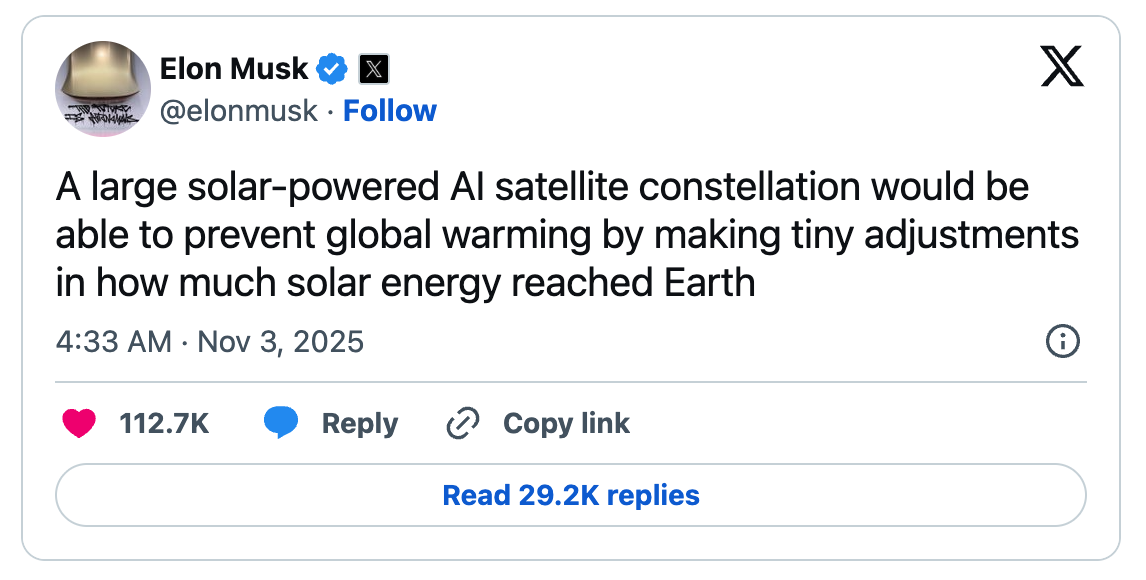
The message was arguably less interesting than the messenger, a former and potentially future MAGA all-star with close links to Trump who runs AI, space launch, and satellite companies, attaches some importance to climate change, is known to exhibit messianic tendencies, and happens to be the richest person in the world. Musk appeared to be suggesting that SRM (in this case space-based) might be a quick fix for climate change; unstated but impossible to ignore was the possibility that his companies could provide that service.
With his tweet, Musk resurrected earlier fears that conservatives might seize on SRM as an alternative to decarbonization, with the added (though unsurprising) twist that doing so might also involve making money. Currently, there is no indication that Musk intends to pursue such a venture, and he is only now beginning to repair his own rupture with Trump, but his ubiquitous media presence and (not unrelated) ownership of X increases the odds that his intervention might gain traction.
Musk’s intervention might also boost support among the “tech right” for commercialization as a pathway to SRM deployment. The prospect of private-sector involvement in SRM has drawn increased attention recently following news that Stardust Solutions, an Israeli–US startup, raised $60 million in venture capital to build out its work on stratospheric aerosol injection. Stardust does not appear outwardly partisan, but if support for private-sector SRM secured a foothold within the conservative establishment, Stardust and other startups might begin to gravitate toward that end of the political spectrum.
The future
The politics of SRM within the Trump coalition is not settled. Right now, two forces are pushing in opposite directions. The grassroots campaign to ban SRM led by chemtrails conspiracy theorists is more energized yet risks ending up a casualty of conflict internal to MAGA. Elon Musk’s flirtation with SRM appears less resolved but may turn out to be more influential in shaping right-wing opinion on this issue. Depending on how these competing impulses play out, the role and status of commercial ventures in SRM research and governance may also be impacted.
The possibility of future engagement by the fossil fuel industry in SRM remains a wild card. So far, oil and gas companies have stayed on the sidelines. If they were to enter this nascent political arena, however, support for something like Musk’s vision of SRM as a techno-fix for climate change would be more likely to emerge as the default position among US conservatives.
The views expressed by Perspective writers and News Reaction contributors are their own and are not necessarily endorsed by SRM360. We aim to present ideas from diverse viewpoints in these pieces to further support informed discussion of SRM (solar geoengineering).
Endnotes
- For example, Clive Hamilton and Naomi Klein.
- Birtherism refers to the false claim that former US president Barack Obama was born outside of the US and was therefore ineligible to run for president.
- State-level bans passed in Tennessee, Louisiana, and Florida.