Perspective
Climate Models Suggest Amazon Forests Would Thrive Under SAI
In this Perspective, Isobel Parry and Peter Cox discuss results from their recent study on the effects of sunlight reflection methods (SRM) on the Amazon rainforest, and explore whether SRM could be a potential backstop for this climate-vulnerable region.
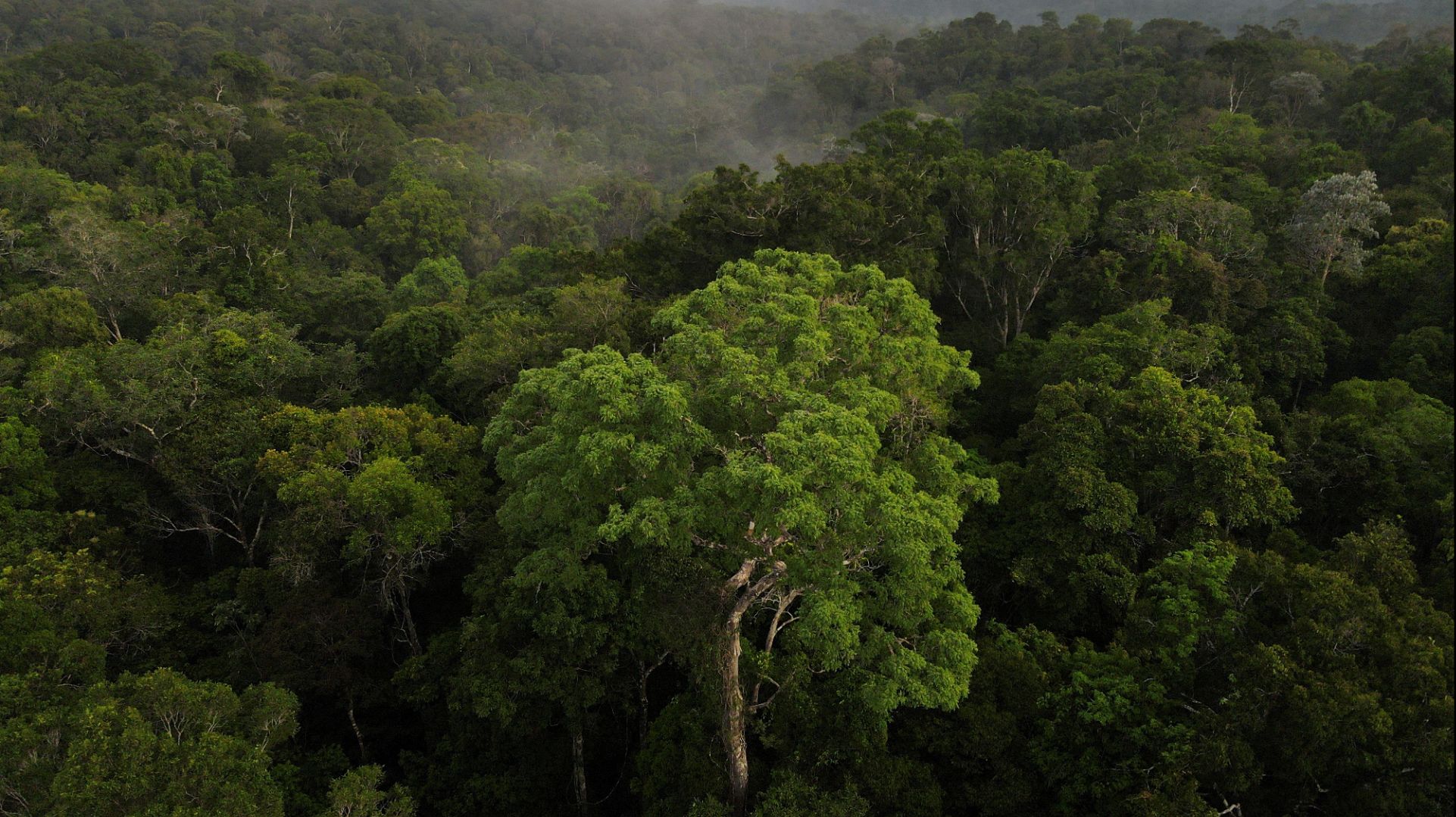
The Amazon rainforest (Photo: REUTERS)


There are increasing concerns that tipping points could be triggered by climate change. In some cases, detectable changes in a system’s resilience may provide a warning of a tipping point’s approach. But what would we do if we were to foresee an oncoming climate tipping point? One of the few possibilities is to deploy fast-acting SRM to try to avoid it.
Amazon rainforest dieback – a tipping point that would shift the rainforest towards a dry savannah-like state – is of particular concern under climate change. Warming and drying could lead to reductions in forest growth and increased tree deaths from drought and fire, which could drive forest dieback.
SRM approaches, which would reduce the amount of sunlight reaching the land surface, could help by reducing temperature, but there are concerns they could also reduce both photosynthesis and rainfall. The net effect of SRM on the Amazon forest has therefore been unclear.
Investigating SAI trade-offs in the Amazon
In order to address this issue, we looked at the impact of the most widely studied form of SRM, stratospheric aerosol injection (SAI), on global vegetation and particularly on the Amazon rainforest. We analysed outputs from state-of-the-art climate models to simulate and compare three scenarios: climate change under mid-range emissions, under high emissions, and under high emissions with cooling from SAI to bring temperatures to a similar level as the mid-range emissions scenario.
Our new research – published in the journal Earth System Dynamics – specifically looks at the impact of SAI on the biosphere through model outputs for net primary productivity (NPP), which is related to plant growth rate; land carbon storage in plants and soil; and changes in rainfall, which determine where rainforests are no longer viable.1
In general, climate models project an increase in global NPP and land carbon storage under CO2-induced climate change.2 This is primarily due to CO2 increasing the efficiency of plant photosynthesis, which is partially counteracted by reductions in NPP and carbon storage due to climate change. However, in Amazonia, the negative impacts of climate change are often much stronger and can lead to localised forest dieback.3
Under SAI deployment, our results show a more prominent increase in global plant productivity. Compared to the medium emissions scenario, the SAI simulations project higher global NPP values (+15.6%) and higher land carbon storage (+5.9%). This is primarily because of enhanced photosynthesis due to higher atmospheric CO2 concentrations.
However, the SAI scenario also shows an increase in global plant productivity compared to the high emissions scenario without SAI, due to temperature reductions which bring plants closer to their optimal conditions for photosynthesis and reduce plant and soil respiration rates.
The effects of SAI are especially clear in Amazonia, where land carbon storage increased across the models by 10.8% on average compared to the high emissions scenario without SAI. The SAI scenario also results in 8.6% more land carbon storage in Amazonia compared to the mid-range emissions scenario, which has a similar level of global warming. Contrary to prior concerns, our study therefore finds that the Amazon rainforest is more productive in the scenario with SAI geoengineering.
Regional changes in rainfall are a known problem with SAI and, in this study, the models do indeed project regional reductions in rainfall. Interestingly, these reductions in rainfall often appear to have negligible effect on plant productivity, especially when compared with the medium emissions scenario. We suspect that this is due to increased plant water use efficiency under higher CO2, which reduces the impact of rainfall changes.
An emergency backstop?
Climate models are imperfect representations of the real world. They contain uncertain representations of key processes, such as the direct effects of CO2 on plant photosynthesis and water use efficiency. They also fail to represent some important processes at all. For example, most models do not yet represent the impact of diffuse sunlight on plant photosynthesis, which would likely make the impact of SAI on the land biosphere look even more positive.
Overall, our study suggests that SAI could in principle function as an emergency backstop to help protect the Amazon forest while we continue to get global emissions under control. However, the related governance and equity issues are very challenging. Indigenous peoples rely on the Amazon, and regional changes in climate can therefore significantly affect their well-being, even if the forest is sustained. Also, SAI to protect the Amazon rainforest may have unintended impacts on other regions.
As a result of the modelled positive impacts of SAI on the Amazon rainforest and these equity and governance issues, we believe that it is vital to openly discuss potential SRM geoengineering approaches before they are implemented at scale. Our study was undertaken with this principle in mind.
The views expressed by Perspective writers and News Reaction contributors are their own and are not necessarily endorsed by SRM360. We aim to present ideas from diverse viewpoints in these pieces to further support informed discussion of SRM (solar geoengineering).
Endnotes
- Parry IM, Ritchie PD, Boucher O, et al. (2026). Stratospheric aerosol injection geoengineering has the potential to increase land carbon storage and to protect the Amazon rainforest. Earth System Dynamics. 17(2):387-414. https://doi.org/10.5194/esd-17-387-2026
- Intergovernmental Panel on Climate Change (IPCC). (2023). Global Carbon and Other Biogeochemical Cycles and Feedbacks. In: Climate Change 2021 – The Physical Science Basis: Working Group I Contribution to the Sixth Assessment Report of the Intergovernmental Panel on Climate Change. Cambridge: Cambridge University Press. p. 673–816. https://doi.org/10.1017/9781009157896.007
- Parry IM, Ritchie PD, Cox PM. (2022). Evidence of localised Amazon rainforest dieback in CMIP6 models. Earth System Dynamics. 13(4):1667-75. https://doi.org/10.5194/esd-13-1667-2022