Perspective
Five Insights We’ve Gained From Communicating on SRM
SRM360’s Co-Founder Mark Turner reflects on the organisation’s first year, sharing key insights gained from tracking and engaging in the discussion around sunlight reflection methods (SRM).
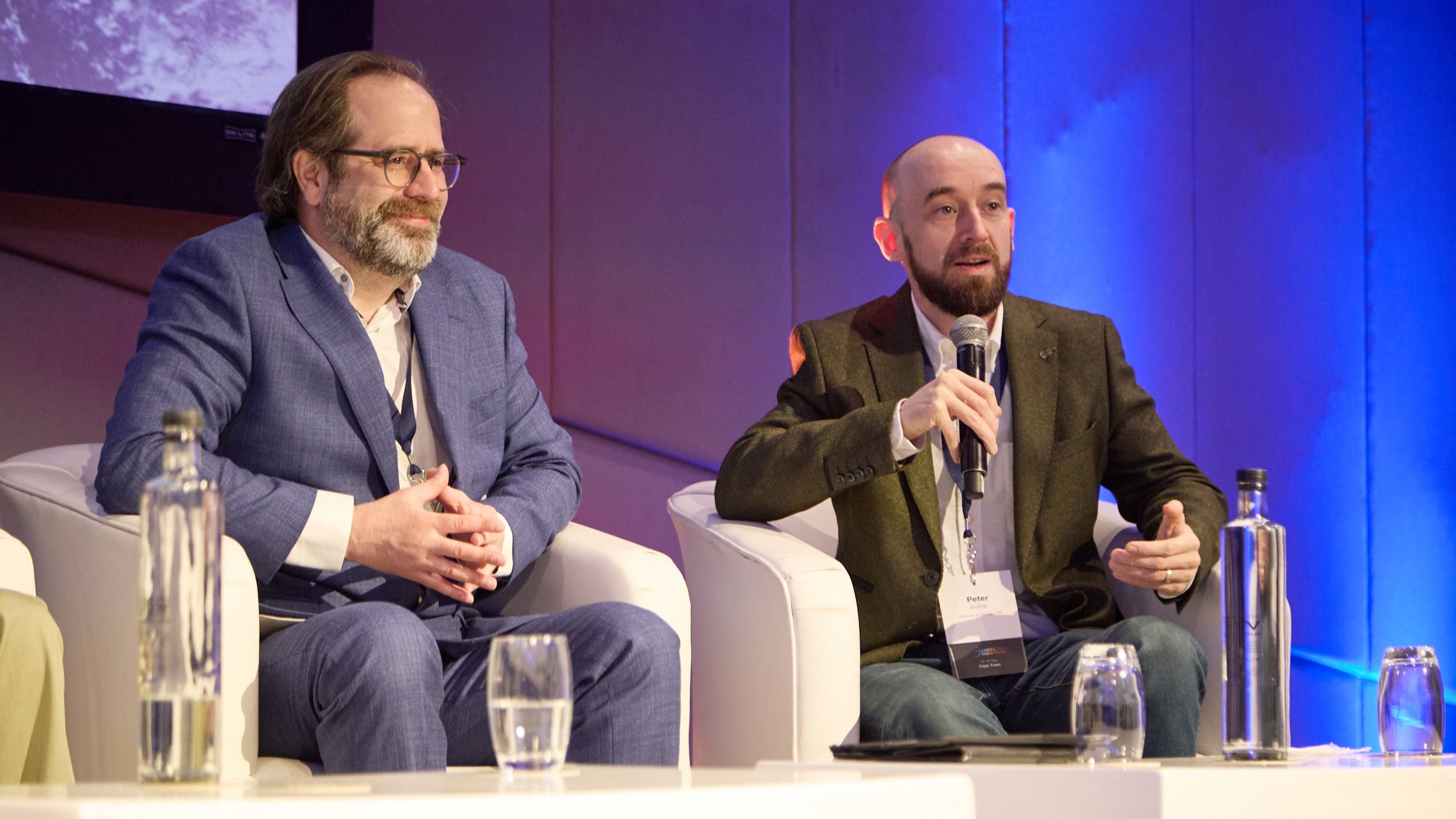
Mark Turner (left) and Pete Irvine (right) introduce the newly-launched SRM360 at the Degrees Global Forum in Cape Town in May 2025 (Photo: The Degrees Initiative/Saskia Wegner/SRM360.org)

SRM360 first went live in late November 2024, and we have been on a learning journey ever since. From the outset, we have been clear with ourselves: our work is only useful if it resonates with audiences, and is being actively used to inform the debate on solar geoengineering (or SRM… see below for terminology).
So we have put a premium on listening – both through direct conversations and feedback, and by analysing the data. What do people want to know? What do they need to communicate on this topic more effectively? What are they using in practice?
One year on, we thought we would share five insights and some additional data that have shaped our work – in the hope that they may be useful for others navigating this challenging field.
1 Explaining the climate context clearly is critical to explaining SRM
It may seem obvious in hindsight, but we have learned how important it is to clearly lay out the context in which SRM – an intuitively alarming idea – is being considered. Specifically: the dramatic risks posed by climate change to the many things people care about, and the degree to which current strategies are able (or not) to reduce those risks.
In his seminal book on geoengineering, The Planet Remade, Oliver Morton asks two key questions (originally posed by Robert Socolow), to help people gauge where they stand:
- Do you believe the risks of climate change merit serious action aimed at lessening them?
- Do you think that reducing an industrial economy’s carbon dioxide emissions to near zero is very hard?
If your answers to both are yes, then that would give a reason to consider SRM. Yet this context is not always as apparent as it may seem to those of us working in this space. First, people may not fully appreciate the range and scale of impacts coming even in their lifetimes: the massive risks to the communities and ecosystems they care about.
Second, people are rightly wedded to emissions cuts as a priority, but this can lead to a conviction that, with a more concerted push, current approaches will be enough to stave off devastating impacts. Recent trends suggest otherwise. The 1.5°C warming goal is now certain to be breached, and the world is well off track for the 2°C goal.
We realised we needed to address these foundations more explicitly – helping audiences understand the worsening climate impacts and the limits of current mitigation efforts – to provide essential context for considering the potential role of SRM.
We have addressed this need through our Guides series, which aims to provide this context, and in our live discussions and primers, which include this broader climate context before addressing whether SRM could help or make things worse.
2 People care about specific impacts in specific places
Discussions about SRM are often framed at a global level – how would this affect the big climate picture? But decision makers are often grounded in more granular and local concerns: how might SRM specifically affect the things they care about – agriculture, health, ecosystems, etc. – and how would that compare to the risks from global warming?
Scientists around the world are increasingly exploring these specifics. The challenge is to stitch those results together into a coherent picture that makes sense to decision makers and the wider public.
In our primers, live discussions, and other materials, we attempt to highlight the issues people most care about, how climate change will affect those issues, and what the science says about how SRM could affect those risks.
We are also planning a long-term project looking to show how a specific scenario of stratospheric aerosol injection deployment could affect a wide range of hazards and impacts. The goal: help decision makers see the trade-offs more clearly. More on this soon!
3 The landscape matters: people want to know who is engaged in SRM, where, and how
Solar geoengineering would be much more than a physical process. If ever deployed, decisions would be made for particular reasons, against a complicated political backdrop – with big implications for the potential outcomes.
SRM360’s initial content focused on the physical mechanics of SRM, but regular feedback and questions showed a widespread desire to learn more about the landscape and questions about governance. So we introduced a set of landscape tracking tools – and these have become some of our most popular products.
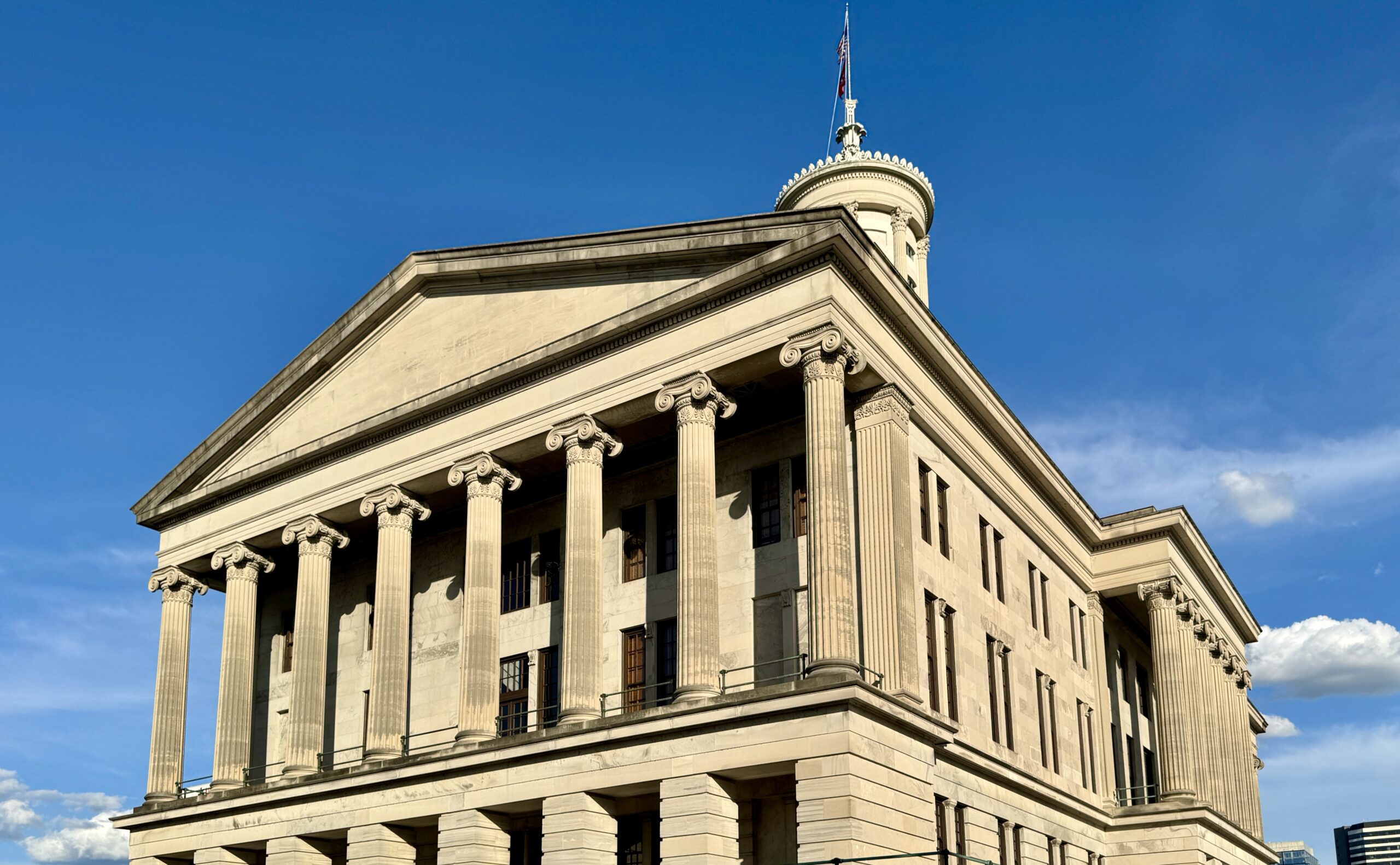
Our Funding Tracker, which we released at our formal launch in May, gained significant media attention and is regularly cited as one of our most useful contributions. Our work on US state bans sparked conversations around the world, and our news reaction in April – A Growing Number of US States Consider Bills to Ban Geoengineering – is still our most read piece of content.
Overall, our most popular content (see below) suggests that questions about who is involved and how decisions get made are just as if not more important to audiences than the physical processes at work.
By tracking the landscape with greater transparency, we hope to provide audiences with a nuanced picture of this fast-evolving field so that they can more effectively engage with it.
Top 10 SRM360 content by views (Google Analytics)
- A Growing Number of US States Consider Bills to Ban Geoengineering
- Experiment Tracker: SATAN Experiment
- Open Letter: Scientists Call for More Climate Intervention Research
- SRM Funding Tracker
- SRM Funding Overview
- SRM Bans and Moratoria: Calls to Restrict Solar Geoengineering Activities
- UK’s ARIA Announces £45m Funding for 21 “Climate Cooling” Research Projects
- Why Are People Considering SRM?
- Outdoor Experiment Tracker
- Stratospheric Aerosol Injection
4 Messengers can matter more than the message
What is said can often take second place to who said it. Audiences have emphasised to us how important it is for people to hear messages from people they know and trust. That is why we put such a premium on working with others who have built up their own networks and relationships.
One example: our Brazil primer, developed with the Institute for Climate and Society, reached audiences we could not have reached alone. It’s a model we plan to replicate – grounding each regional primer in local expertise and networks.
We also make a point of featuring people with a broad range of views and backgrounds in our Perspectives (please contact us if you want to contribute).
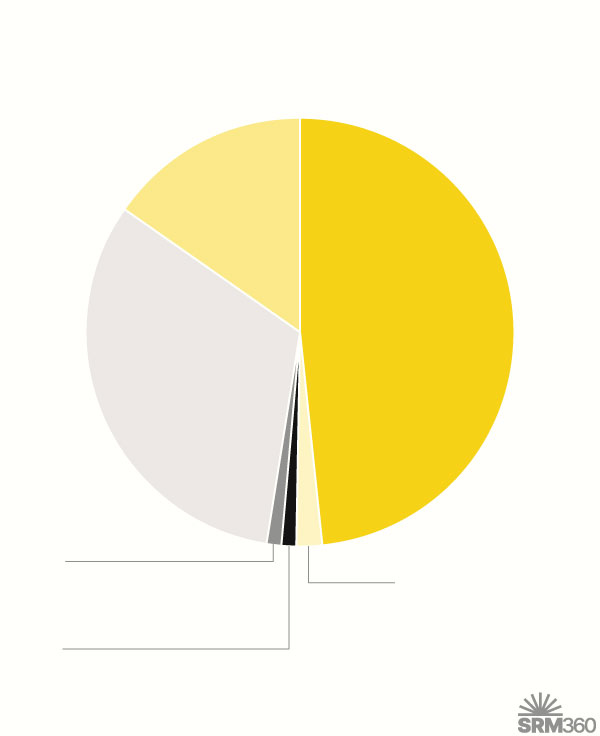
Social platforms referring traffic to SRM360.org
X/Twitter
15%
48%
32%
YouTube
1%
Bluesky
2%
1%
Source: Google Analytics
Over the coming months, we plan to do a lot more on social media featuring the people contributing to this field – the scientists and thinkers often taking great reputational risks to work on this controversial topic. Who they are and why they do this work can be as important to audiences as their messages and the conclusions they come to.
5 As interest is rising, terminology is evolving
Overall, our monitoring suggests that media interest in SRM is rising. According to an analysis using Meltwater (a media monitoring tool), media and blog mentions of the broad range of SRM-related terms that we are tracking increased by more than 20% over the course of a year (see below).
The conversation on social media has gained momentum, with social media mentions growing nearly fourfold compared to the previous twelve months.

SRM-related mentions
News sources and blogs
2024*
2025**
12,538
15,278
UP 22%
Social media mentions
55,714
211,029
UP 279%
*December 2023—November 2024;
**December 2024—November 2025
Source: Meltwater

SRM-related Mentions
2024*
2025**
12,538
15,278
UP 22%
News sources and blogs
Social media mentions
55,714
211,029
UP 279%
*December 2023—November 2024;
**December 2024—November 2025
Source: Meltwater
At the same time, we see new terminology entering the conversation – and this has implications for reaching new audiences.
When SRM360 first started work, we favoured the term “sunlight reflection methods” due to its intuitive descriptive power, and because it shared the acronym “SRM” with other terms such as “solar radiation management” and “solar radiation modification” (used by the IPCC).
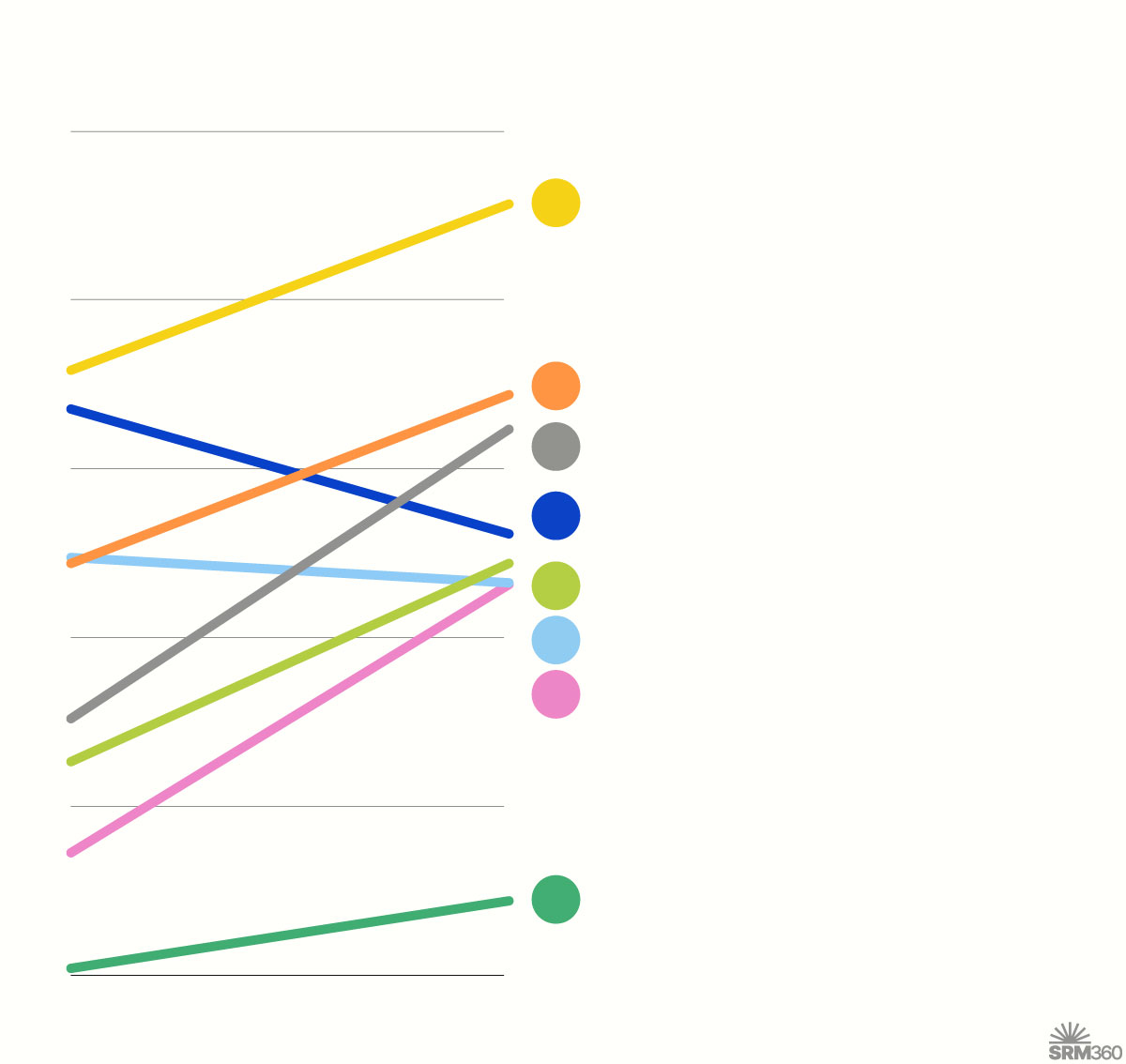
But we have learned that despite gaining some traction – moving to 88 media mentions between December 2024 to November 2025 compared to only 8 times in the previous twelve months – “sunlight reflection methods” is not catching on to the same extent as other terms.

SRM Terms mentioned in news sources and blogs
2024*
2025**
Solar geoengineering (Up 27%)
Solar radiation management (Up 41%)
Stratospheric aerosol injection (Up 113%)
Marine cloud brightening (Down 22%)
Climate interventions (Up 93%)
Solar radiation modification (Down 6%)
Climate cooling (Up 219%)
Sunlight reflection methods (Up 1,000%)
0
200
400
600
800
1,000
*December 2023—November 2024; **December 2024—November 2025
Source: Meltwater
SRM Terms mentioned in news sources and blogs
2024*
2025**
1,000
Solar geoengineering (Up 27%)
1
800
Solar radiation management (Up 41%)
2
Stratospheric aerosol injection (Up 113%)
3
600
Marine cloud brightening (Down 22%)
4
Climate interventions (Up 93%)
5
Solar radiation modification (Down 6%)
400
6
Climate cooling (Up 219%)
7
200
8
Sunlight reflection methods (Up 1,000%)
0
*December 2023—November 2024; **December 2024—November 2025
Source: Meltwater
Solar geoengineering remained the most popular term. Use of “climate cooling”, a term used by the UK research body ARIA, more than tripled. “Climate interventions”, a term used by the Brussels-based Centre for Future Generations, nearly doubled. By contrast, the term used by the IPCC – “solar radiation modification” – saw a slight decline in mentions.
These are not definitive results: they are based on an informal analysis using Meltwater, the terms differ in emphasis, and are only reflective of English language mentions. Nonetheless, they suggest that, as this topic gains increasing interest, terminology will continue to evolve and will be used differently by different groups.
Effective communications will require staying on top of these terms and helping audiences to navigate them.
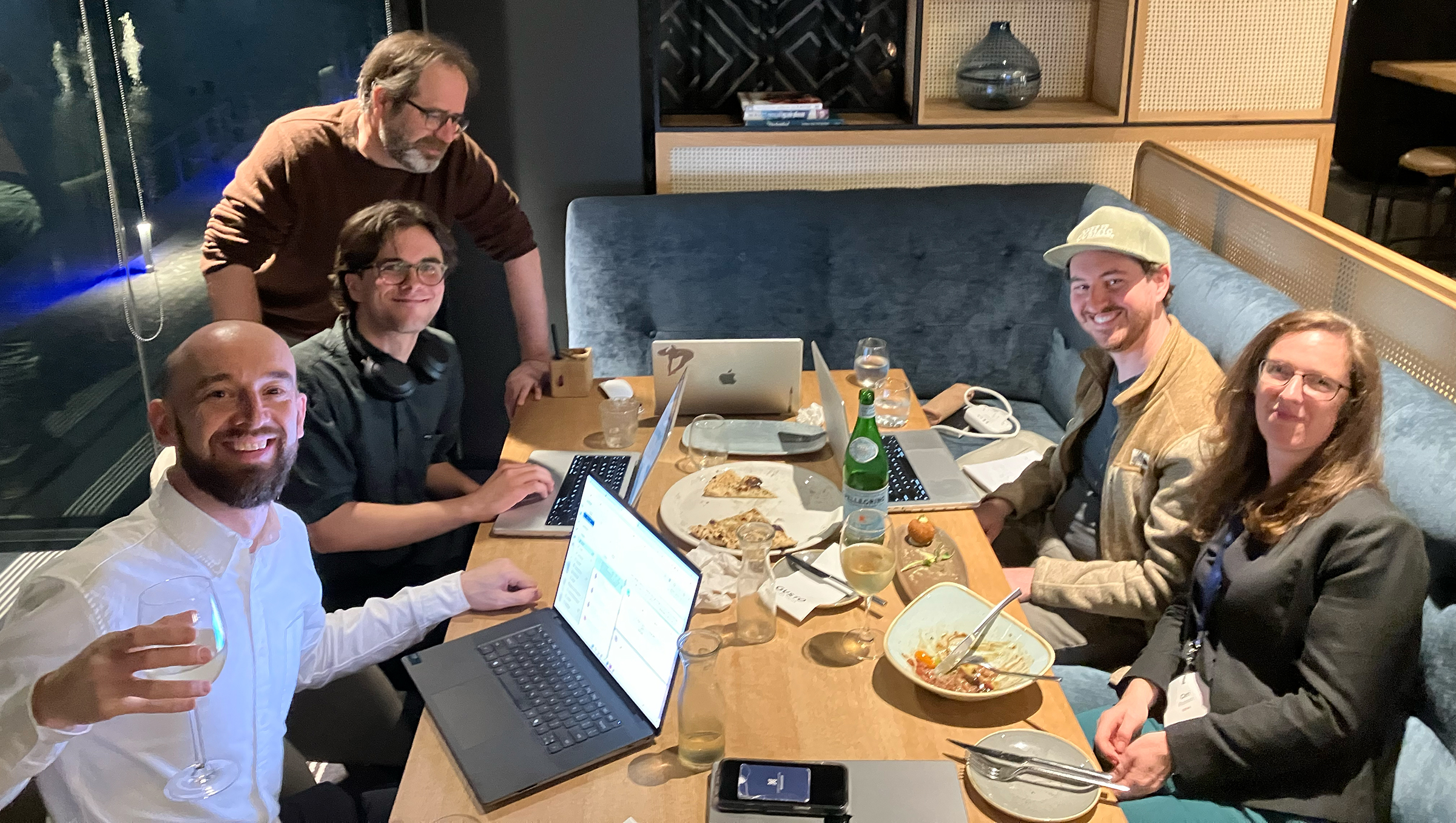
Some of the SRM360 team at work covering the Degrees Global Forum in Cape Town, May 2025
The views expressed by Perspective writers and News Reaction contributors are their own and are not necessarily endorsed by SRM360. We aim to present ideas from diverse viewpoints in these pieces to further support informed discussion of SRM (solar geoengineering).