Sunlight reflection methods (SRM) – also known as solar geoengineering or solar radiation modification – are a set of ideas to reflect a small fraction of incoming sunlight to reduce global temperatures. There are several ideas, including stratospheric aerosol injection and marine cloud brightening.
Trapping heat and reflecting light
The Earth currently reflects around 30% of the sunlight that reaches it. If just 1% more sunlight were reflected, this would offset around 1°C of global warming, which would make a massive difference. This is roughly the gap between countries’ climate goals of keeping below 2°C and what their current policies are on track for.
Sunlight reflection methods (SRM) – or solar geoengineering – describe a set of ideas that aim to slightly alter that reflectivity equation.
The Earth’s energy budget
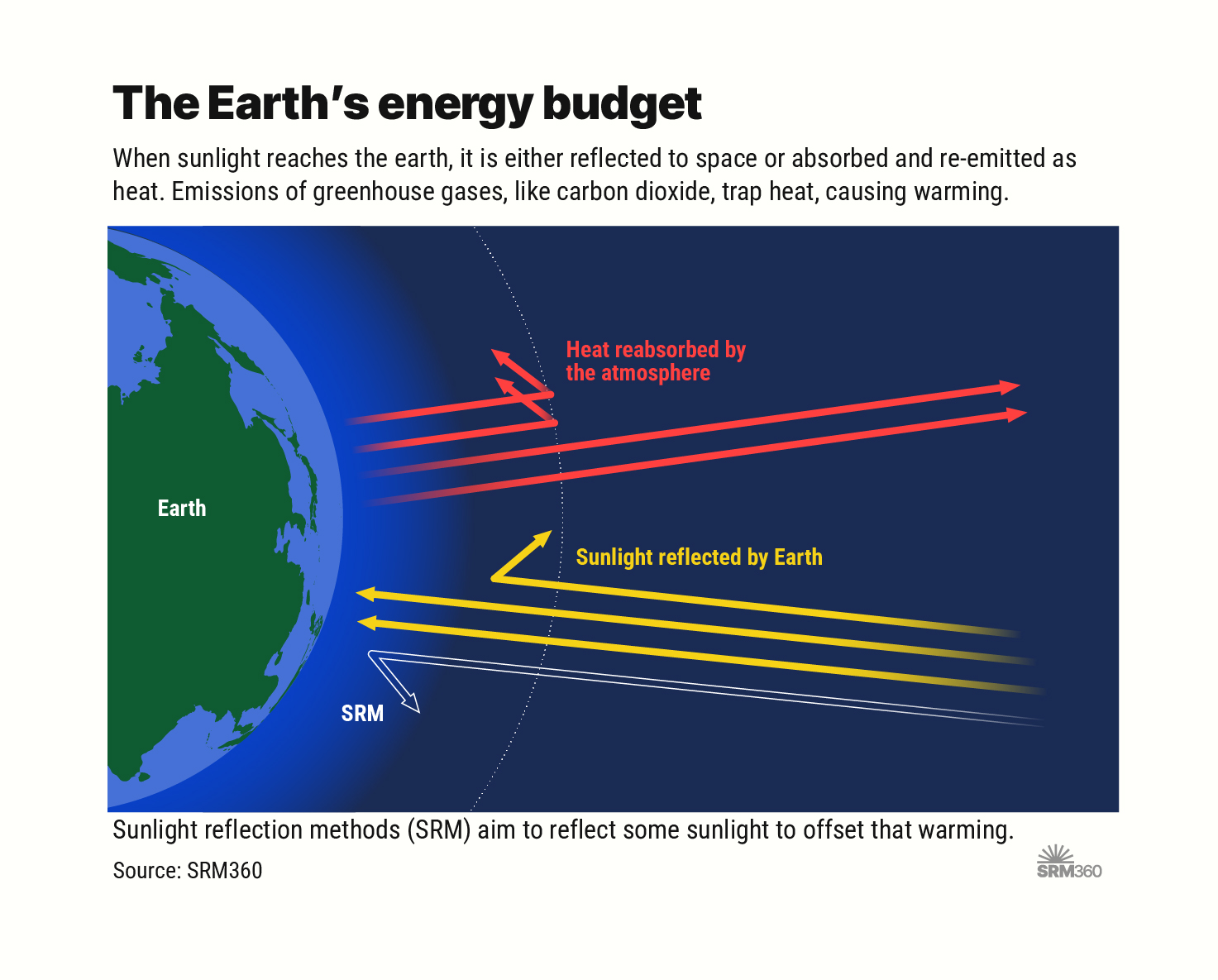
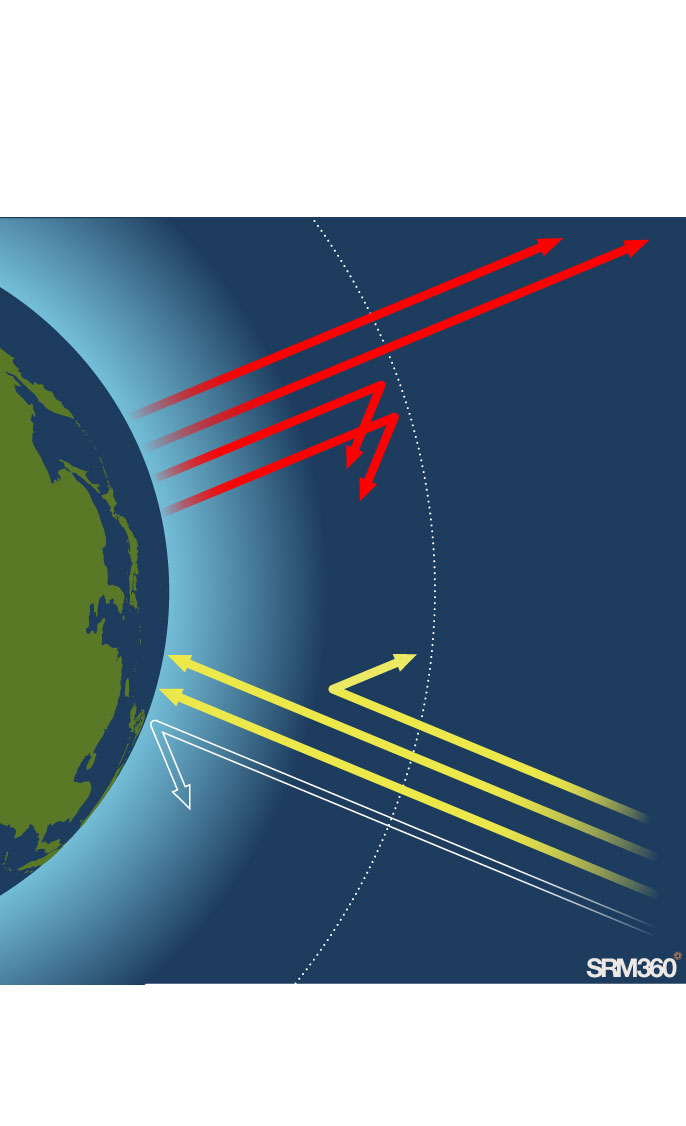
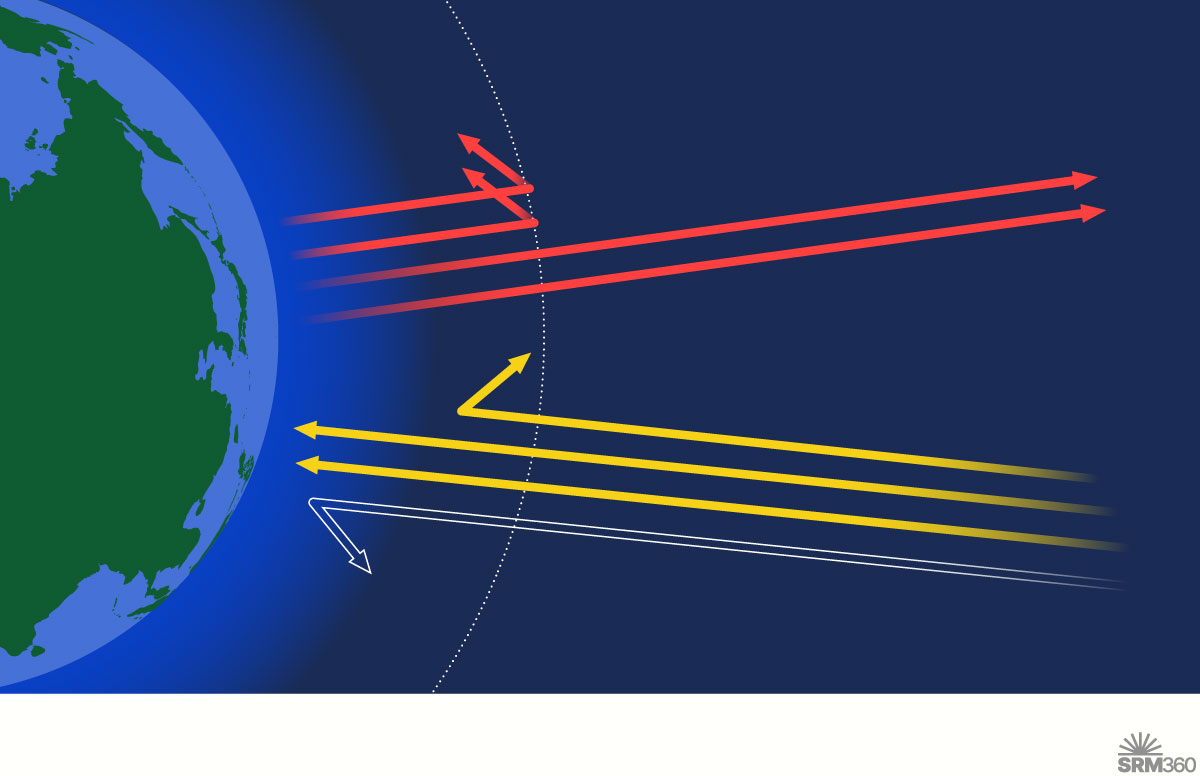
When sunlight reaches the earth, it is either reflected to space or absorbed and re-emitted as heat. Emissions of greenhouse gases, like carbon dioxide, trap heat, causing warming.
When sunlight reaches the earth, it is either reflected to space or absorbed and re-emitted as heat. Emissions of greenhouse gases, like carbon dioxide, trap heat, causing warming.
Heat reabsorbed by the atmosphere
Earth
Sunlight reflected by Earth
SRM
Sunlight reflection methods (SRM) aim to reflect some sunlight to offset that warming.
Source: SRM360
Heat reabsorbed by the atmosphere
Earth
Sunlight reflected by Earth
SRM
Sunlight reflection methods (SRM) aim to reflect some sunlight to offset that warming.
Source: SRM360
This may sound like science fiction – and some of the ideas are far-fetched – but, by leveraging the incredible cooling potential of tiny particles known as aerosols, two ideas stand out as potentially feasible and effective.
Learn more
Stratospheric aerosol injection (SAI)
Major volcanic eruptions, like Pinatubo in 1991 and Tambora in 1815, added a layer of tiny reflective sulphate particles to the stratosphere, above the tops of most clouds. These particles spread out to create a thin global layer that reflected a small fraction of incoming sunlight and cooled the earth for a few years.
Stratospheric aerosol injection (SAI) would aim to mimic this proven cooling effect by releasing tiny aerosol particles into the stratosphere. There, they would have a much longer lasting, and so much larger, cooling effect than they would in the lower atmosphere.
Stratospheric aerosol injection
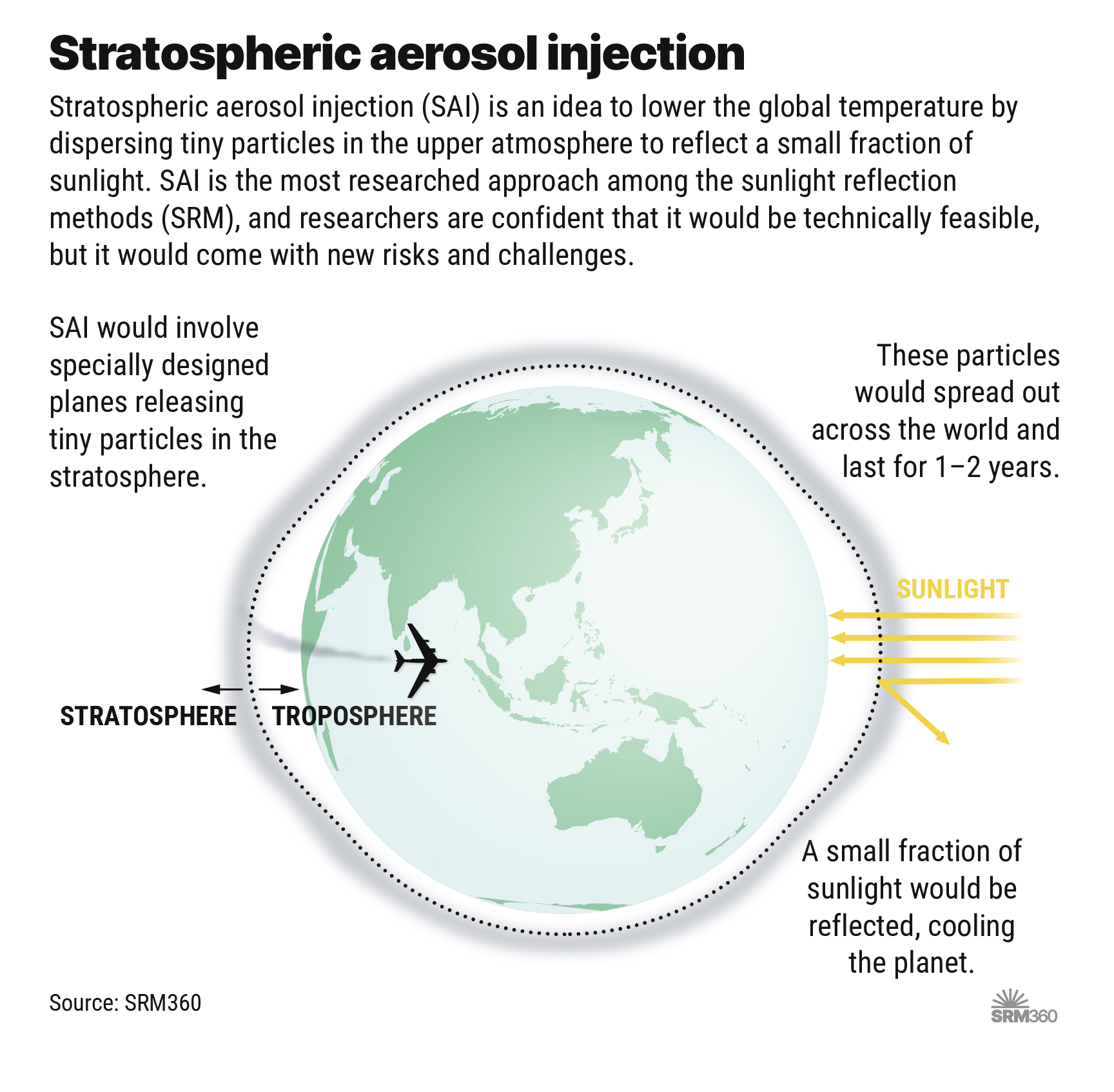
Stratospheric aerosol injection (SAI) is an idea to lower the global temperature by dispersing tiny particles in the upper atmosphere to reflect a small fraction of sunlight. SAI is the most researched approach among the sunlight reflection methods (SRM), and researchers are confident that it would be technically feasible, but it would come with new risks and challenges.
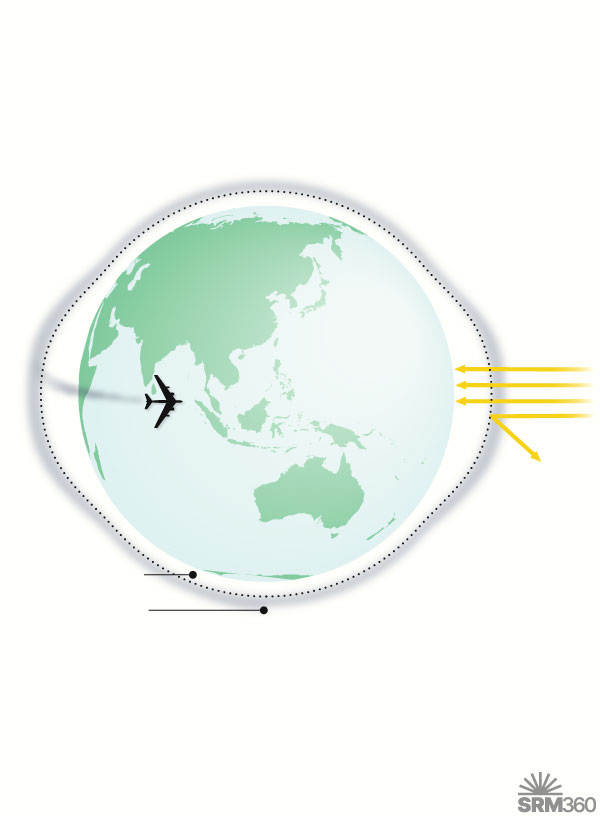
SAI would involve specially designed planes releasing tiny particles in the stratosphere. These particles would spread out across the world and last for 1–2 years.
Sunlight
Troposphere
Stratosphere
A small fraction of sunlight would be reflected,cooling the planet.
Source: SRM360
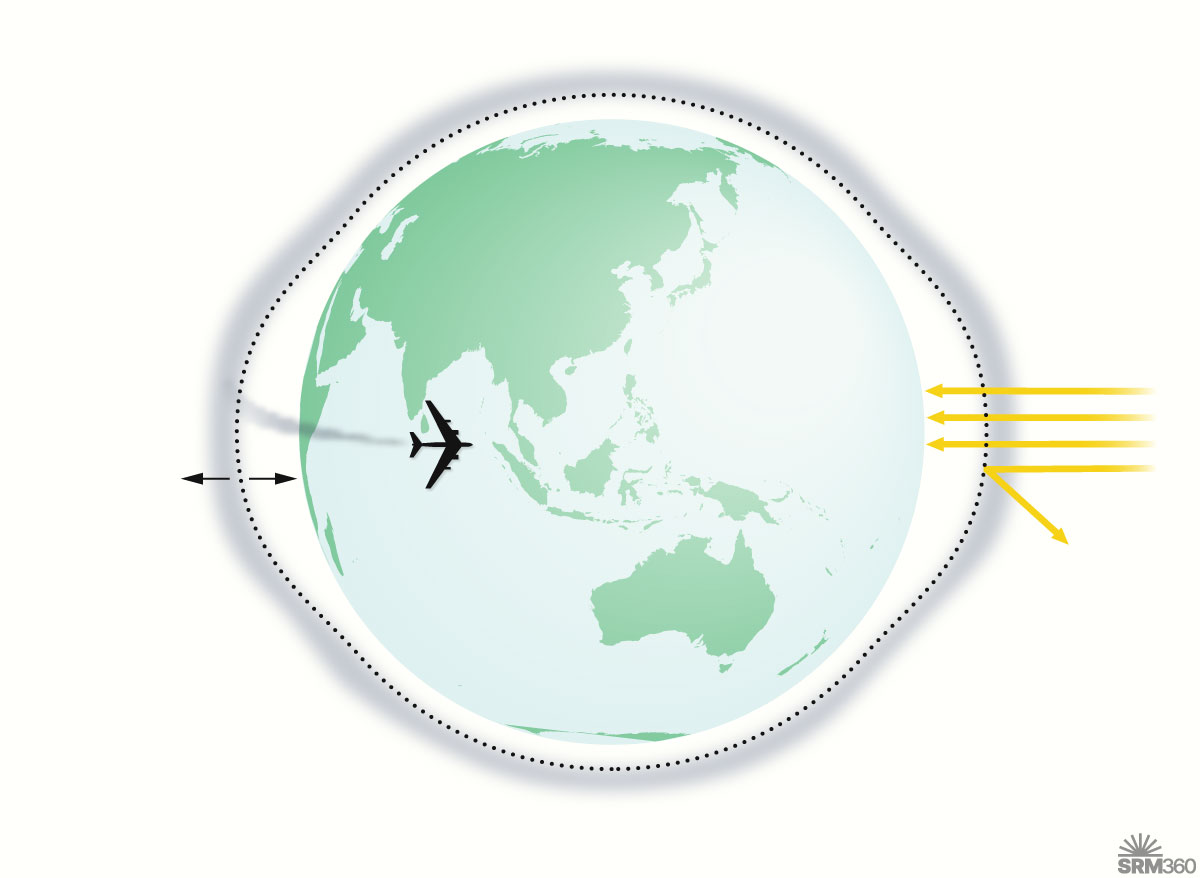
SAI would involve specially designed planes releasing tiny particles in the stratosphere.
These particles would spread out across the world and last for 1–2 years.
SUNLIGHT
STRATOSPHERE
TROPOSPHERE
A small fraction of sunlight would be reflected, cooling the planet.
Source: SRM360
With hundreds of specialised aircraft lifting millions of tonnes of sulphate or other particles to the stratosphere, geoengineering with SAI could lower global temperatures by one or even several degrees Celsius. While uncertainties remain, there is little doubt that this could have a substantial cooling effect.
By lowering global temperatures, SAI might reduce many climate risks, though not all. It would affect rainfall patterns, causing greater change in some places than expected under climate change alone. It would also have some undesirable side effects such as adding a little to acid rain, making the sky a little hazier, and delaying the slow recovery of the ozone hole by some decades.
Learn more
Marine cloud brightening (MCB)
“Ship tracks” form in certain areas of the ocean when polluting ships pass underneath low clouds. The tiny pollution particles emitted by these ships act as seeds for new cloud droplets, triggering cloud formation or brightening existing clouds.
Following changes to pollution standards for ships in 2020, ship tracks have become less common and ocean clouds near busy shipping routes have become less reflective. This clean-up effort could have contributed slightly to recent global warming.
Marine cloud brightening (MCB) is an idea to produce a similar cloud-brightening effect without the air pollution impacts by spraying sea-salt particles from ships.
Marine cloud brightening
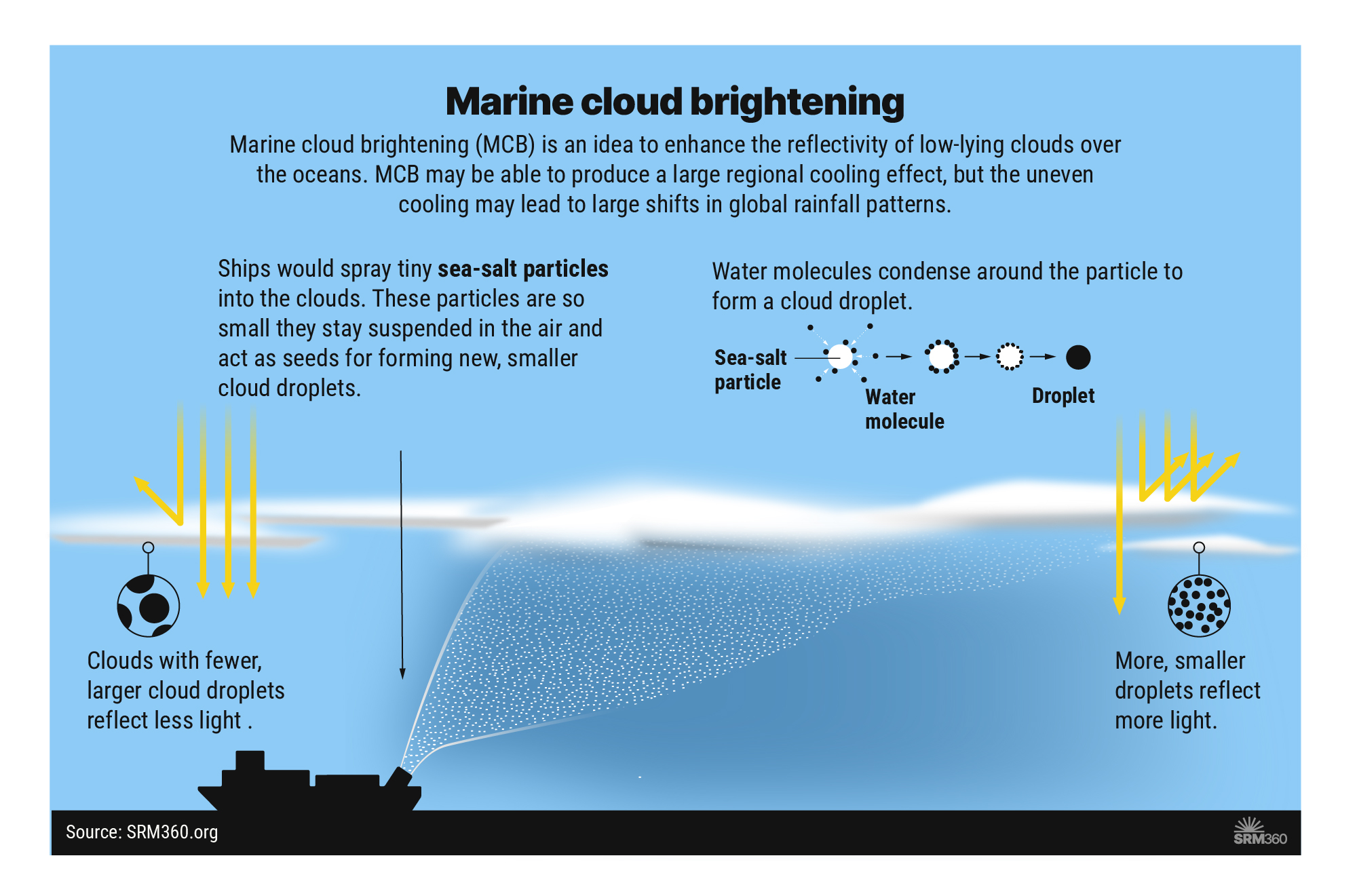
Marine cloud brightening (MCB) is an idea to enhance the reflectivity of low-lying clouds over the oceans. MCB may be able to produce a large regional cooling effect, but the uneven cooling may lead to large shifts in global rainfall patterns.
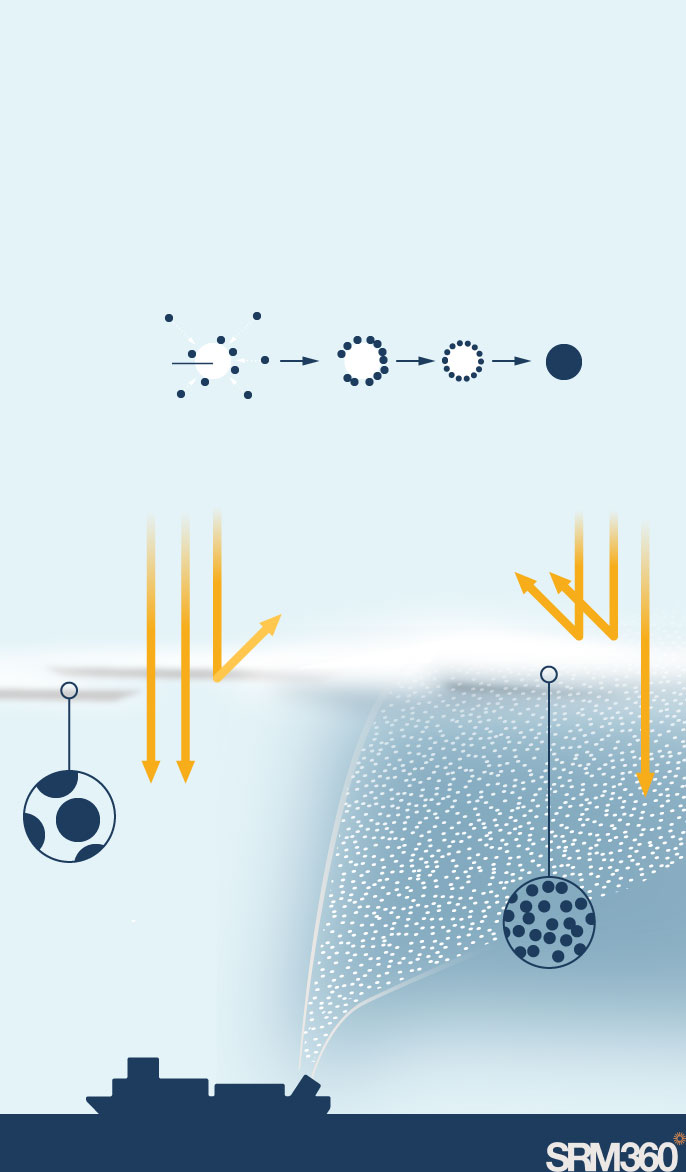
Ships would spray tiny sea salt particles into the clouds. These particles are so small they stay suspended in the air and act as seeds for forming new, smaller cloud droplets.
Water molecules condense around the particle to form a cloud droplet.
Sea-salt particle
Droplet
Water molecule
Clouds with fewer, larger cloud droplets reflect less light.
More, smaller droplets reflect more light.
Source: SRM360.org
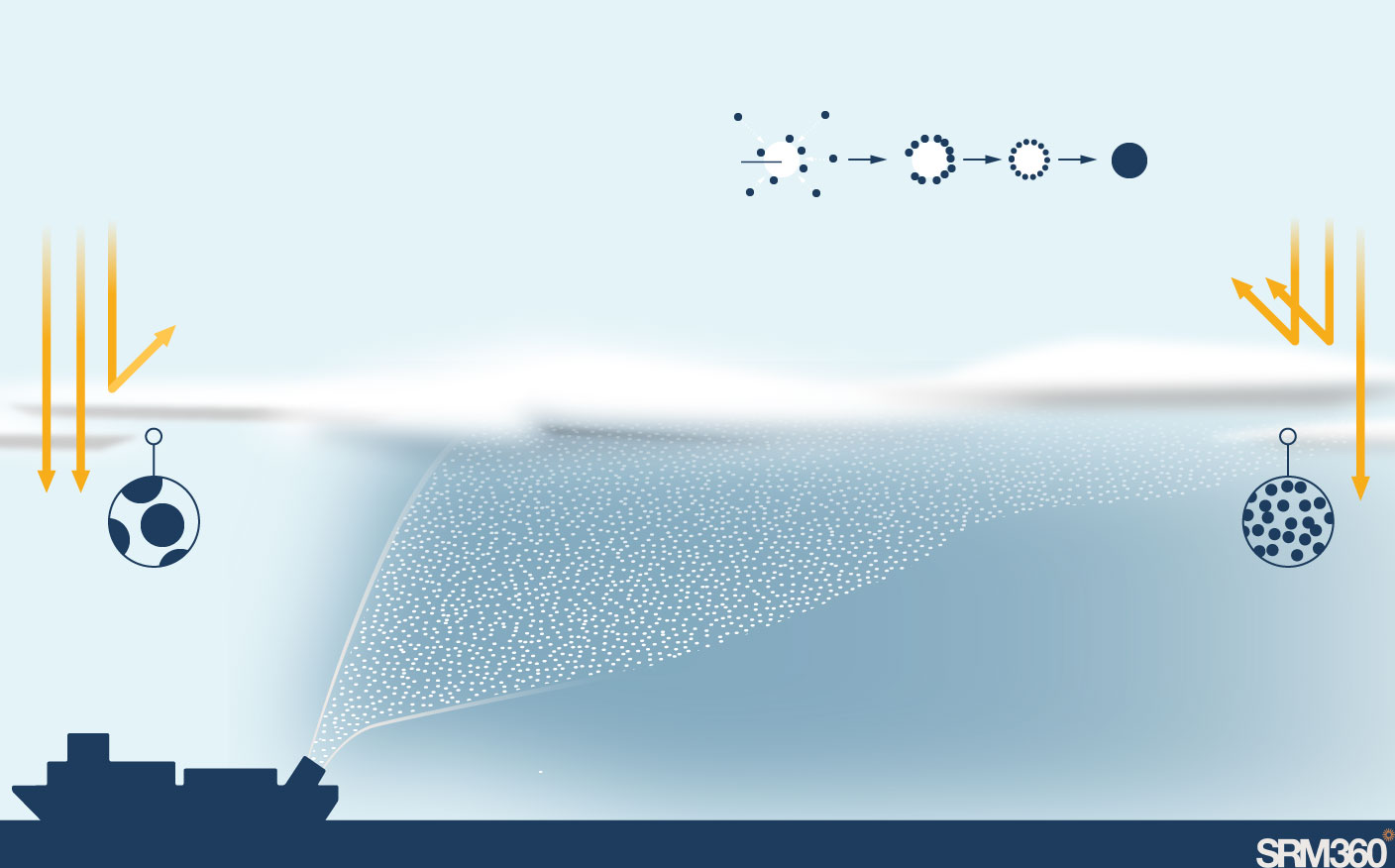
Ships would spray tiny sea salt particles into the clouds. These particles are so small they stay suspended in the air and act as seeds for forming new, smaller cloud droplets.
Water molecules condense around the particle to form a cloud droplet.
Sea-salt particle
Droplet
Water molecule
More, smaller droplets reflect more light.
Clouds with fewer, larger cloud droplets reflect less light.
Source: SRM360.org
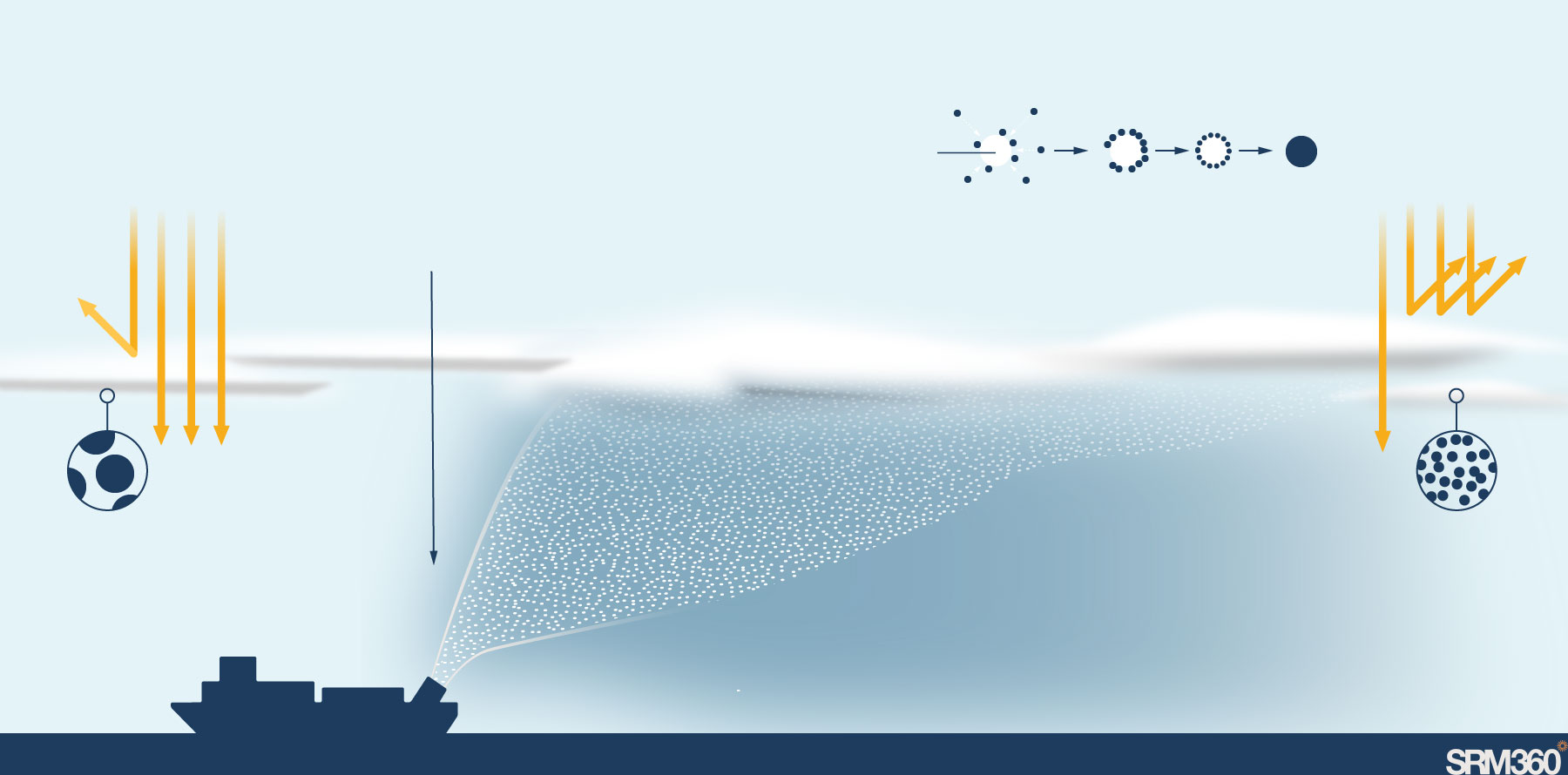
Ships would spray tiny sea-salt particles into the clouds. These particles are so small they stay suspended in the air and act as seeds for forming new, smaller cloud droplets.
Water molecules condense around the particle to form a cloud droplet.
Sea-salt particle
Droplet
Water molecule
Clouds with fewer, larger cloud droplets reflect less light.
More, smaller droplets reflect more light.
Source: SRM360.org
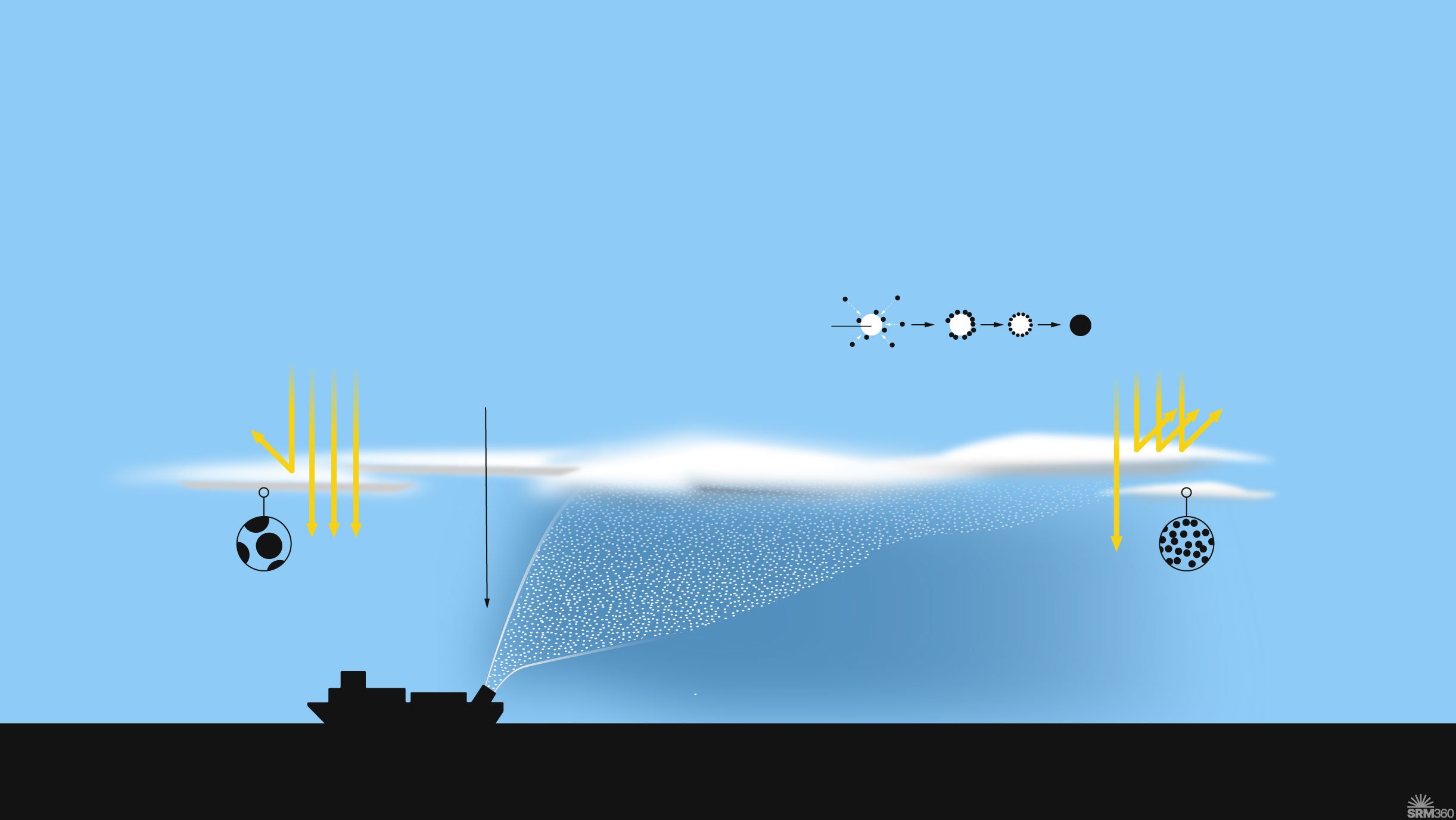
Marine cloud brightening
Marine cloud brightening (MCB) is an idea to enhance the reflectivity of low-lying clouds over the oceans. MCB may be able to produce a large regional cooling effect, but the uneven cooling may lead to large shifts in global rainfall patterns.
Ships would spray tiny sea-salt particles into the clouds. These particles are so small they stay suspended in the air and act as seeds for forming new, smaller cloud droplets.
Water molecules condense around the particle to form a cloud droplet.
Sea-salt particle
Droplet
Water molecule
More, smaller droplets reflect more light.
Clouds with fewer, larger cloud droplets reflect less light.
Source: SRM360.org
While this idea could work in principle, engineers have yet to develop sea-salt sprayers that would be efficient enough to be used for deployment, and the effects of the particles on clouds remains very uncertain. In fact, these aerosol–cloud interactions are one of the biggest uncertainties in climate science.
This is why a team in Australia has been conducting outdoor experiments of this idea since 2020, and several other research teams are working on plans for outdoor experiments of their own.
Learn more
Other sunlight reflection methods
While SAI and MCB are receiving the most attention from researchers, there are several other SRM ideas.
Space-based SRM would involve placing material between the Earth and the Sun to deflect light before it reaches the Earth, though it would be prohibitively costly, at least for the next several decades.
Cirrus cloud thinning would aim to reduce the heat-trapping effect of high wispy cirrus clouds. Adding the right kind of particles might thin these clouds, but there are deep uncertainties about its potential and effectiveness.
Mixed-phase cloud thinning is a similar idea, though focused on a different type of cloud that forms lower in the atmosphere and contains both ice crystals and supercooled liquid. Thinning those clouds, especially in winter months at the poles, may allow some extra heat to escape and help regrow melting sea ice.
There are also several ideas for brightening surfaces, for example, developing slightly more reflective crops, building with brighter materials, or brightening and thickening sea ice. These ideas might have some potential to alleviate local impacts, but none could be scaled up to have a substantial global cooling effect.
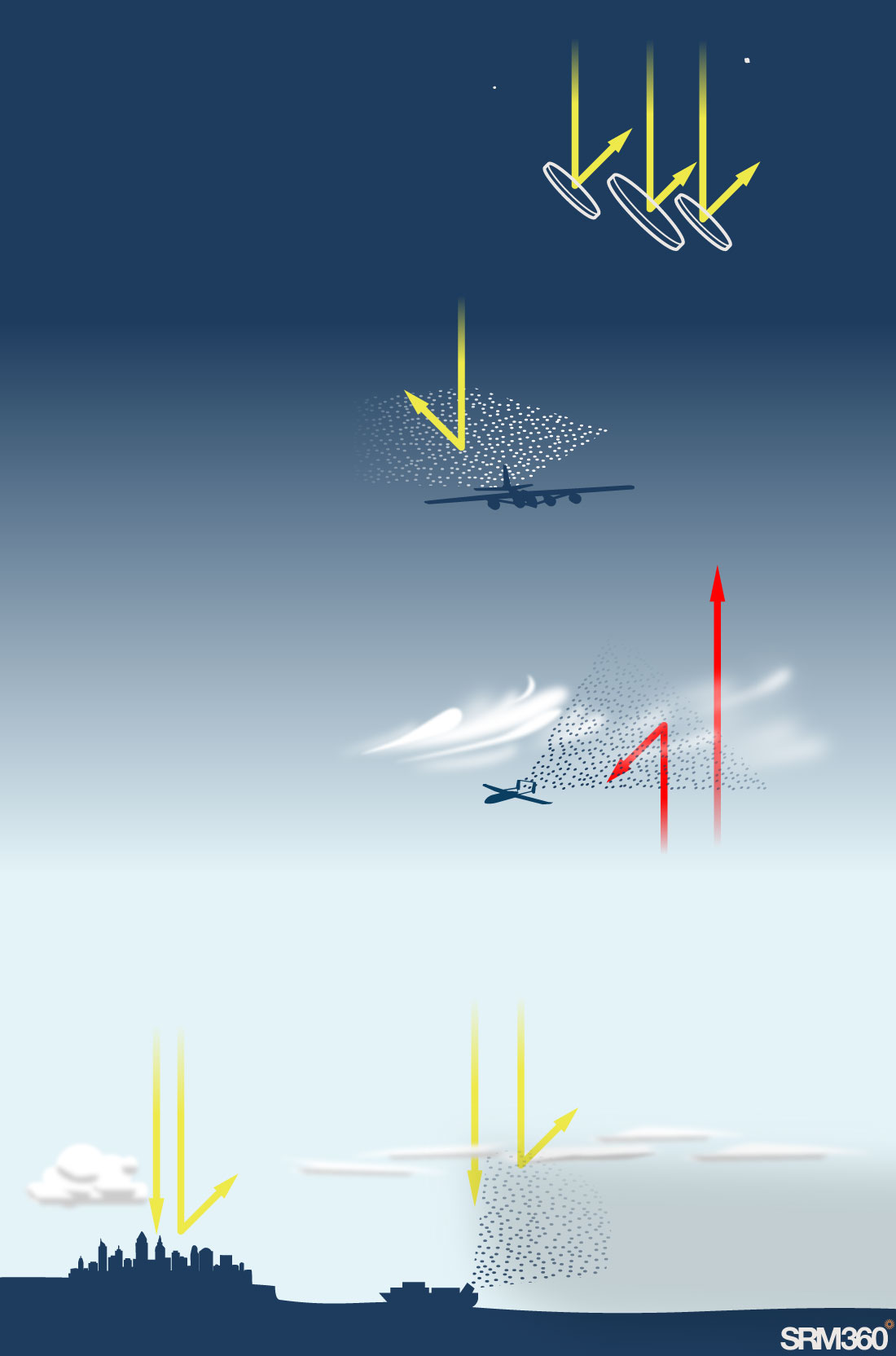
An overview of sunlight reflection methods
Sunlight reflection methods (SRM) are hypothetical approaches to lower global temperatures by increasing the amount of sunlight reflected to space.
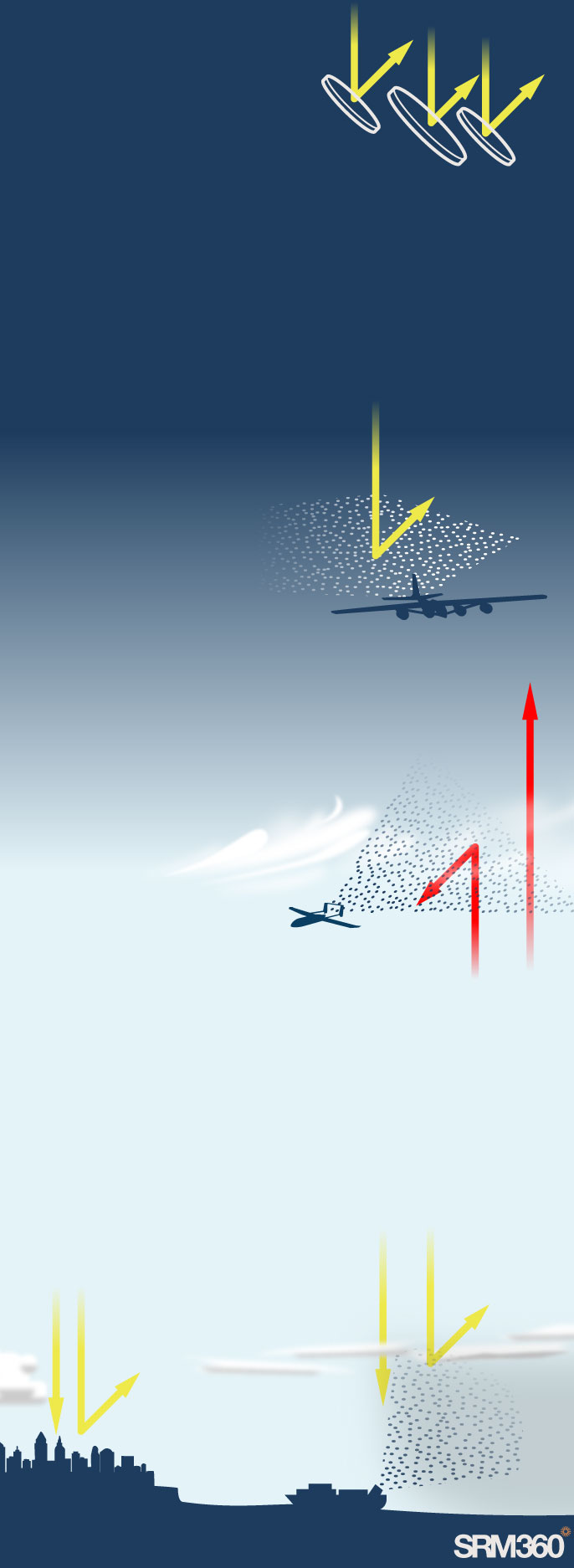
Space-based SRM
Reflective material between the earth and sun could scatter light, but delivery would be extremely costly.
Stratospheric aerosol injection (SAI)
Tiny particles released in the stratosphere could reflect a small fraction of sunlight, producing a global cooling.
Sunlight
Cirrus cloud
thinning (CCT)
Seeding might thin cirrus clouds, allowing more heat to escape to space.
Heat
Surface albedo modification
Brighter surfaces could reflect more sunlight, but global cooling potential is limited.
Marine cloud brightening (MCB)
Sea-salt particles could be sprayed from ships to enhance the reflectivity of low-lying clouds.
Source: SRM360.org
Space-based SRM
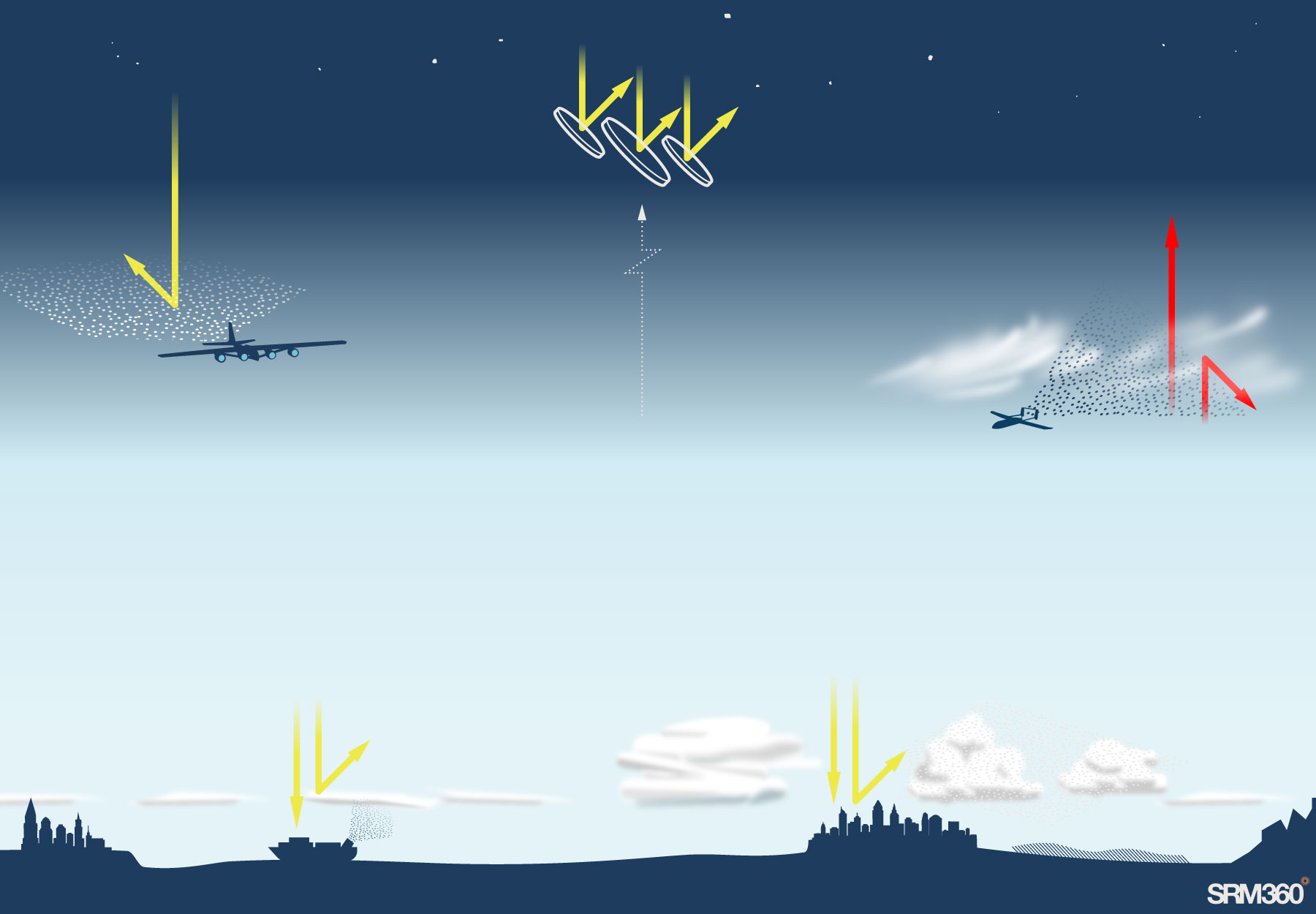
Reflective material between the earth and sun could scatter light, but delivery would be extremely costly.
Sunlight
Stratospheric aerosol injection (SAI)
Tiny particles released in the stratosphere could reflect a small fraction of sunlight, producing a global cooling.
Cirrus cloud
thinning (CCT)
Seeding might thin cirrus clouds, allowing more heat to escape to space.
Heat
Surface albedo modification
Brighter surfaces could reflect more sunlight, but global cooling potential is limited.
Marine cloud brightening (MCB)
Sea-salt particles could be sprayed from ships to enhance the reflectivity of low-lying clouds.
Source: SRM360.org
Sunlight
Heat
Marine cloud brightening (MCB)
Sea-salt particles could be sprayed from ships to enhance the reflectivity of low-lying clouds.
Space-based SRM
Reflective material between the earth and sun could scatter light, but delivery would be extremely costly.
Surface albedo modification
Brighter surfaces could reflect more sunlight, but global cooling potential is limited.
Cirrus cloud
thinning (CCT)
Seeding might thin cirrus clouds, allowing more heat to escape to space.
Stratospheric aerosol injection (SAI)
Tiny particles released in the stratosphere could reflect a small fraction of sunlight, producing a global cooling.
Source: SRM360.org
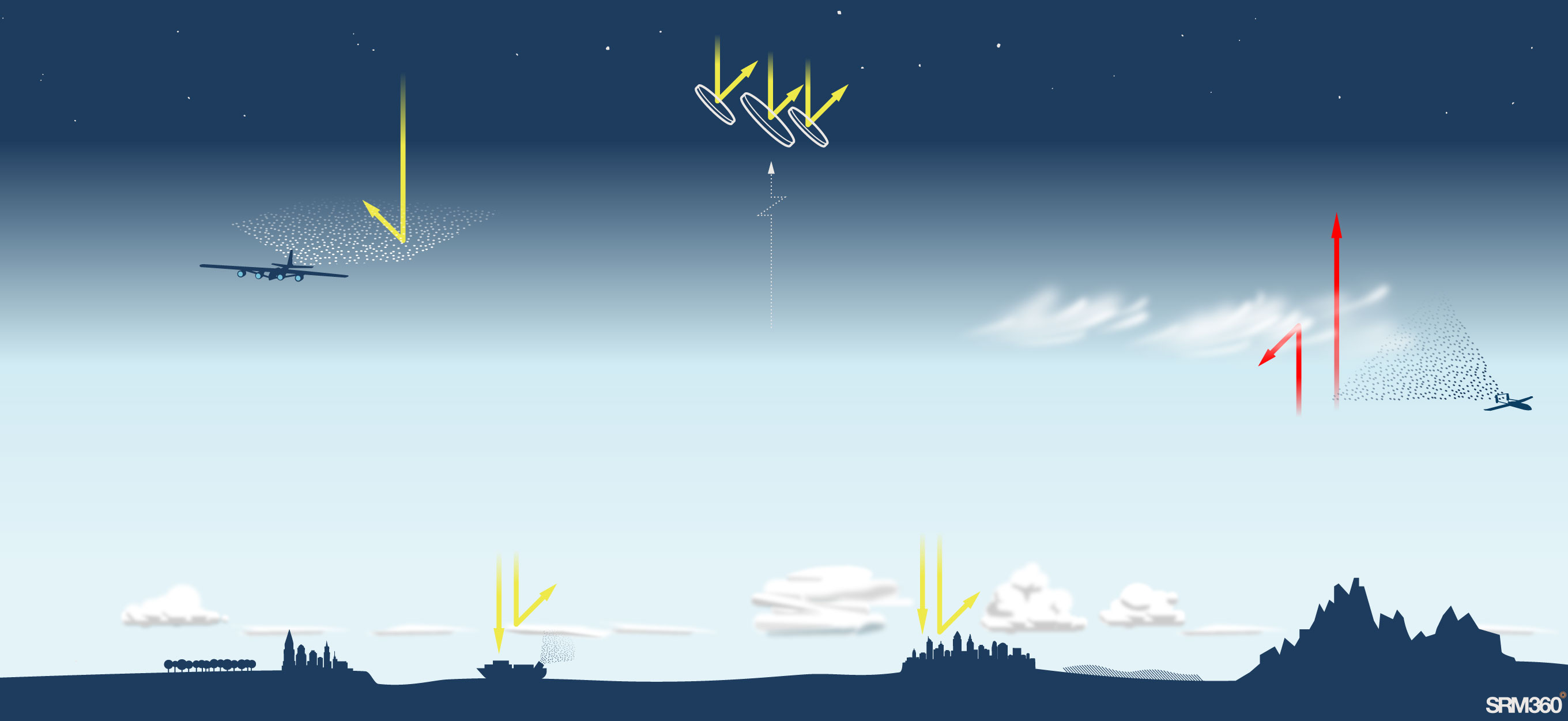
Sunlight
Heat
Marine cloud brightening (MCB)
Sea-salt particles could be sprayed from ships to enhance the reflectivity of low-lying clouds.
Space-based SRM
Reflective material between the earth and sun could scatter light, but delivery would be extremely costly.
Surface albedo modification
Brighter surfaces could reflect more sunlight, but global cooling potential is limited.
Cirrus cloud thinning (CCT)
Seeding might thin cirrus clouds, allowing more heat to escape to space.
Stratospheric aerosol injection (SAI)
Tiny particles released in the stratosphere could reflect a small fraction of sunlight, producing a global cooling.
Source: SRM360.org
Learn more
Could SRM help in the fight against climate change?
Cutting greenhouse gas emissions is and will remain the primary strategy to combat climate change. Removing carbon already in the atmosphere and adaptation are also critical.
SRM is being explored as an additional tool to use alongside these other strategies, offering a way to reduce temperatures and limit many of the harms of climate change. However, these approaches would bring new risks and uncertainties of their own, as well as raising profound ethical and political questions.