Perspective
Cooling, Drying, and the Fine Print: Lessons on SRM From Tanzania
In this Perspective, Trisha Patel discusses results from a recent study on how sunlight reflection methods (SRM) could impact Tanzania, highlighting the importance of regional lenses in analysing climate change and SRM.
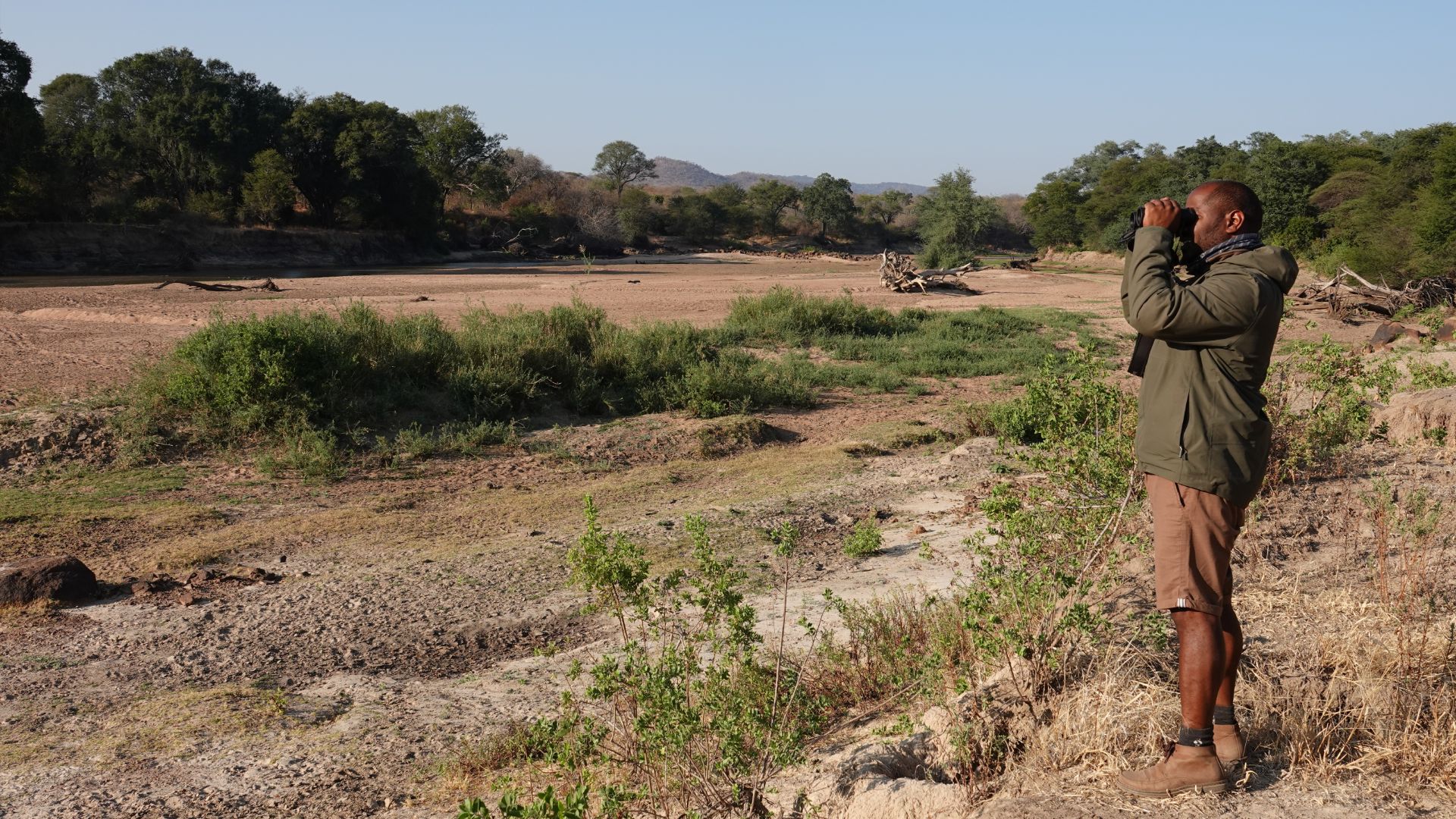
A dried-up section of the Great Ruaha River in Tanzania (Photo: Kristin Palitza/dpa)

Tanzania offers an opportune place from which to think about sunlight reflection methods, given the complex and exciting spread of climate and geography it holds.
The country stretches from the Indian Ocean coastline to the central plateau and from the low-lying coastal plains to the high-altitude slopes of Mount Kilimanjaro.1 Its climate is shaped by a range of influences, including equatorial trade winds, monsoon systems, and wider modes of variability such as the El Niño–Southern Oscillation.1 Rainfall patterns are not uniform either: parts of northern Tanzania experience two rainfall seasons, while central and southern regions generally have only one.2
These distinctions spotlight why climate change, and any proposed climate intervention, has to be understood regionally.
A regional lens
Much of the public discussion around SRM still takes place at a global scale. This is understandable, since SRM techniques are usually examined as a possible response to global warming, and because many of the central questions concern planetary temperature, atmospheric circulation, and governance.
However, interpreting SRM only through global-scale research risks simplifying the conversation, and can make it feel distant from the ways in which climate is actually experienced. For an individual or a community, a change in temperature or rainfall gains meaning through a poor growing season, flood event, hydropower shortage, or an uncomfortable working day outdoors. The same climate effect can carry very different implications depending on whether it occurs in a rainfed agricultural region, mining area, coastal settlement, or already water-stressed community.
This was the broader motivation behind our recent Tanzania study. The paper assessed projected changes in temperature and precipitation extremes under a high-emissions future, and then examined how these changes might be modified under stratospheric aerosol injection, or SAI, using GLENS climate model simulations for 2075–2095.3 In this model experiment, sulphur dioxide is injected into the stratosphere to hold global temperatures near present-day levels.3 This means the results should not be read as “what SAI would do” in general, but as what might emerge within one model framework and one specific SAI design, when a global climate intervention is viewed through a national and sectoral lens.
How might Tanzania’s climate change?
The results show that continued climate change might cause substantial warming across Tanzania, with southern and south-western regions falling prey to the worst of it. Temperature extremes also intensify, with increases in hot days and warm spell duration across the country.
The rainfall response to climate change is more spatially and seasonally variable. Annual precipitation increases in many areas, particularly towards the north-west, and the long rains show notable increases. During the short rains, however, the pattern is more uneven: rainfall is projected to increase most strongly in the north-west, weaken moving south-east, with parts of south-eastern Tanzania becoming drier.
It is here that regional-scale research begins to reveal the richness (and the slight messiness) of climate analysis for natural and human systems. An overall wetter Tanzania, for instance, does not necessarily mean reduced risk.
Rainfall may increase in one season and decline in another. It may present as heavier rainfall events that raise flood risk, or shift in a manner that does not support the timing of agricultural production. Dry spells may increase in one part of the country, even as rainfall totals increase elsewhere. Distinctions of this nature are key for effective climate risk assessment and adaptation planning; it follows, then, that they are equally important in any critical examination of SRM.
What would SAI mean for Tanzania?
The SAI results folded a twist into the analysis.
In the simulations, SAI reduced much of the projected warming across Tanzania and, in some regions, overcompensated, causing overcooling relative to the present-day climate. The positives of cooling could be important for reducing heat stress on people, crops, livestock, ecosystems, and infrastructure.
At the same time, SAI also tended to reduce rainfall, and in some areas the simulations indicated increases in consecutive dry days. This could be consequential for rainfed agriculture – a climate-sensitive livelihood system that employs up to 80% of Tanzania’s active population and contributes substantially to the national economy.4
Comparing future changes under climate change with and without SAI allows us to ask, more critically, what could change, for whom, and through which pathways.5 Such changes are essential for understanding how a climate intervention might shift present-day climate systems, but by linking these changes to Tanzania’s key sectors, we were able to translate the results into more clearly identifiable forms of contextually relevant risk for human systems.
From model outputs to potential impacts
In the Tanzanian context, the literature allowed us to infer that projected increases in hot days and warm spells could pose a range of risks including those to agricultural production, heat-related illnesses and deaths, mining productivity, tourism activity, and ecosystem conditions. Similarly, increases in heavy rainfall and multi-day rainfall extremes suggest risks of crop flooding, infrastructure and operational disruptions in mining and energy, and heightened disease-related health risks, including malaria, cholera, and dengue.
Under SAI, the projected reduction in hot extremes could ease some of these heat-related pressures. However, the accompanying drying signal is particularly important for Tanzania: reduced rainfall and drier conditions could lead to crop yield reductions, degrade grazing land, constrain hydropower reliability, and exacerbate water insecurity.
All that said, if findings are presented primarily through maps and model outputs, we risk reinforcing the historically siloed nature of academia, limiting the ability of people most affected by climate risks to identify and interrogate the concerns most relevant to them. Conversely, if results are translated too loosely, important uncertainties and trust in the robustness of evidence can be lost.
This surfaces a difficult but necessary challenge: how do we maintain technical honesty while making the analysis accessible and engaging enough for an individual to understand why and how a change in a rainfall index might affect a crop, household, worker, tourist destination, or energy system central to their life?
Regionally focused SRM research will not make the SRM debate simpler. On the contrary, it is likely to make it more complex because it asks us to dig deeper: beyond global climate systems and into the more intricate – and yes, slightly scarier – human systems. This is precisely its value. It encourages researchers to investigate how SRM could alter temperature and rainfall patterns, and how it might interact with particular climates, economies, ecosystems, and livelihoods.
A rich assessment of SRM impacts might pass through a wide range of systems: rainfall regimes, agricultural systems, hydropower networks, disease environments, labour conditions, protected areas, and households. Tanzania is one such place, but the broader lesson extends beyond. Regional research roots the SRM conversation in a firmer geography, and with it, offers a more intimate account of what climate intervention could mean for people already living with climate risk.
The views expressed by Perspective writers and News Reaction contributors are their own and are not necessarily endorsed by SRM360. We aim to present ideas from diverse viewpoints in these pieces to further support informed discussion of SRM (solar geoengineering).

Endnotes
- Chang’a L. (2021). Climate Variability and Its Impacts in Tanzania: Climatology of Tanzania. Xlibris Corporation
- Borhara K, Pokharel B, Bean B, et al. (2020). On Tanzania’s precipitation climatology, variability, and future projection. Climate. 8(2):34. https://doi.org/10.3390/cli8020034
- Tilmes S, Richter JH, Kravitz B, et al. (2018). CESM1 (WACCM) stratospheric aerosol geoengineering large ensemble project. Bulletin of the American Meteorological Society. 99(11):2361-71. https://doi.org/10.1175/BAMS-D-17-0267.1
- Cowling N. (2024). Agriculture in Tanzania – statistics & facts. Statista. https://www.statista.com/topics/9058/agriculture-in-tanzania
- Felgenhauer T, Bala G, Borsuk ME, et al. (2025). Practical paths to risk-risk analysis of solar radiation modification. Oxford Open Climate Change. 2025;5(1):kgaf012. https://doi.org/10.1093/oxfclm/kgaf012