Article
What’s New in Solar Geoengineering Funding?
As the funding landscape for sunlight reflection methods (SRM), or solar geoengineering, continues to grow, SRM360 has updated its Funding Tracker to shine a light on who is spending what. Here, we look at some of the latest developments and trends in SRM funding.

In 2025, SRM360 launched a Funding Tracker to paint a picture of SRM funding – who is spending it and who is receiving it. We have now updated the Tracker with the best available information, and there have been some major changes to the field.
An injection of private funding
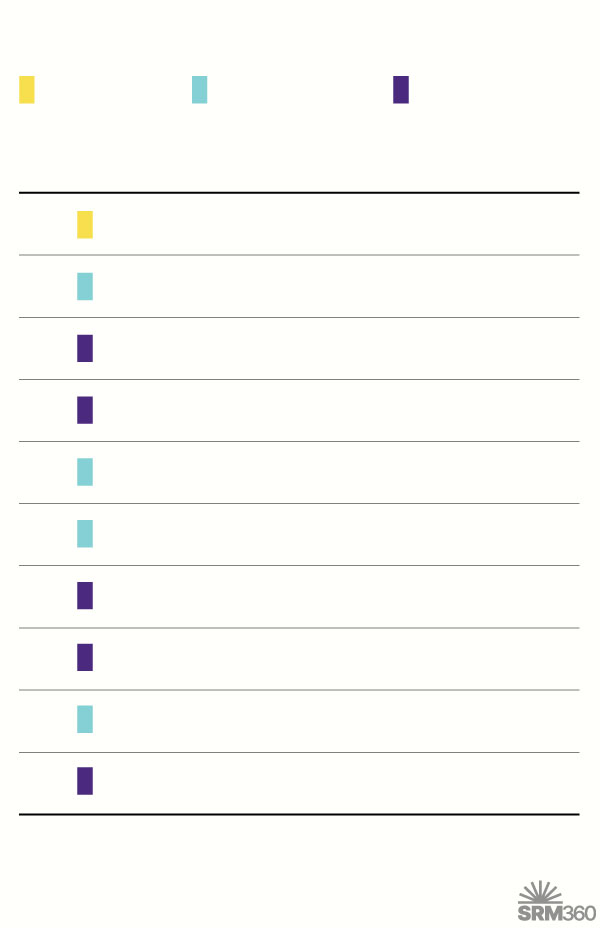
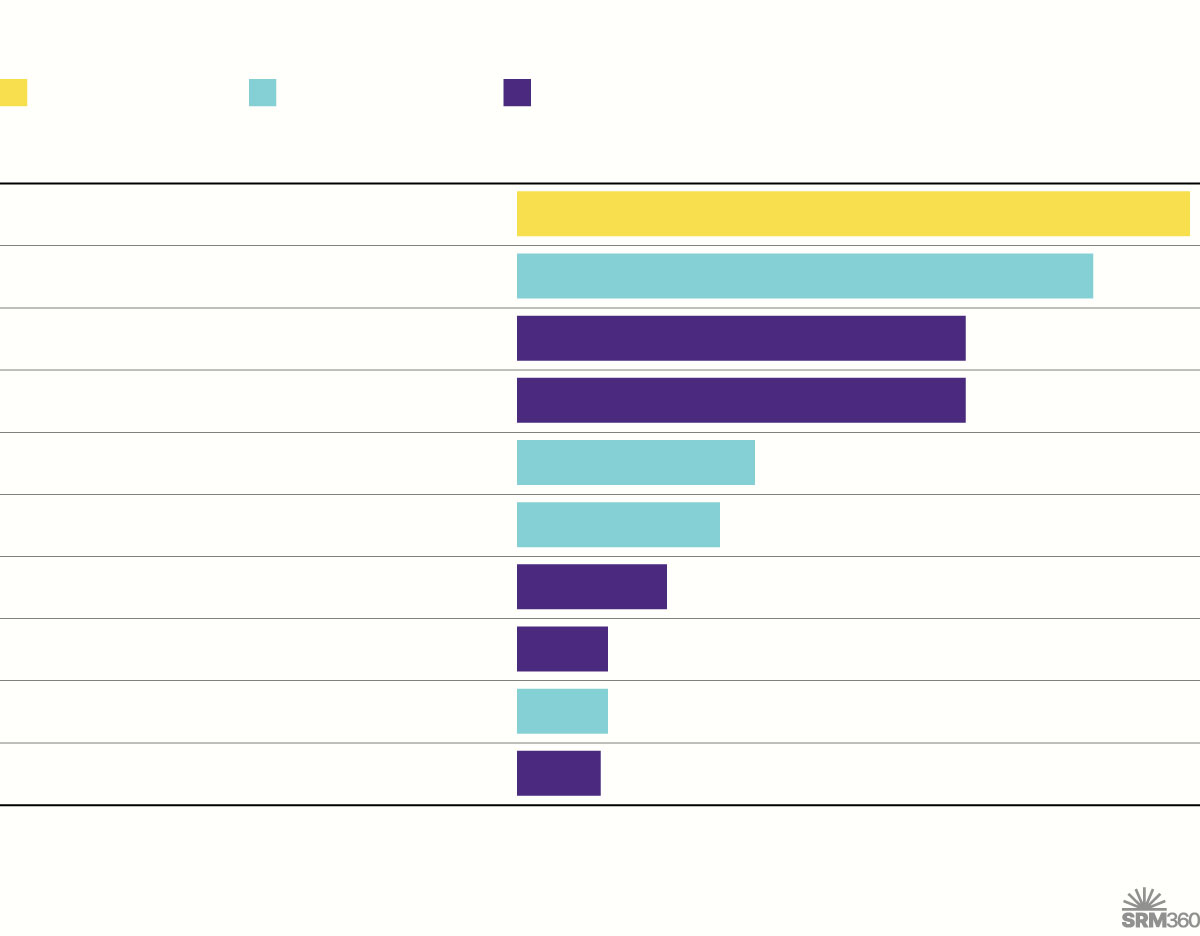
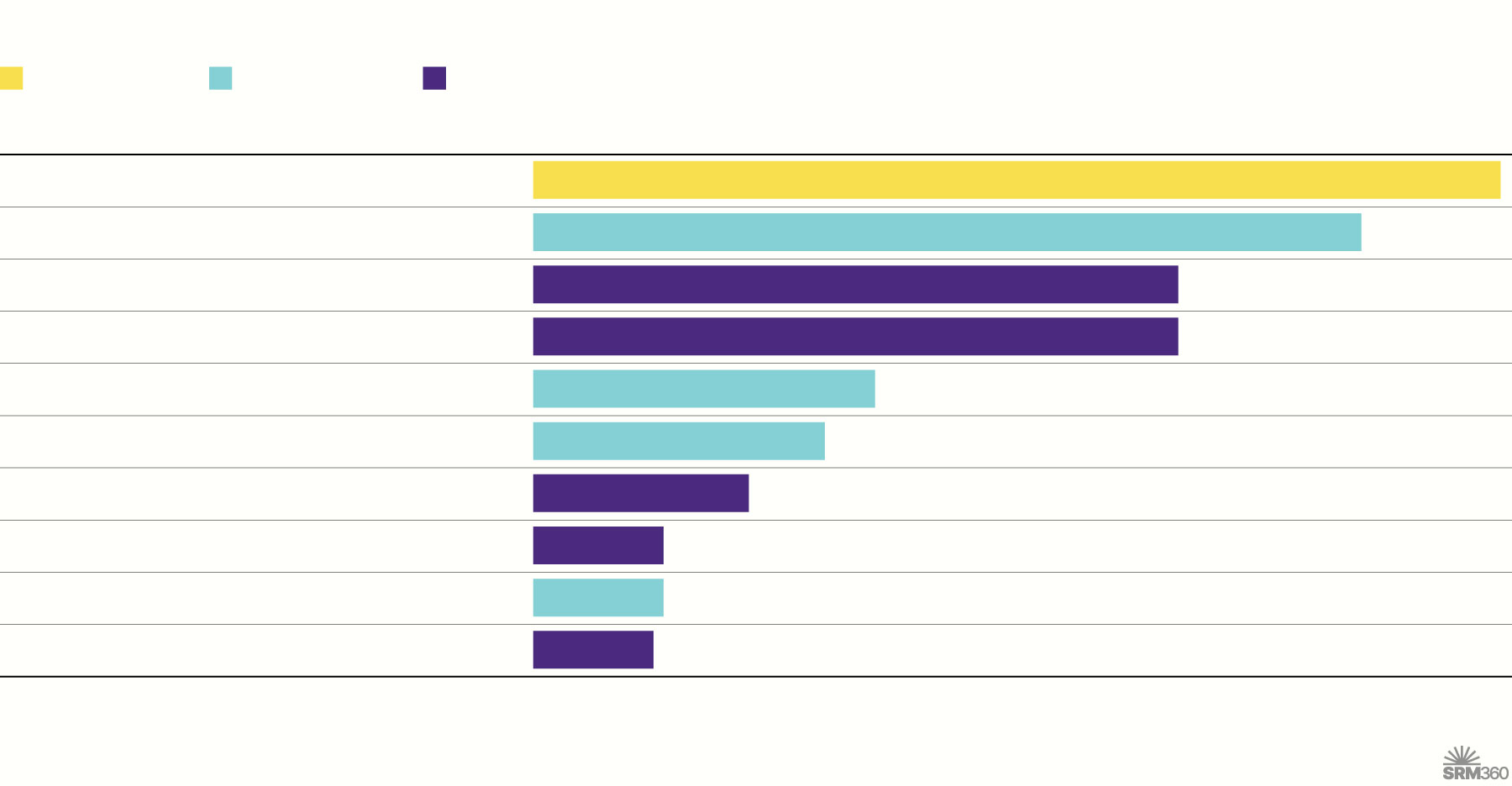
The most prominent and notable change to the landscape is Stardust Solutions, the for-profit US-Israeli company that is developing SRM technology – specifically a form of stratospheric aerosol injection (SAI), where small particles injected into the upper atmosphere would reflect a small amount of sunlight back into space. The company entered the field in 2023 with $15.0 million in funding from Awz Ventures, a Canadian-Israeli-US firm with ties to defence agencies, and in 2025 it announced a second fundraising round totalling $60.0 million. With $75.0 million in total, Stardust’s funding now exceeds the investments of any single philanthropic donor or government.1
It is clear from recent announcements and limited public disclosures that Stardust is collaborating with researchers at universities in the US, UK, Israel, and elsewhere, supporting at least some of them financially. While Stardust shared in a call with SRM360 that they had relationships with over two dozen other organisations, they did not disclose the full details or scale of their regranting efforts.
Some have criticised the for-profit model for this field, but there is no doubt that it is now influencing the field’s development and the research that gets conducted.
The UK pulls ahead
Another major development in the field is the leading role that the UK government is now playing. The Advanced Research + Invention Agency (ARIA), an independent but UK government-backed funding agency, is providing £56.8 million ($77.2 million) in funding spread out over several years for 22 “climate cooling” research projects.1 This makes ARIA the largest single government-backed source of funds in SRM. The UK’s Natural Environment Research Council also launched a five-year £10.5 million ($14.3 million) SRM modelling project in 2025, raising the UK government’s contribution higher still.
Philanthropies and Stardust’s investors outspend most nations on SRM
Only a few governments compete with big philanthropies on SRM funding, and recent fundraising by the for-profit company Stardust Solutions puts its investors at the top of the list in terms of total funding spent and committed.
10 LARGEST SRM FUNDERS
COMMERCIAL
GOVERNMENTAL
PHILANTHROPIC
TOTAL SPENT AND COMMITTED in millions of US dollars
RANK
FUNDER
$75.0
1
Stardust investors
$64.2
2
UK government
$50.0
3
Quadrature Climate Foundation
$50.0
4
Simons Foundation
$26.5
5
US government
$22.6
6
Australian government
$16.7
7
Coefficient Giving*
$10.1
8
LAD Climate Fund
$10.1
9
German government
10
$9.7
Bill Gates
*Formerly Open Philanthropy
Source: SRM360.org
10 LARGEST SRM FUNDERS
COMMERCIAL
GOVERNMENTAL
PHILANTHROPIC
FUNDER
RANK
TOTAL SPENT AND COMMITTED in millions of US dollars
$75.0
1
Stardust investors
2
UK government
$64.2
Quadrature Climate Foundation
3
$50.0
Simons Foundation
4
$50.0
US government
5
$26.5
6
Australian government
$22.6
7
Coefficient Giving*
$16.7
8
LAD Climate Fund
$10.1
9
German government
$10.1
Bill Gates
10
$9.7
*Formerly Open Philanthropy
Source: SRM360.org
10 LARGEST SRM FUNDERS
COMMERCIAL
GOVERNMENTAL
PHILANTHROPIC
FUNDER
RANK
TOTAL SPENT AND COMMITTED in millions of US dollars
$75.0
1
Stardust investors
2
UK government
$64.2
Quadrature Climate Foundation
3
$50.0
Simons Foundation
4
$50.0
US government
5
$26.5
6
Australian government
$22.6
7
Coefficient Giving*
$16.7
8
LAD Climate Fund
$10.1
9
German government
$10.1
Bill Gates
10
$9.7
*Formerly Open Philanthropy
Source: SRM360.org
In terms of the total spent and committed government funding, the UK is now in first place at $64.2 million. The US sits in second at $26.5 million and Australia just behind at $22.6 million. But with only small amounts from the US committed for the coming years (less than $400,000) and no new support for marine cloud brightening research through Australia’s Reef Restoration and Adaptation Program, the UK now accounts for 94% of all committed government funding for work on solar geoengineering from 2026 onwards.
It is important to note, though, that little is known about what the world’s second-largest economy, China, might undertake with regard to SRM.
UK-based philanthropies also play a large role in the field, with the Quadrature Climate Foundation having spent or committed $50.0 million, placing it on even footing with the US-based Simons Foundation. The non-profit Degrees Initiative, also based in the UK, is the primary funder of researchers in the Global South.2 Degrees has spent or committed a total of $8.2 million to support researchers across 27 developing countries to study solar geoengineering.
The rise of major new research initiatives
Another major addition to the field in recent years is the University of Chicago’s Climate Systems Engineering initiative (CSEi), an academic centre that studies SRM along with other climate interventions including carbon dioxide removal and glacial interventions. Led by David Keith, who formerly ran the Harvard Solar Geoengineering Research Program, CSEi formally launched with an event in 2026.
It reported $2.5 million in funding in 2025, with $14.6 million more slated for the next three years, from the University of Chicago and philanthropic donors. With support from the university’s president to host 10 permanent faculty, CSEi will be one of the largest academic efforts focusing on solar geoengineering in the world.
Beyond the commercial and academic approaches to SRM research, Reflective is charting a different course. A non-profit organisation aiming to “radically accelerate” SRM research with a focus on SAI, Reflective has seen rapid growth in its funding in recent years, with $1.8 million in 2024, rising to $4.0 million in 2025 and $7.6 million in 2026.3 Reflective conducts research in-house, but has also been supporting researchers around the world through regranting efforts.
The Arctic Stabilization Initiative is another new entrant with similar ambitions to Reflective. It aims to rapidly research an idea known as mixed-phase cloud thinning, a potential method to help cool the Arctic by thinning heat-trapping clouds. Having already raised $9.0 million since launching as part of Renaissance Philanthropy in 2025, they aim to raise a total of $60 million to support research, including field experiments, within the next few years.
SRM as a field is changing rapidly, with research expanding around the world and engagement with governance and other complex issues growing. How funding in this field is distributed will shape its future – check out our funding overview article and explore the Tracker here.



Endnotes
- The UK’s Advanced Research + Invention Agency (ARIA) has announced an overall “climate cooling” programme budget of £56.8 million ($77.2 million), but not all of that has yet been allocated and some of its projects focus on approaches adjacent to SRM, like sea-ice thickening, that we did not include in our Tracker’s totals.
- Degrees Initiative Chief of Staff Jesse Reynolds is on SRM360’s Board of Directors.
- Reflective CEO Dakota Gruener is on SRM360’s Board of Directors.