Perspective
Cooling Isn’t Plan B – It’s How Plan A Succeeds
Paul Gambill reflects on how efforts to tackle climate change have progressed and looks ahead to the potential role of sunlight reflection methods (SRM). He discusses the challenges facing emissions reductions and carbon removals and their implications for SRM.
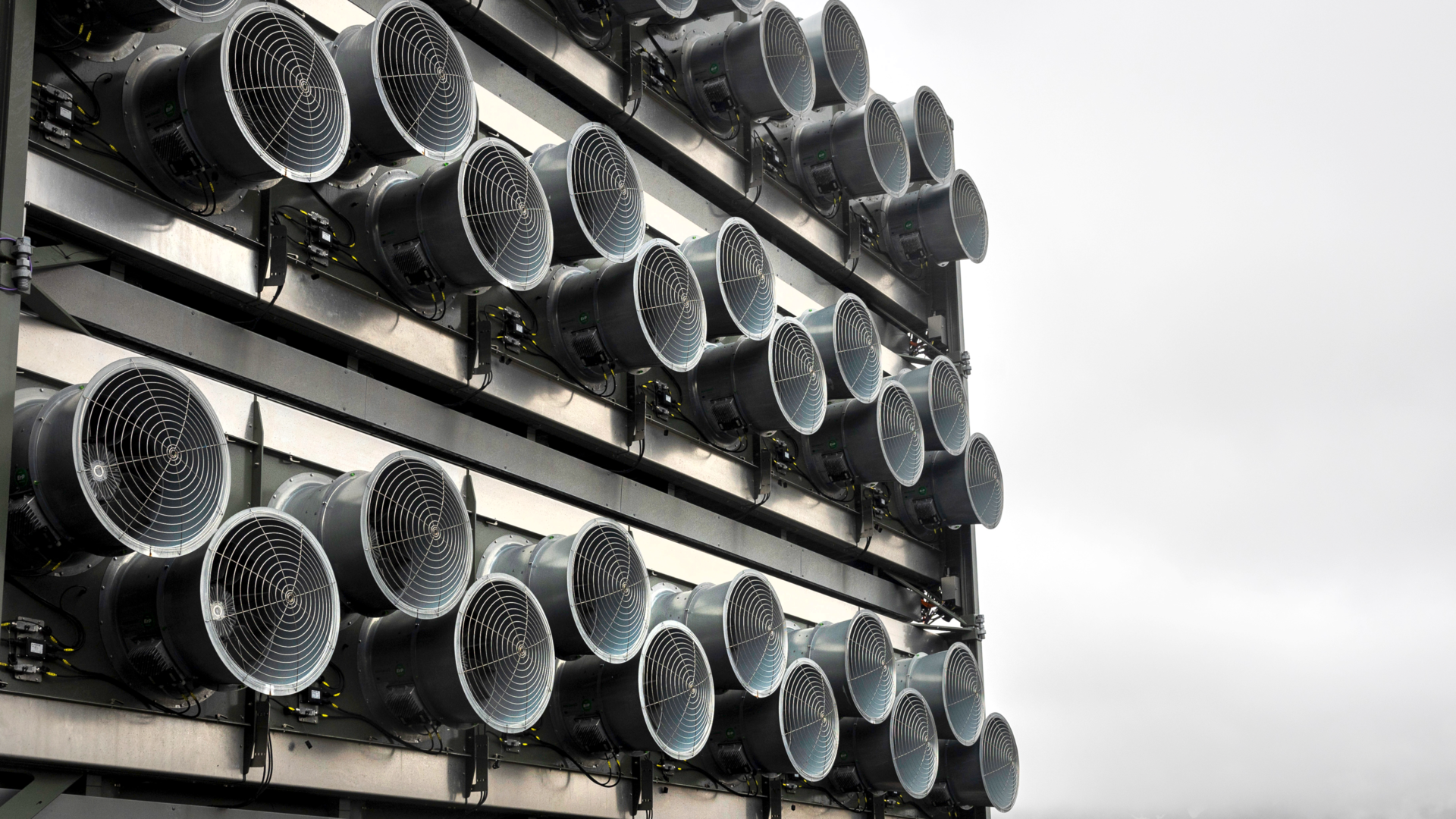
Climework’s "Mammoth" carbon removal plant in Reykjavik, Iceland (Photo: John Moore)

I think we’ll look back on the 2020s as the decade we finally admitted we need cooling interventions. Not because we gave up on emissions cuts or carbon removal, but because we accepted the math: we need more time, and we need stable conditions to make our climate solutions work.
I spent the last decade building carbon removal infrastructure. I co-founded Nori in 2017 as one of the first carbon removal marketplaces, helped establish carbon removal as its own category distinct from carbon avoidance offsetting, and pushed hard on regenerative agriculture adoption. Our goal was to create the financial infrastructure that would make gigatonne-scale1 removal possible.
Here’s what I’ve learned: it’s not happening fast enough.
The timeline problem
2015 was the heady year when the Paris Agreement was adopted, and also my first foray into carbon removal. Back then, I thought we’d be removing many millions of tonnes of CO2 by 2025, well on our way to the first gigatonne. The climate math was clear: we needed massive scale, fast. So, we built the infrastructure, educated the market, and pushed the industry forward.
Today? At best estimate, we are currently removing single-digit millions of tonnes per year through technological methods. And yet, the Paris Agreement’s goal of limiting warming to no more than 1.5°C by the end of the century would require the world to be removing 10 billion tonnes annually by 2050.2 Working backward from there means we need to reach 285 million tonnes per year by 2030 to stay on track.2
We’re not just not close. After 10 years of efforts at scaling the carbon removal industry, we are less than one half of one percent of the way towards that 2030 goal. With just five years to 2030, progress remains far too slow.
When I zoom out and look at the real scaling challenges in the voluntary carbon market, it’s clear this will take decades we don’t have. And I’m not alone in this conclusion. More and more carbon removal pioneers are reaching the same uncomfortable realization.
The wake-up call
This past February, I read James Hansen’s latest paper, Global Warming Has Accelerated: Are the United Nations and the Public Well-Informed? His team showed how cleaning up maritime shipping fuels and their pollution removed some of their cooling effect,3 unmasking suppressed warming. Their conclusion: warming is accelerating faster than expected.
That was my timeline collapse moment. Not that we wouldn’t succeed at carbon removal, but that we wouldn’t succeed in time.
We know dangerous tipping points exist. We don’t know exactly when they’ll hit. The uncertainty itself is the risk, and we cannot afford to find out the hard way. The consequences of being wrong are simply unacceptable.
Why cooling means stabilization
One thing I think most people miss about cooling interventions is that it’s not just about buying us more time. Stabilizing the global temperature also means preserving the conditions where our climate solutions can actually work.
Think about what is going to happen as temperatures rise. Geopolitical coordination will become harder as climate migration increases. Armed conflicts will multiply. Extreme weather will disrupt supply chains and infrastructure. And most critically for carbon removal: nature-based solutions will start failing as ecosystems destabilize.
Everything we’re trying to do – massive industrial transformation, global coordination, ecosystem restoration – will become exponentially more difficult in a rapidly warming world. Cooling interventions can maintain the stable conditions where decarbonization and carbon removal can succeed at scale.
The speed difference matters too. Once developed, stratospheric aerosol injection (SAI) could deploy in years, not decades. Marine cloud brightening could show effects in months. The costs would be a small fraction of those for gigatonne removal. When you’re racing against tipping points, speed is crucial.
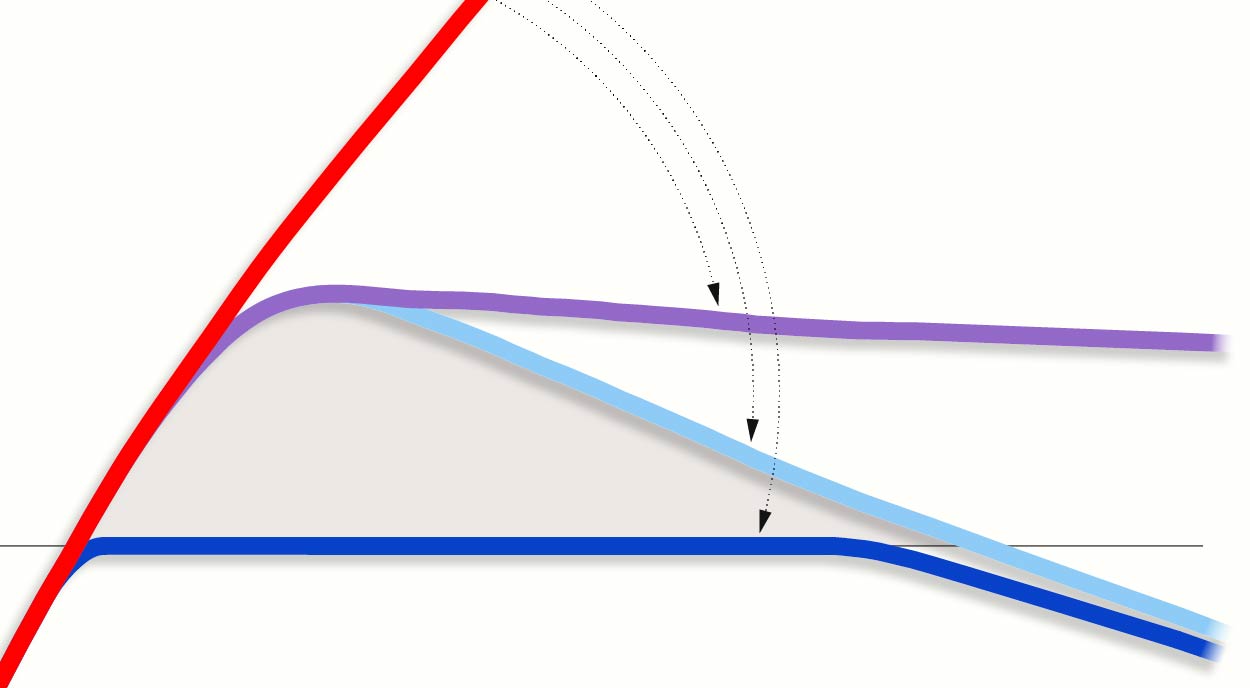
We have exactly three tools for slowing or reversing warming: emissions reduction, carbon removal, and cooling interventions like SAI. The math says we need all three.
The pattern of acceptance
Every decade since our fight against climate change began has revealed the same pattern. In the 1990s, we thought emissions cuts alone would save us. Then heat waves and hurricanes in the 2000s forced us to accept that adaptation would be required too. The 2010s added carbon removal into the mix as the Intergovernmental Panel on Climate Change (IPCC) finally broke down barriers to research and funding and included negative emissions in all their illustrative pathways to limit warming to 1.5°C. Each addition faced resistance – “adaptation means giving up!” or “carbon removal creates moral hazard!”.
The same objections are hitting cooling interventions now. But physics doesn’t care about our philosophical preferences. Reality has a way of making these debates irrelevant.
The moral hazard argument particularly falls apart when you look at what’s actually driving decarbonization. Renewables are cheaper. Electric vehicles are better. Markets are already pushing the transition. The idea that cooling would stop this momentum misunderstands basic economic forces.
Building our future
Humans rarely take the most efficient path to solving problems. We debate, we resist, we muddle through. Eventually we accept reality and adapt. But muddling takes time.
Cooling interventions can buy us that time. Time for carbon removal to reach scale, time for emissions to plummet, time for adaptation to protect vulnerable communities. More importantly, they can (when risks are eventually managed) maintain the stable conditions where all these solutions can succeed.
I’m not abandoning carbon removal. I’ve spent a decade trying to build this industry to gigatonne-scale, and I plan to continue advocating for the best way forward. But I’ve learned to see our climate tools for what they are: complementary solutions that enable each other’s success.
Even in 2015, I knew we’d eventually need cooling. I just thought carbon removal had decades to scale first. We simply don’t have the time.
The 2020s will be remembered as when we stopped pretending that we could solve this with partial measures. It’s time to start preparing for the necessary work of stabilizing the temperature to give decarbonization and carbon removal a fighting chance.
The views expressed by Perspective writers and News Reaction contributors are their own and are not necessarily endorsed by SRM360. We aim to present ideas from diverse viewpoints in these pieces to further support informed discussion of SRM (solar geoengineering).



Endnotes
- A gigatonne of CO2 is a billion tonnes of carbon dioxide – slightly less than 3% of annual emissions worldwide.
- These targets are based on the 2024 Rocky Mountain Institute Report: Scaling Technological Greenhouse Gas Removal: A Global Roadmap to 2050. The figures do not include nature-based “living biomass” solutions, such as reforestation, as they do not durably store the removed CO2.
- Some polluting particles, such as sulfur dioxide, increase the reflection of sunlight and have a cooling effect.