Perspective
Who Gets to Decide? Reporting on SRM From an African Perspective
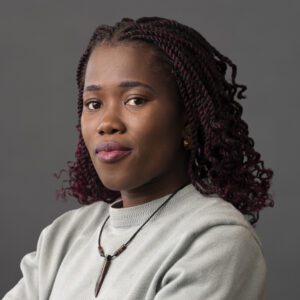
In September, Ugandan journalist Sharon Muzaki helped facilitate a workshop with SRM360 for journalists across Africa. In this Perspective, she shares insights on how African journalists can better approach stories about sunlight reflection methods (SRM), including what questions to ask and what regionally specific issues might help guide coverage of the topic.
Photo: REUTERS
Most of the climate stories I have reported have started with what is happening on the ground.
In Uganda and across Africa, climate change is not an abstract issue. Its effects can be seen in floods, drought, water insecurity, pressure on agriculture, biodiversity, and health, and in the ways communities are adapting to changing conditions. In my own reporting, I have covered flooding that damaged homes and crops, displaced people, and disrupted access to water.
That experience shapes how I approach sunlight reflection methods.
When I hear about technologies that could deliberately alter the amount of sunlight reaching the Earth, my first question is not whether they could cool the planet. It is: what could this mean for people whose lives are already being shaped by climate change?
For an African journalist, answering that means looking beyond the technology itself. It means examining the evidence, the regional implications, the money behind the research, whose expertise is shaping it, and who has a meaningful voice in decisions.
Slow down the science
One of the challenges of reporting climate science is how easily a complicated scientific question can become a simple headline.
Sunlight reflection methods (SRM) could be presented as a technology to “cool the planet,” or at the other extreme, as an attempt to “manipulate nature.” Neither framing necessarily tells audiences what is actually happening.
Before crafting the headline, I would want to establish what exactly is being proposed, what evidence exists, what has been tested, what comes from computer modelling, and what remains uncertain. I would also want to understand the potential regional consequences.
For Africa, those regional questions could include what models suggest about rainfall in East Africa, the West African monsoon, or the Sahel, and the possible implications for agriculture, water availability, and drought. But a model result should not be turned into a prediction. African climate scientists who understand these regional systems are essential for explaining both what models suggest and their limitations.
That distinction is important because changes that appear relatively straightforward in a model can become much more complicated when translated into people’s livelihoods.
Follow the money
Another reporting trail leads to funding.
Who is paying for SRM research? Which institutions receive that money? What questions are funders interested in answering? And are African universities and researchers leading projects, participating as partners, or mainly assessing research developed elsewhere?
Funding can influence where scientific capacity develops and who has opportunities to build models, conduct research, and participate in international scientific discussions.
Of the 34 countries that received SRM funding between 2007 and 2024, 22 were in the Global South. Yet researchers and organisations in those countries received about 2% of the overall funding, according to SRM360 data.
A map showing research activity across many countries can tell one story about participation, while the distribution of funding can tell another.
For journalists, the question is therefore not simply whether African researchers are present, but what resources they have to shape the research.
Where is African expertise?
Africa should not feature in the SRM story only as a place where possible consequences are assessed.
Researchers across the continent already work on atmospheric science, climate modelling, rainfall, agriculture, public health, environmental governance, and climate adaptation. Their expertise can help answer a more locally relevant question: what could different climate interventions mean in African contexts?
Mapping that expertise could itself be an important journalism project. Which researchers and universities are studying or scrutinising SRM? What research is being conducted? What concerns are African scientists raising? Where are the gaps?
But representation alone does not necessarily mean influence. An African researcher can participate in an international research project without having equal influence over the questions being asked, how resources are distributed, or how findings are interpreted.
These questions also push us beyond treating “Africa” as a single context. Potential changes in rainfall or temperature would interact with different climate systems, livelihoods, agricultural practices, and water needs across the continent.
To understand what SRM could mean for different parts of Africa, we need experts who understand those specific regions, rather than relying only on global-level results.
From expertise to power
Scientific participation leads to a harder question: who has the power to shape what happens next?
I would want to know whether Uganda is discussing SRM, what other East African governments are saying, what position the African Union is taking, and whether African negotiators are participating in international conversations.
Reporting this from Uganda would mean looking for where these conversations are already happening and where they are absent. I would want to speak with climate scientists, government officials, researchers working on agriculture and water, and people involved in regional and international climate discussions. If SRM is not yet part of national climate conversations, that absence could itself be worth examining. At what point should countries begin developing the expertise needed to understand and respond to decisions that could eventually have consequences beyond their borders?
These are not questions that need to wait until someone proposes deployment. Decisions about research, funding, experiments, and governance are part of the development of the field itself.
Africa’s vulnerability to climate change should not mean that African countries are considered only in terms of the impacts they might experience. They should also be part of discussions about research and governance that could eventually have global consequences.
Bring the conversation to communities
Governments and scientists are not the only voices that matter.
What would SRM mean to people whose livelihoods depend directly on rainfall and climate conditions? What would a farmer in Uganda want to know? What questions might a pastoralist ask? What information would communities experiencing drought or recurrent flooding need before they could meaningfully participate in the debate?
There is a reporting challenge here too. Asking someone whether they support or oppose solar geoengineering means little if the idea has not first been explained clearly and without steering them toward a particular answer. Community reporting would therefore require more than collecting reactions. It would mean explaining what is being researched, what remains hypothetical, what scientists know, and what remains uncertain, and then listening to the questions communities themselves raise.
Journalists do not need to wait for deployment to begin talking to communities. Those conversations could also change the questions they take back to researchers and policymakers. A conversation that begins with global temperature might look very different when approached through water, crops, livestock, or rainfall.
Keep adaptation in the picture
SRM is also emerging at a time when African countries still need substantial investment in adaptation and resilience, with adaptation finance flows remaining well below the continent’s estimated needs.
That makes it worth investigating whether growing attention to SRM could affect attention or resources for mitigation and adaptation.
I would not assume that one will necessarily take resources away from the other. Instead, I would compare funding, speak with adaptation experts, and ask governments and funders how they see these approaches interacting.
The issue is more complicated than a choice between geoengineering and adaptation. The reporting question is how priorities and resources are actually evolving.
Language matters
Journalists also need to pay attention to terminology.
SRM is not a single technology, and it does not remove greenhouse gases from the atmosphere. Describing it as a climate “fix” can therefore give audiences the wrong impression.
The same caution applies to uncertainty. Modelling results should not be presented as established facts, but uncertainty should not prevent serious reporting either.
For journalists, language is not simply about finding terminology that audiences can understand. The words we choose can influence how people understand the debate before they have encountered the evidence. That makes precision especially important when reporting on a field where much remains under research.
The questions I would carry into the story
For me, the different reporting threads come together in seven questions:
- What exactly is being proposed?
- What evidence do we have?
- What do we not know?
- Who is funding the research?
- Who stands to benefit and who could bear the risks?
- Who gets to make the decisions?
- What does this mean for mitigation, adaptation, and communities already living with climate change?
I do not see my role as deciding whether SRM is good or bad. My role as a journalist is to ask questions that might otherwise be missed and to find the evidence and people who can help audiences understand the answers.
As this conversation develops, African perspectives should not be added at the end. The science needs to be examined through African climate systems and expertise; funding and governance need scrutiny; and communities need enough information to participate meaningfully.
Some of the most important stories about SRM will therefore lie beyond the question of whether humans can alter the climate. They will be found in examining who gets to shape the choices, whose voices are included, and what those choices could mean for people already living with a changing climate.
The views expressed by Perspective writers and News Reaction contributors are their own and are not necessarily endorsed by SRM360. We aim to present ideas from diverse viewpoints in these pieces to further support informed discussion of SRM (solar geoengineering).