Perspective
SAI: How Low Can You Go?
In this Perspective, Alistair Duffey discusses a lower-altitude approach to stratospheric aerosol injection that reduces the technical barriers to deployment, highlighting some of the trade-offs and uncertainties with this approach.
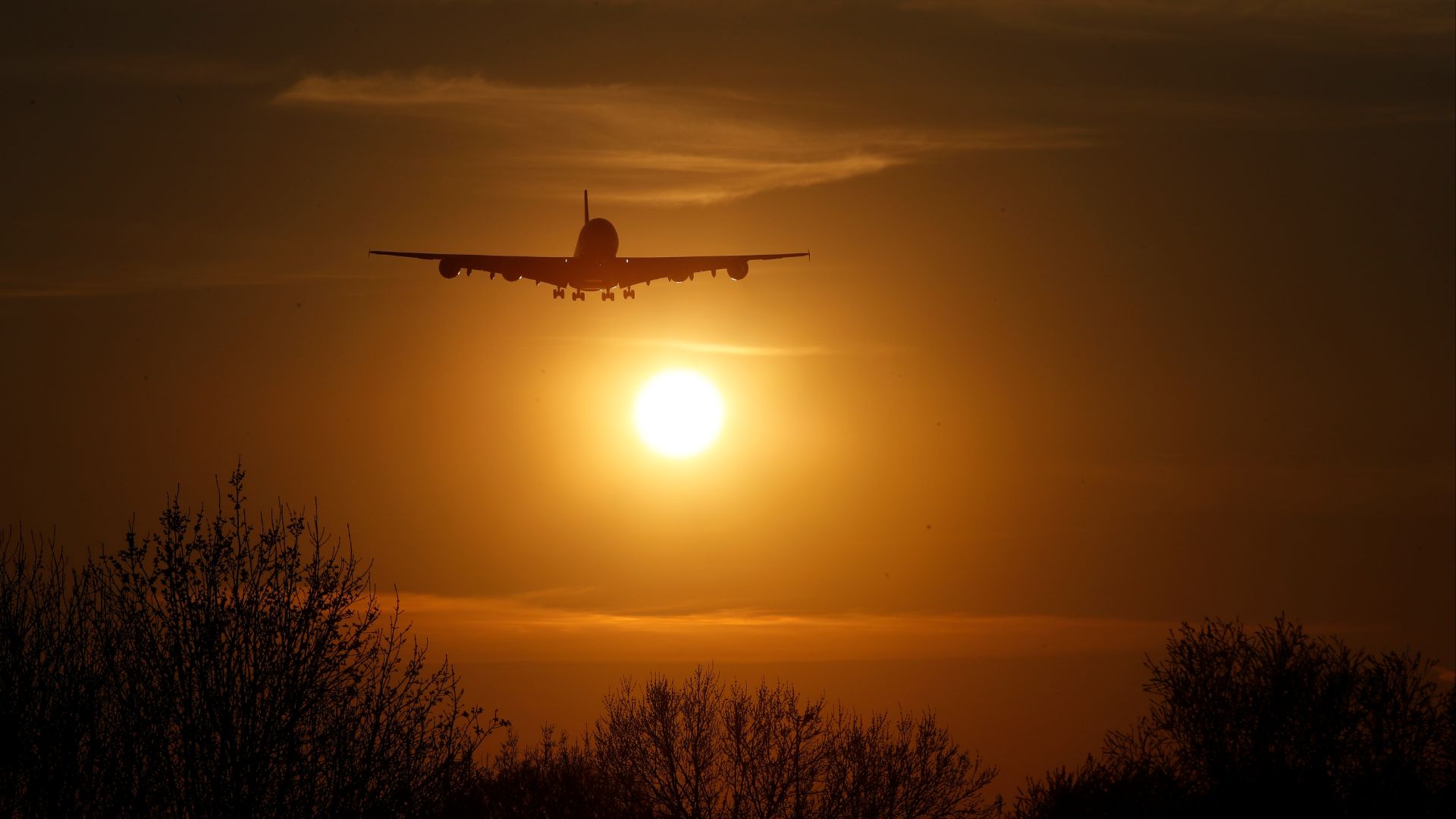
Photo: REUTERS

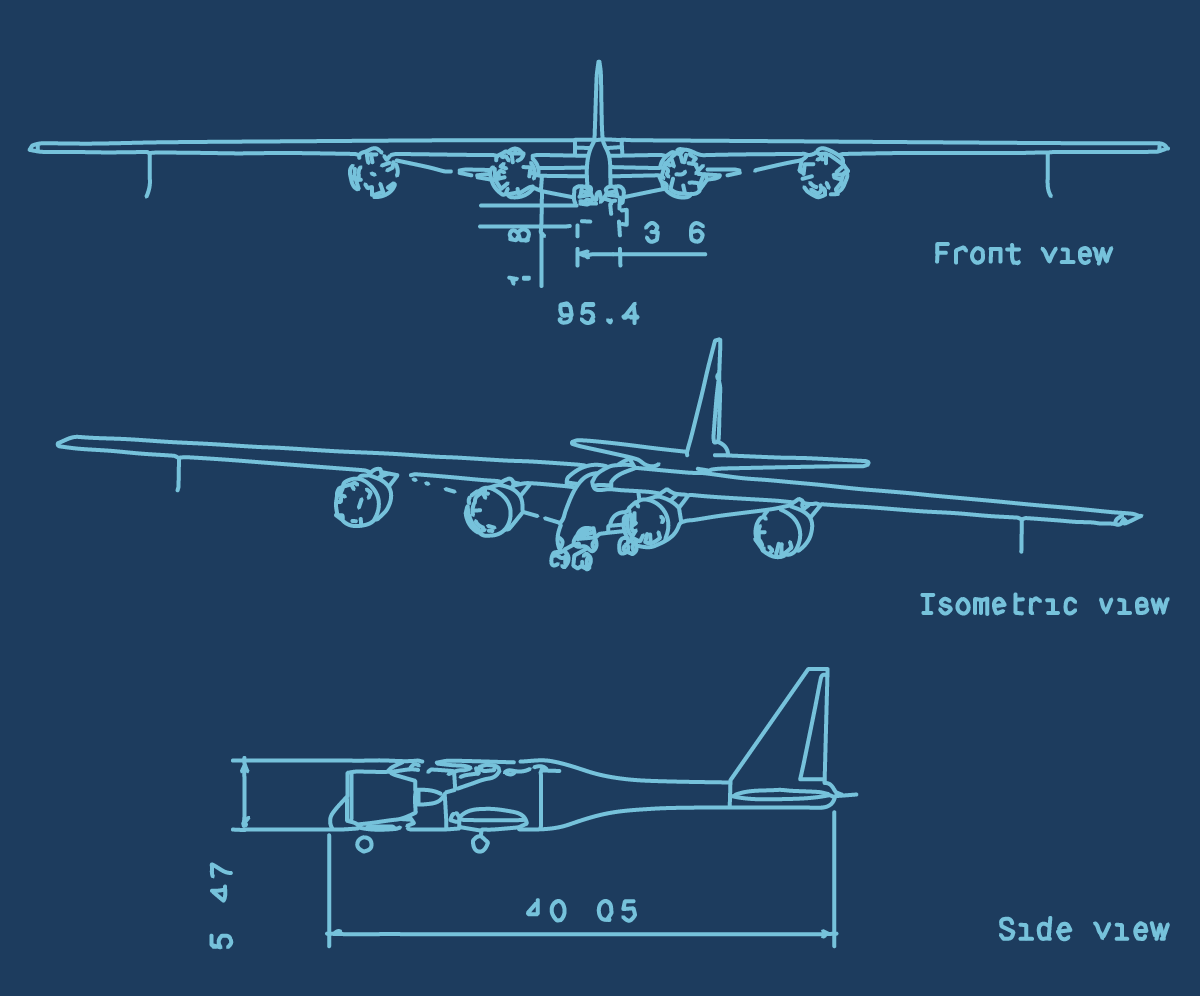
Cooling the planet with stratospheric aerosol injection (SAI) has often been assumed to require a new fleet of aircraft capable of taking payloads to unusually high altitudes of around 20 km (or ~65,000 feet). Making these aircraft is likely possible with existing technology, but would be a significant barrier to deployment that would require substantial funding and time to overcome.
For some, this barrier is reassuring. It limits the actors capable of starting SAI and presents opportunities for deliberation and oversight during the years – some experts suggest at least a decade1 – of engineering effort expected between the first large-scale funding of an SAI programme and deployment.
However, the SAI research community has so far mostly focused on scenarios with injection in or near the tropics, between about 30° North and South of the equator. But the required altitude of injection, and the associated difficulty of deploying, would be lower the further poleward one injects. This is not a minor change in altitude: the lower boundary of the stratosphere drops from around 18 km near the equator to under 10 km near the poles.
What hasn’t been clear until recently is the trade-off between the lower technical challenge of reduced altitude and the lower effectiveness for climate cooling of more poleward, lower-altitude deployments.
A surprisingly effective approach to SAI
Over the last two years, colleagues in the SRM modelling community and I set out to supply that information using simulations of what we termed “High-Latitude Low-Altitude” (HiLLA) SAI. By this, we mean injections of sulphur dioxide in the subpolar lower stratosphere, such as at 60° North and South and 13–15 km (~43,000-50,000 feet) altitude.
Unlike in the tropics, aerosol particles from HiLLA SAI survive less than a year in the stratosphere in our simulations. This form of SAI would therefore likely be seasonal; injecting in the spring and early summer would ensure there is sunlight to reflect before the aerosol particles fall out.2
What we found with our HiLLA simulations surprised us. While this form of SAI is definitely less effective at cooling the planet for a given injection of material, the drop-off in efficiency is not as extreme as we had assumed.
In a recent paper,3 we tested this in three different climate models (building on previous studies4–7) and found that HiLLA SAI with altitude limited to 13 km is close to half as efficient at reducing global average temperature as a more “conventional” 21 km injection in the subtropics.
The 13 km altitude referenced here is relevant as it is roughly the maximum altitude at which many modern large jets, like a Boeing 777, are certified to fly. These jets could carry much larger payloads than aircraft designed for deployment over 20 km, meaning fewer planes and flights would be required per tonne injected. Their use would also mean deployment could begin without the perhaps decade-long development time and significant cost required to design and build a fleet of new aircraft.8
Large commercial jets could likely be pushed a little beyond the 13 km certification ceiling with some modifications, but exactly how much further is not yet clear. Our modelling shows that eking out a few more kilometres of altitude would make a big difference to the climate outcome, principally by increasing how long the particles remain in the stratosphere. We find that if the deployment altitude can be raised from 13 to 15 km, the efficiency of global average cooling (measured relative to the “conventional SAI” case) rises from roughly 50% to around 65%. The cooling in the Arctic itself, per tonne injected, is about the same for the 15 km HiLLA strategy as for the 21 km “conventional SAI” reference case.
Efficiency determines how much sulphur dioxide would be required for a given cooling, affecting not only costs and logistics but also the extent of SAI’s physical side effects, such as sulphate deposition and impacts on the ozone layer.
This surprising effectiveness of HiLLA strategies is due to several effects. Seasonal injections mean that even with lifetimes of less than a year, aerosols are exposed to significant amounts of sunlight in the polar regions over their single summer season. Also, changes to the Earth’s energy balance in the high latitudes cause a larger change in global temperature than an equal one in the tropics due to differences in how temperature changes with altitude and processes like feedbacks involving ice.9
The fact that the Arctic is warming 3–4 times faster than the global average also means that changes there have outsized impacts on the global average temperature metric which we often use. This is an important caveat when comparing HiLLA strategies, which have more polar cooling profiles, to conventional lower latitude SAI. Considering only temperature change in the tropics instead of the global average, the efficiency of HiLLA strategies drops to more like one third to one half that of the conventional 21 km case in our models.
The implications of reduced barriers to SAI deployment
Stepping back from the scientific detail, we should remember that the potential for easier deployment with HiLLA strategies does not imply they would be preferable to other forms of SAI. In the event that large-scale SAI is carried out, the choice of strategy ought to be made on the basis of the climate effects, and particularly on the relative benefits and harms of those climate effects on the most vulnerable people around the world.
Engineering constraints matter: they are why I am writing this piece about SAI and not space mirrors. But if, as currently thought, developing aircraft capable of deploying at 21km presents no fundamental technical problems, then these constraints should not dictate any long-term choice of SAI strategy. Opponents of research into SAI should bear in mind that one possible outcome of a lack of research is to restrict potential future deployers to suboptimal deployments.
That said, high-latitude injections, perhaps as part of a multi-latitude strategy, could be desirable for climate reasons as well as engineering ease. This might be motivated by a desire to reduce the rapid and consequential changes occurring in the polar regions, or to support a balanced global profile of cooling.
Our recent simulations demonstrate that HiLLA SAI would work, in the sense that it would substantially reduce global average temperatures and polar changes with plausible amounts of injected aerosols. As a result, the barrier to entry for initial deployments of SAI is lower than has often been suggested, and the set of actors who could take part is broader.
Given these implications, there is an urgent need for lots more research into the climate impacts of HiLLA SAI. We do not yet have a good understanding of how the effects of SAI – from delaying the ozone hole recovery to changes in regional precipitation – differ under HiLLA strategies. There is reason to think these climate effects could be substantially different to conventional SAI. As just one example, HiLLA scenarios produce a more seasonally and spatially asymmetric pattern of sunlight reflection, which moves back and forth between the hemispheres in their respective summers. We do not yet know the extent to which this would change the impacts of SAI, such as on tropical precipitation.
This and similar uncertainties motivated our recent round of funding at Reflective for eight projects which will start to fill these gaps in our understanding, using the latest simulations of HiLLA SAI produced as part of the Geoengineering Model Intercomparison Project (GeoMIP).10 It’s too early to say what these researchers will find (preliminary results11 are just starting to come in now). But these and other ongoing projects mean we will know much more about HiLLA SAI in a year’s time.
The views expressed by Perspective writers and News Reaction contributors are their own and are not necessarily endorsed by SRM360. We aim to present ideas from diverse viewpoints in these pieces to further support informed discussion of SRM (solar geoengineering).

Endnotes
- Smith W, Bartels MF, Boers JG, Rice CV. (2024). On thin ice: solar geoengineering to manage tipping element risks in the cryosphere by 2040. Earth’s Future. 12(8):e2024EF004797. https://doi.org/10.1029/2024EF004797
- Lee WR, MacMartin DG, Visioni D, Kravitz B. (2021). High‐latitude stratospheric aerosol geoengineering can be more effective if injection is limited to spring. Geophysical Research Letters. 48(9):e2021GL092696. https://doi.org/10.1029/2021GL092696
- Duffey A, Lee W, Wheeler L, et al. (2026). The global climate response to High-Latitude Low-Altitude Stratospheric Aerosol Injection (HiLLA-SAI). Earth System Dynamics. 17(2):353-85. https://doi.org/10.5194/esd-17-353-2026
- Zhang Y, MacMartin DG, Visioni D, et al. (2024). Hemispherically symmetric strategies for stratospheric aerosol injection. Earth System Dynamics. 15(2):191-213. https://doi.org/10.5194/esd-15-191-2024
- Lee WR, MacMartin DG, Visioni D, et al. (2023). High‐latitude stratospheric aerosol injection to preserve the Arctic. Earth’s Future. 11(1):e2022EF003052. https://doi.org/10.1029/2022EF003052
- Wheeler L, Wagman B, Smith W, et al. (2025). Design and simulation of a logistically constrained high-latitude, low-altitude stratospheric aerosol injection scenario in the Energy Exascale Earth System Model (E3SM). Environmental Research Letters. 20(4):044011. http://doi.org/10.1088/1748-9326/adba01
- Duffey A, Henry M, Smith W, et al. (2025). Low‐altitude high‐latitude stratospheric aerosol injection is feasible with existing aircraft. Earth’s Future. 13(4):e2024EF005567. https://doi.org/10.1029/2024EF005567
- Smith W. (2024). An assessment of the infrastructural and temporal barriers constraining a near-term implementation of a global stratospheric aerosol injection program. Environmental Research Communications. 6(6):061007. https://doi.org/10.1088/2515-7620/ad4f5c
- Kang SM, Xie SP. (2014). Dependence of climate response on meridional structure of external thermal forcing. Journal of Climate. 27(14):5593-600. https://doi.org/10.1175/JCLI-D-13-00622.1
- Visioni D, Robock A, Duffey A, et al. (2026). The Geoengineering Model Intercomparison Project (GeoMIP) contribution to CMIP7–description of new experimental protocols and preliminary results. EGUsphere. 2026:1-47. [Preprint]. https://doi.org/10.5194/egusphere-2026-2417
- Quagraine KT, Quagraine KA, Akalanyabah E, et al. (2026). High-latitude, low-altitude stratospheric aerosol injection reshapes West African monsoon rainfall and associated dynamics. [Preprint]. https://doi.org/10.21203/rs.3.rs-9315964/v1