News Article
Middle Path Initiative Aims to Widen the Field in SRM Research
What would a “middle path” on solar geoengineering look like? A new initiative aimed at charting such a course emphasises meaningful participation from climate-vulnerable parts of the world that are often less represented in SRM research and conversation.

Photo: REUTERS

New initiative launched
A new coalition of prominent civil society organisations from around the world has launched the Middle Path Initiative, an effort to chart a more inclusive path forward on research, governance, and decision-making around SRM. Joining other markers like the increased funding for the field, the new engagement on the topic from major environmental and climate organisations in the US, India, Brazil, and elsewhere is another example of the field’s increasing relevance.
The effort is motivated by the fact that climate change continues to worsen, and discussions around potential interventions like SRM are getting louder – but those discussions, the Middle Path Initiative founders say, can often be too “polarized and paralyzed” to move forward in productive ways.
“Most of the SRM conversation has played out as a debate between two camps: One worries mainly about the risks of SRM, and the other worries mainly about the risks of unchecked warming”, said Ernest Ofori, co-founder and co-executive director of Emerging Climate Frontiers in Ghana, in an email to SRM360. “Both concerns are legitimate. What gets lost is that for many of us in Ghana and across Africa, both risks are real at the same time.”
Along with Ofori, members of the Middle Path Initiative include representatives from the Environmental Defense Fund in the US; the Youth Alliance for Environment in Nepal; the African Research Impact Network in Kenya; the Instituto Clima e Sociedade in Brazil; Operaatio Arktis in Finland; and the Healthy Climate Initiative in India.
“The real question ahead of us is not whether SRM should be deployed or not, but rather how the conversation will unfold”, the initiative’s members wrote in their first white paper, published last week. “[W]ho is at the table, what research is enabled, whose insights matter, and how the research and/or development of such technologies should be governed in a global reality defined by climate suffering and geopolitical tensions.”
Human rights, vulnerable groups, and deployment restraint
The Middle Path Initiative’s white paper includes a set of principles, as well as recommendations for governments, researchers, and others. First, the authors say that SRM decisions should be made with human rights and justice at the centre, and that any such decisions should be part of a broader climate change response where mitigation and adaptation remain at the forefront.
Further, the most vulnerable people – such as indigenous communities in the Arctic and those in least developed countries – should not just participate in SRM discussions but help shape the direction research takes.
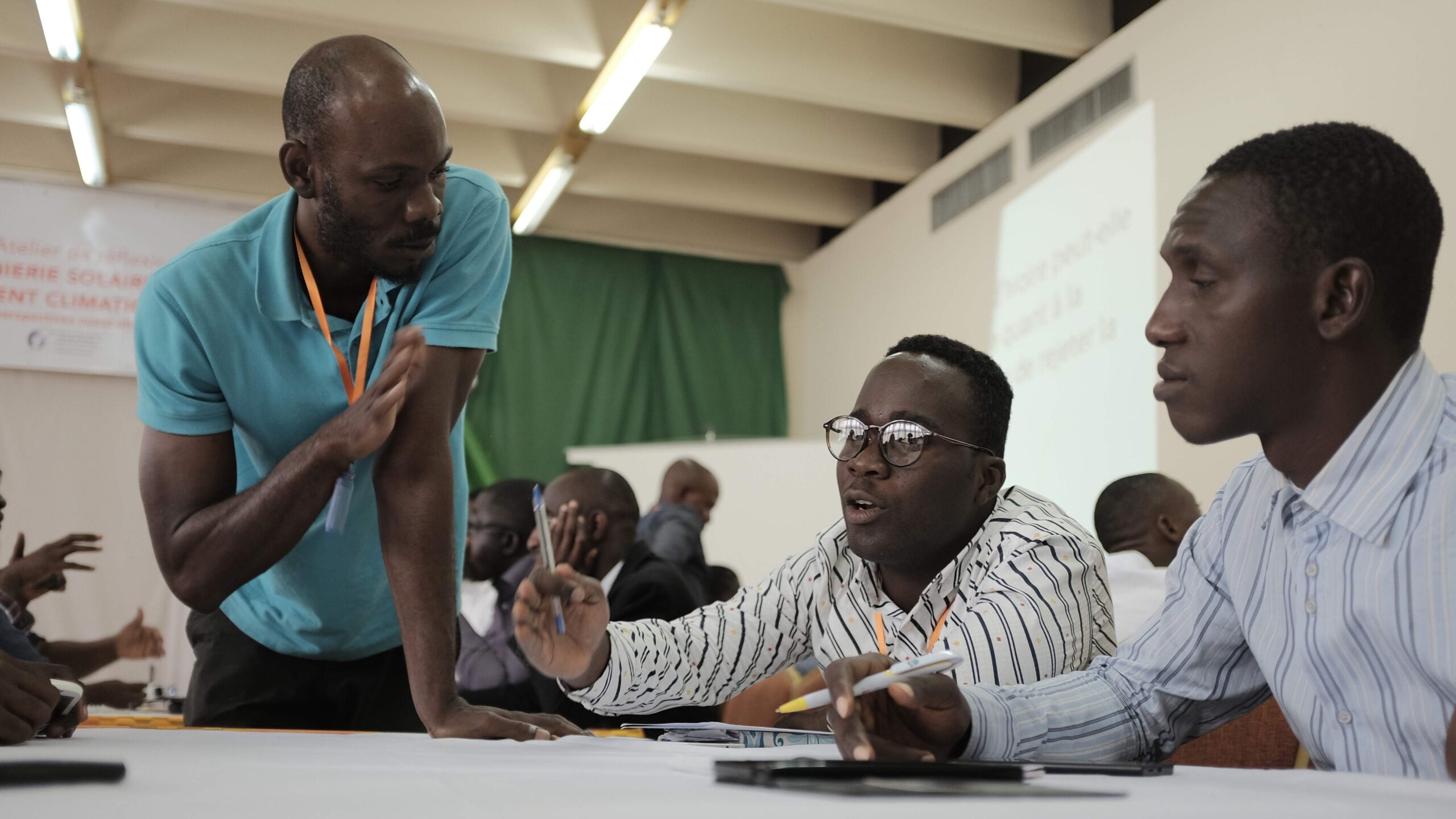
“The gap isn’t only about who gets a seat in governance rooms. It’s also about whose knowledge counts in assessments, who sets funding priorities, and who decides what an acceptable risk is”, Ofori said. “This initiative brings civil society from climate-vulnerable regions into those questions as agenda-setters, not observers.”
Perhaps most notably, the group’s “middle path” balances what it terms “deployment restraint” with responsible research. They oppose deployment at the present levels of scientific and governance uncertainty, but believe that a robust publicly funded research programme is needed to support future decisions around SRM. The group specifically differentiates this position from the “non-use” approach to SRM. “The difference is that restraint on deployment and staying out of the knowledge are two separate commitments”, Ofori told SRM360. “When they get treated as one, much of the world is shut out of rule-making.”
Recommendations for next steps
The group urges policymakers to consider SRM through a “risk/risk” framework, to differentiate between SRM technologies when considering governance approaches, and to proactively address moral hazard concerns, among other priorities. They also stress that governments should directly fund independent, interdisciplinary research – at a time when very few governments have public plans to do so.
They also urge the development of robust research governance that is proportionate to risk – meaning regulation of computer modelling or other low-risk activities should be approached differently from outdoor experiments – and recommend policymakers look ahead to prepare for future governance challenges. The group hopes to expand, bringing more civil society organisations into the initiative.
“We are not trying to build governance from scratch. We want to strengthen existing efforts and make sure they reach the communities most exposed”, Ofori said. “For funders, that means putting money into research capacity and agenda-setting led by Global South institutions over the long term. For governments in our regions, it means building their own independent capacity to assess SRM rather than waiting for assessments to arrive from elsewhere.”
This news article also appeared as part of our weekly newsletter on LinkedIn. Subscribe for a curated digest of the stories, studies, and conversations that matter most.