News Reaction
Reflective Publishes a Roadmap for the Future of SAI Research
The non-profit organisation Reflective published a plan that aims to strategically guide research into stratospheric aerosol injection (SAI) forward through the next decade or two. We asked experts for their reactions and what influence it could have on the future of the SRM field.

Photo: REUTERS
The non-profit Reflective, which aims to accelerate the pace of research into sunlight reflection methods (SRM), published an SAI Research Roadmap last week. The Roadmap is targeted at what that organisation saw as a gap in the field, where science is progressing in too haphazard and decentralised a fashion to allow for truly informed decision-making on a potentially planetary-scale intervention.
To address that gap, Reflective designed the Roadmap to progress in distinct stages, from building foundational knowledge through outdoor experiments and eventually to “monitored cooling”, meaning deployment at global scale. It leaves open the possibility that the research may show why deployment should not proceed.
Reflective finds that if the research is conducted as they suggest, a decision on whether to begin an SAI deployment could be reached in 10 to 22 years, for a cost between $370 million and $1.36 billion. We asked experts for their reactions to the Roadmap, and what influence it could have on the future of the SRM field.

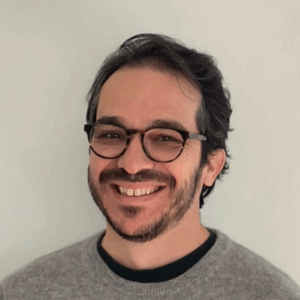
Marianna Linz
Head of Research
Reflective
The SAI Research Roadmap provides one potential comprehensive plan for answering the most important open technical and scientific questions about stratospheric aerosol injection. Resolving those uncertainties is necessary but not sufficient for responsible decisions about SAI; governance must develop alongside the science. The roadmap borrows the logic of clinical trials: research is organized into phases, each built around reducing uncertainty about specific questions, with checkpoints that must be cleared before moving on. Thus it is also potentially a path towards ruling SAI out. It suggests we could have the information needed for a decision in as little as 10 years, limited mainly by observations: the assets take years to get in place, and detecting any change from SAI requires a well-established background signal first.
Much of this will evolve as the field engages with it. We welcome comments, especially on the sequencing, scope, and cost of individual activities – there is a feedback link on every page of the roadmap.
Marianna Linz is the Head of Research at Reflective, a nonprofit organization dedicated to accelerating research on stratospheric aerosol injection. She is an expert in stratospheric physics, and she has recently left her position as Assistant Professor of Environmental Science and Engineering at Harvard University.
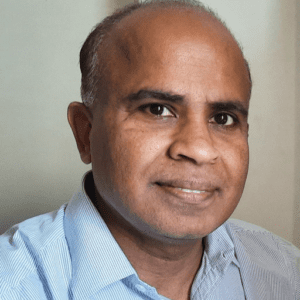
Govindasamy Bala
Professor at the Centre for Atmospheric and Oceanic Sciences
Indian Institute for Science
I think the SRM roadmap by Reflective is ambitious and too optimistic. We have seen this kind of optimism and hype in the past for several proposals to address climate change: carbon capture and storage, tree planting, ocean iron fertilization, direct air capture, etc. I believe these earlier proposals usually neglected or underplayed some key issues such as the scale, cost and side effects of the solutions. Although SRM, specifically stratospheric aerosol geoengineering, appears to scale up to the global scale at relatively lower cost and the side effects are shown to be small for moderate and temporary deployment, we must remember SRM is still a controversial idea and it is not recognized or endorsed formally as a solution to climate change by the global community. Governance frameworks are lacking at both national and global levels.
Given the fact that global negotiations for addressing climate change have been taking place for more than 3 decades and annual carbon emissions are still increasing, the roadmap by the Reflective appears simply unrealistic. Sure, it is possible to achieve technical readiness in 10 years or so by a rogue or unilateral actor. However, if you are looking for SRM deployments as a globally coordinated effort, it could be many decades away or may never happen.
Govindasamy Bala is a Professor at the Indian Institute of Science. His main research interests are modelling climate change, carbon and water cycles, solar geoengineering, and the global and regional monsoon systems. He has published over 130 peer-reviewed papers and has served as a Lead and Contributing Author in the AR5 and AR6 IPCC WG1 reports.

Matthias Honegger
Director of Climate Interventions
Centre for Future Generations
Reflective’s SAI Research Roadmap is a useful technical scaffold with a signaling problem. It outlines questions, instruments, and field tests that would advance scientific understanding of SAI’s feasibility and effects, and it assigns dollars and years. Its narrow technical focus, however, pushes political choice into the footnotes.
“Informed decision-making” is the stated purpose. The silent assumptions are, first, that the technical questions are paramount; second, that research is always done by responsible actors; and third, that findings will in fact inform decision-makers. Science does not travel into policy on its own. When it does, it usually travels through relationships, and only if the science is responsive to what decision-makers need to know. The questions policymakers ask tend to require interdisciplinary work more than deeper technical work.
The roadmap also creates a governance problem. It proposes that research proceed through stage gates. Those gates imply judgment calls about when evidence is sufficient to proceed. The roadmap does not say who makes those calls, or how – even though they are political questions.
The roadmap is a useful scaffold for focused technical research, not a decision-making pathway.
Matthias Honegger leads the Centre for Future Generations’ work on the overall governance of Climate Interventions and the Co-CREATE project for Perspectives Climate Research on governance of research into solar radiation modification risks and uncertainties for the European Commission.
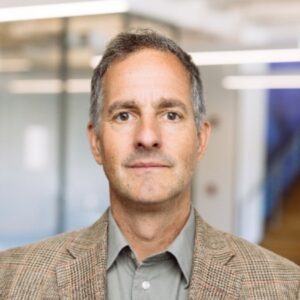
Dan Cziczo
Professor
University of Chicago
The Reflective SAI Research Roadmap is an interesting document that seeks to form a framework for some of what is needed to understand SAI. Among its strengths are laying out some of the tasks required to better understand SAI, timelines for work, and estimated costs for each step.
Unfortunately, there are several large gaps in the Roadmap. One important example is the establishment of a comprehensive baseline of the stratosphere before a potential implementation of SAI. While the need for a baseline is acknowledged, it is extremely limited both in scope and capability. As a result, what is proposed appears much less expensive than what would be needed to accurately define the current state of the stratosphere.
A second example is the side effects of SAI. Ozone loss is an established side effect, yet ‘ozone’ only appears once in the document and there doesn’t appear to be any comprehensive investigation of the impact on ozone. This is likewise true of many of the other theorized impacts of SAI. Only in Phase 3 does the question “Are any unexpected effects emerging?” appear – something that should rightly be considered from Phase 0 onward.
These gaps limit its overall usefulness as a true roadmap.
Dan Cziczo is Professor at the University of Chicago. He is an atmospheric scientist interested in particulate matter and cloud formation. His research utilizes laboratory and field studies to elucidate how small particles interact with water vapor to form droplets and ice crystals, important players in the Earth’s climate system.

Kwesi Quagraine
Senior Lecturer
University of Cape Coast
Reflective’s SAI Research Roadmap is the most useful thing the sunlight reflection field has produced in years. It does what the field has avoided, which is to say what would count as sufficient evidence, in what order, at what cost, and under what conditions the whole thing should stop.
My concern is what the gates are keyed to. The only quantified progress metric across the roadmap is uncertainty reduction in cooling efficacy. The impacts of SRM run in a parallel row where tropical circulation and monsoon response is a three-to-five-year modelling activity with no target attached and no gate depending on it, which means a program can clear both gates, arrive at the “informed decision” milestone, and still not know the sign of the West African monsoon response.
I would suggest a couple of amendments that would make this roadmap something climate vulnerable countries could actually use. First, we should attach a tropical rainfall criterion to the second gate, so that cooling efficacy alone cannot open it. Put modelling and observational capacity in exposed regions inside the budget rather than beside it, because an “informed decision” is otherwise informed only for those who funded the evidence. We should also separate whoever rules on the gates from whoever funds the research, which is what the clinical trial analogy actually requires.
Read Kwesi’s full comment on LinkedIn.
Kwesi Akumenyi Quagraine is a climate scientist and Senior Lecturer at the University of Cape Coast, Ghana, currently a Visiting Scientist at the National Centre for Atmospheric Research (NCAR). His research focuses on climate intervention, precipitation extremes, and African climate dynamics, with particular emphasis on the governance and regional impacts of SRM.

Jack Stilgoe
Professor
University College London
Scientists’ easiest policy response in politically contentious issues is to say ‘more research needed’. It’s hard to argue against knowledge, as that would seem to be siding with ignorance. But any research roadmap needs to ask what sort of research is needed, who should be doing it, and who should be making decisions about it. Geoengineering is an unavoidably political construction.
The new plan from Reflective should be seen for what it is: a lobbying effort to accelerate one organisation’s agenda. For a roadmap to be useful, it needs to have more than one road on it. We need to know what the options are, in all of their complexity. Proposals for geoengineering raise many questions, only a few of which are amenable to scientific ‘evidence’. Among many other issues, we need to ask about justice, geopolitics, intellectual property, the ethics of experimentation and what it might mean to live in a controlled climate. We need to ask who should be involved in making sense of geoengineering and we need to identify as many future paths as possible. This means including a wide range of voices, not pretending there is some source of neutral ‘evidence’. Many organisations, including the Alliance for Just Deliberation on Solar Geoengineering and the UK’s Advanced Research and Invention Agency are starting to develop more thoughtful responses. This new ‘Roadmap’ is a step backwards.
Dr Jack Stilgoe is a professor in science and technology studies at University College London, where he researches the governance of emerging technologies. He is part of the UKRI Responsible AI leadership team and a member of ARIA’s Climate Cooling Oversight Committee. He is the author of ‘Experiment Earth: Responsible innovation in geoengineering’.
The views expressed by Perspective writers and News Reaction contributors are their own and are not necessarily endorsed by SRM360. We aim to present ideas from diverse viewpoints in these pieces to further support informed discussion of SRM (solar geoengineering).