News Article
Can the Arctic Be Cooled Without Side Effects Elsewhere?
Regionally targeted stratospheric aerosol injection (SAI) has been suggested as a way to counter dangerously rapid warming in the Arctic, but worries of far-reaching disruptions have persisted. New research suggests that may not be the case – with caveats.
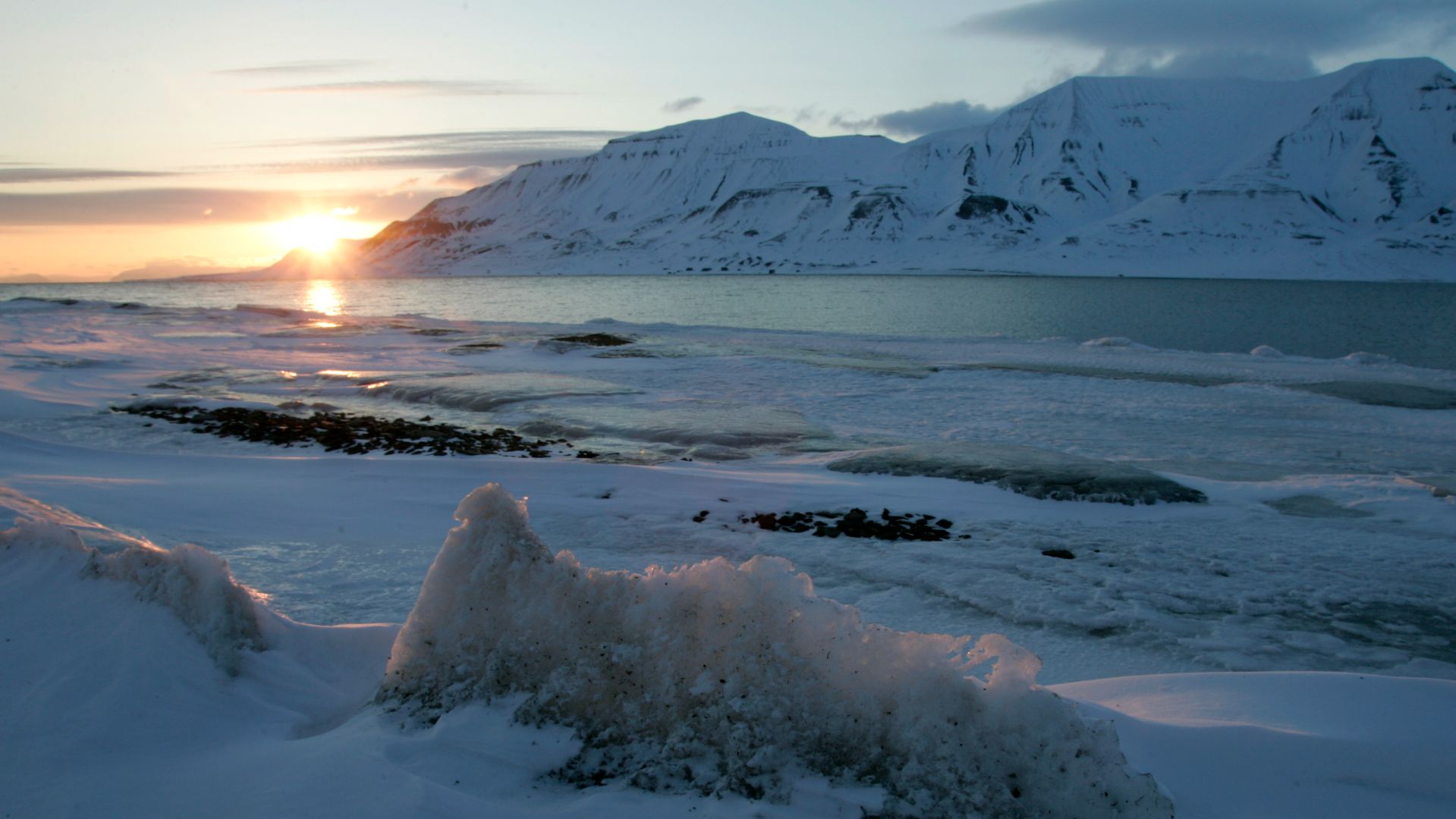
Photo: REUTERS

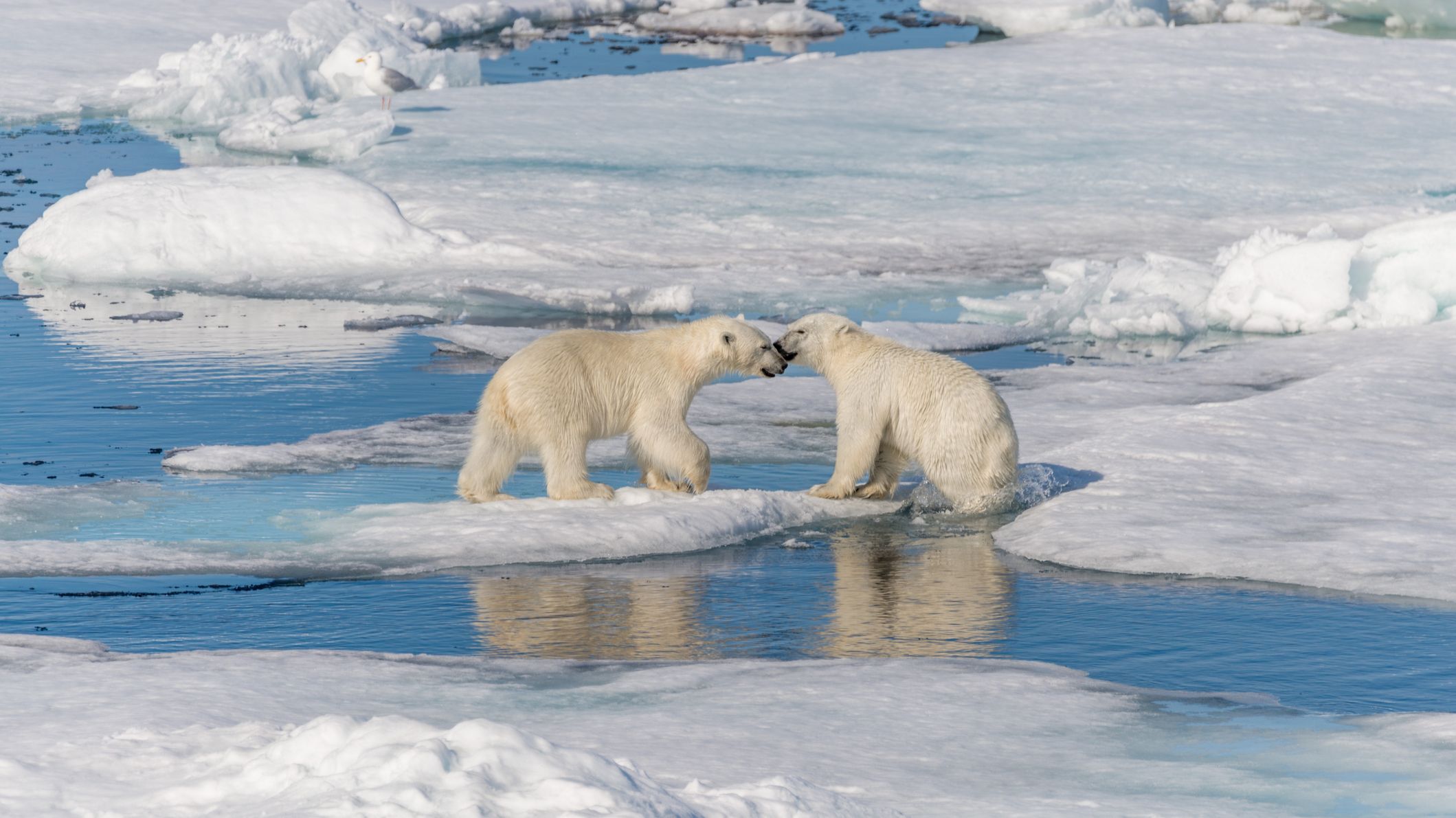
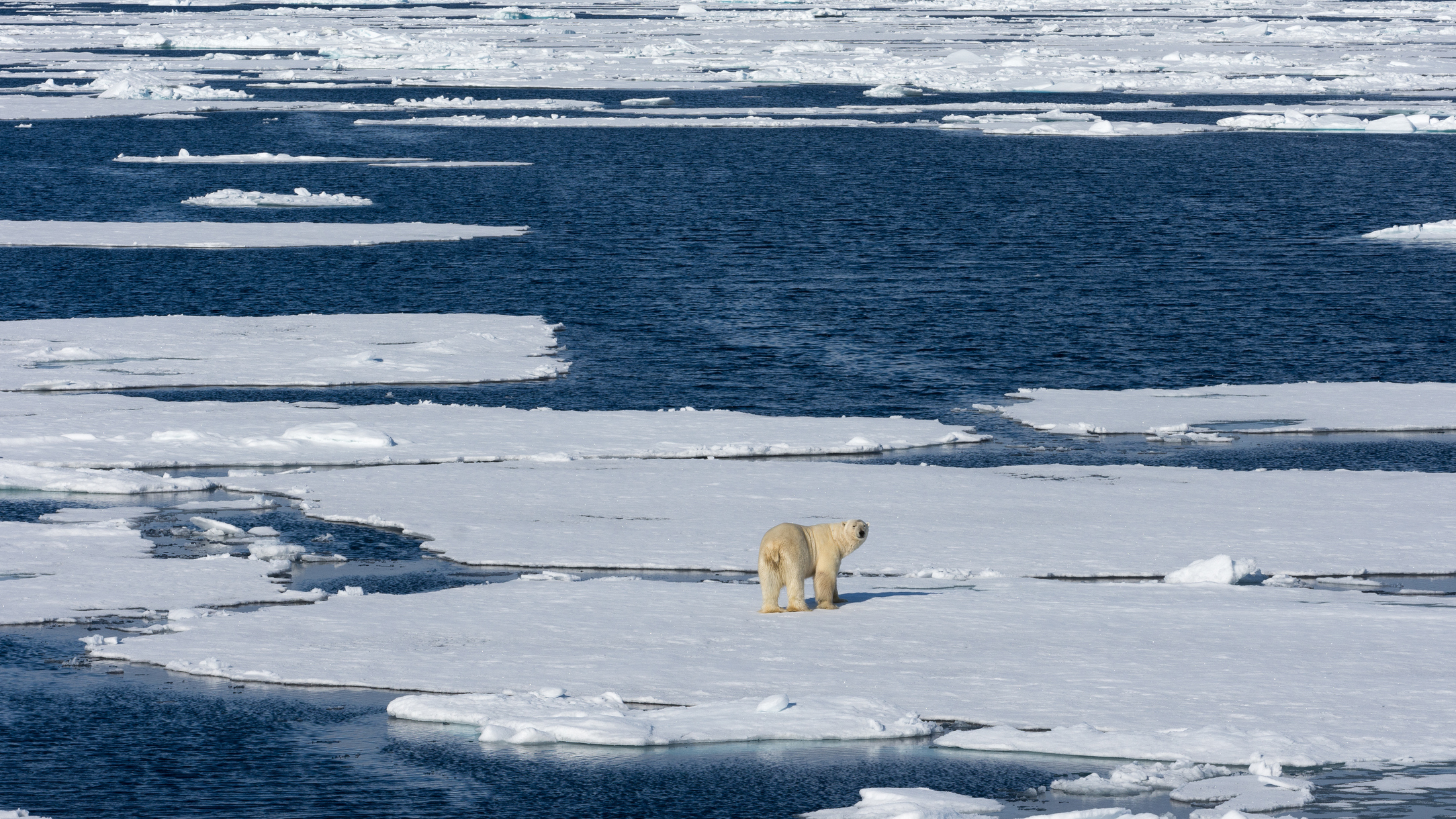
The Arctic is warming nearly four times faster than the planet as a whole, and the consequences reach well beyond the region itself. Melting ice in Greenland is adding to global sea level rise. Thawing permafrost is releasing greenhouse gases locked away for thousands of years. Sea ice loss is reshaping habitats for wildlife and changing how Arctic and Indigenous communities travel, hunt, and live alongside a landscape that’s shifting under them.
That combination of speed and consequence has kept the Arctic at the centre of climate intervention conversations. A new modelling study looks at one specific question: what would happen if the Arctic were cooled on its own, without matching cooling anywhere else?
What cooling just the Arctic could mean
Natalia Okanikova and colleagues modelled a scenario where reflective particles are released into the stratosphere over the Arctic only, rather than spread across the globe – as stratospheric aerosol injection is more typically modelled. The appeal, on paper, is that it targets warming where it’s most severe, and could use aircraft that already exist, unlike a global version of the same idea (though recent developments suggest planes for SAI may be closer and cheaper than previously thought).
The concern with cooling just one part of the planet is that this could produce imbalances that could shift rainfall patterns. The tropical rain band tends to shift toward whichever hemisphere is relatively warmer, so if you cool the Arctic without cooling the Southern Hemisphere by a similar amount, you risk disrupting tropical rainfall as a result.
The study found that this concern doesn’t automatically hold. Because the Northern Hemisphere is already warming faster than the Southern, a modest amount of Arctic-only cooling would generally nudge the two hemispheres back toward balance rather than push them further apart. Across a wide range of climate models, the researchers found that a modest, arctic-only cooling could be implemented without producing the kinds of imbalances that would disrupt tropical rainfall.
Open questions
There is a significant caveat. When the researchers tested this using the two most widely used climate models in this field specifically, the models gave notably different answers: one suggested a fairly substantial amount of cooling would be needed to hold the balance steady, while the other suggested very little would be needed at all, underlining how much uncertainty remains even among the field’s standard tools.
The researchers also examined something that’s often assumed rather than tested: that keeping the hemispheres in balance is, by itself, enough to protect rainfall patterns in the tropics. That link held up in most of the models they examined, but not all of them, which they treat as a reminder that hemispheric balance is one useful signal, not a guarantee of safety. Other effects on Arctic ecosystems, ocean currents, and local weather would still need to be assessed on their own terms.
These findings add to another recent modelling study by Long Cao and Yu Fang, which found that cooling applied at the poles produced more than three times the effect, per tonne of aerosol, compared with the same amount spread evenly across the globe; cooling applied near the equator produced only about half the effect of a global approach. This study further highlights the importance of deployment location, with implications for the scale of deployment and its potential side effects.
In general, the Arctic’s fragile state continues to draw attention from varying corners of the climate interventions world. Other recent work suggests the idea of pumping seawater onto existing sea ice to help it thicken might be too costly to scale up across the region, and a new group called the Arctic Stabilization Initiative has now launched its website and will work on ideas like mixed-phase cloud thinning.
This news article first appeared as part of our weekly newsletter on LinkedIn. Subscribe for a curated digest of the stories, studies, and conversations that matter most.