Perspective
Could a Focus on Clouds Help Repair the Arctic?
Ginny Selz of Ocean Visions explains why they are funding early-stage research into two potential interventions focused on clouds in the Arctic, and how those interventions could possibly protect one of the most climate-vulnerable places on the planet.
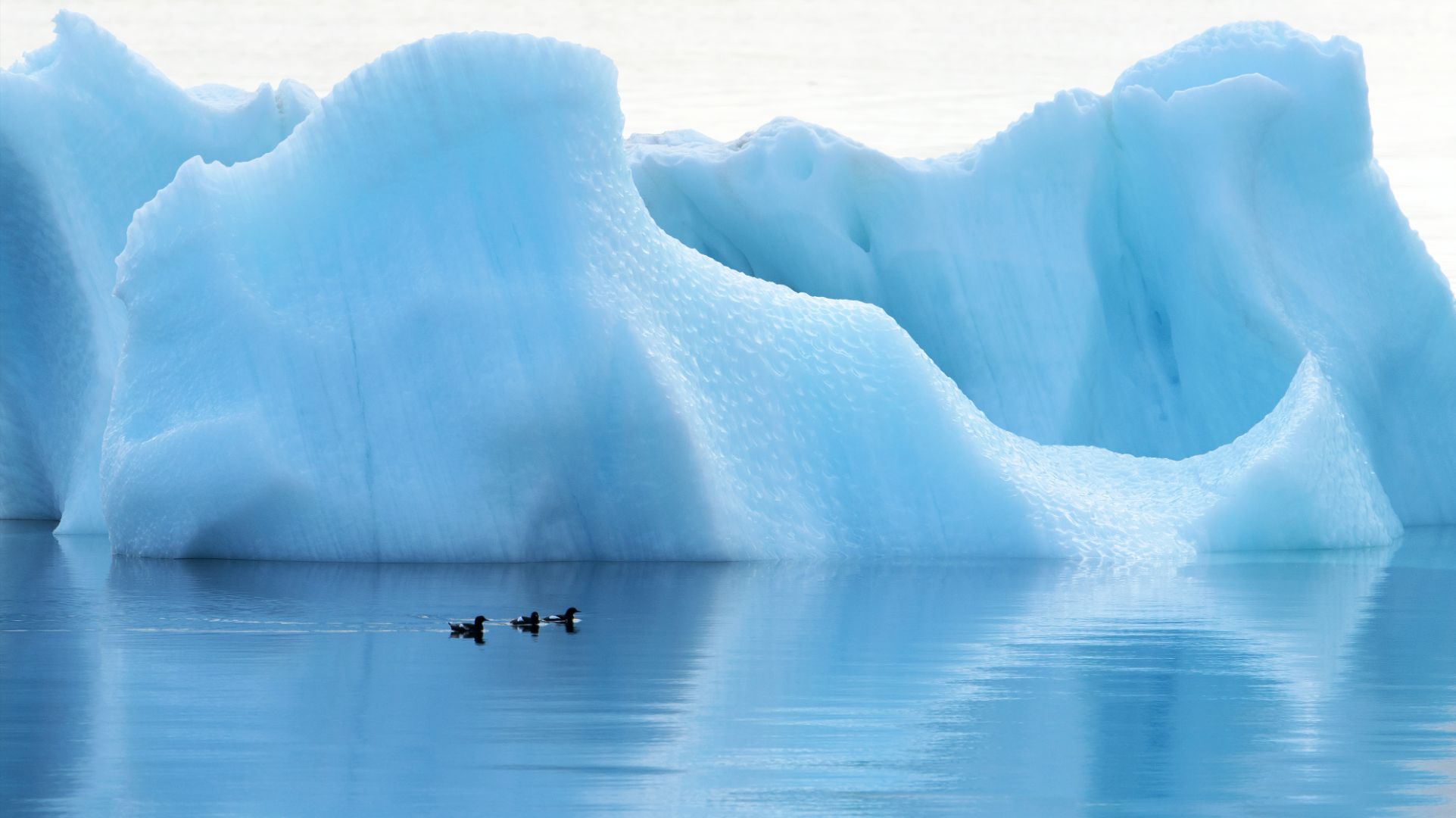
A melting iceberg off Norway's Svalbard archipelago in the Arctic (Photo: Science Photo Library)

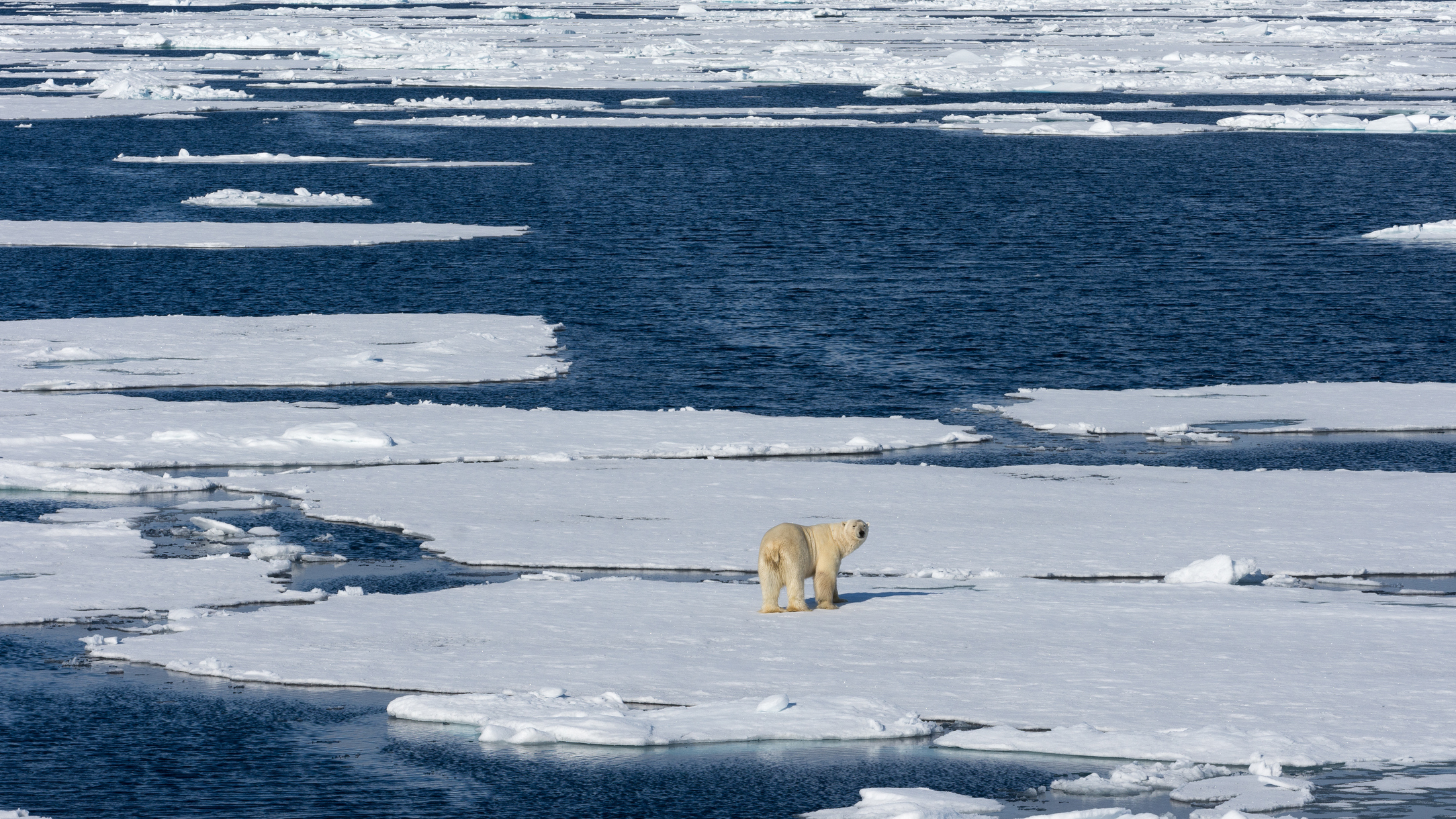
Arctic sea ice is disappearing at an unprecedented rate, pushing parts of the Earth system toward dangerous tipping points. Clouds may be one of the few tools that could help slow this decline.
Clouds regulate surface temperatures and influence how much ice forms or melts; even small shifts in their reflectivity or heat-trapping properties could reduce Arctic climate risk. Ocean Visions, an organization focused on addressing climate disruption to marine ecosystems, is funding emerging research on whether and under what conditions changes to clouds could generate cooling effects and slow the loss of Arctic sea ice.
A critical and endangered ecosystem
The Arctic has warmed three to four times faster than the global average, a process known as Arctic amplification, closely connected with a roughly 50 percent decline in summer sea ice over the past 40 years. Changes in the Arctic aren’t just important to the region but also play a large role in global climate stability. Sea ice loss amplifies regional warming, accelerates Arctic ice sheet instability and sea level rise, contributes to methane-driven warming via permafrost thaw, disrupts Arctic ecosystems, and alters weather patterns and ocean circulation far beyond the polar region.
Despite their influence, clouds remain one of the least understood components of the Earth system. Improving our understanding is no longer simply a scientific ambition; it is increasingly central to understanding what options may exist as Arctic change outpaces global mitigation timelines. Most current projections suggest that even under the most ambitious carbon mitigation and removal scenarios, Arctic sea ice will disappear in summer by 2050, if not earlier, and bring with it significant and cascading impacts.
As Arctic change accelerates, understanding critical physical processes such as how clouds influence sea ice, moves beyond a basic scientific question to one with potentially significant implications for managing climate risks.
Assessing the potential for SRM in the Arctic
The Ocean Visions Arctic Sea Ice Road Maps, developed with input from over a hundred experts, assessed 21 approaches to slow or stop the loss of Arctic sea ice. Among these, six solar radiation modification (SRM) methods were reviewed, covering global and regional aerosol-based, cloud-based, and space-based methods. Based on what was known at the time of publication on the state of the science, knowledge gaps, and first-order priorities from the Road Maps, Ocean Visions highlighted two of the SRM approaches as underfunded, but high potential: mixed-phase cloud thinning and marine cloud brightening.
Mixed-phase cloud thinning research explores whether seeding mixed-phase clouds (clouds with both ice and supercooled liquid droplets) could encourage ice formation, allowing more heat to escape to space and reducing the clouds’ warming effect. Marine cloud brightening research focuses on increasing the reflectivity of low-lying clouds by spraying fine seawater droplets into the lower atmosphere. By increasing droplet concentration, marine cloud brightening aims to reflect more incoming sunlight.
Both of these concepts are derived from observations of how clouds have become less heat trapping or more reflective after being naturally seeded by dust particles, or by shipping emissions. These two approaches are potentially complementary since marine cloud brightening is most effective during sunlit months and mixed-phase cloud thinning targets winter heat-trapping clouds. Together, these two approaches are a subset of a higher-order priority for scientific inquiry: how do clouds influence the Arctic energy balance, and could improving our understanding of cloud processes inform potential interventions to help preserve sea ice?
To respond to these and other such questions, Ocean Visions established the Arctic Sea Ice Restoration Research Fund. Pooling contributions from multiple donors, the Fund directs resources to first-order priorities identified in the Road Maps, enabling responsible research where little or no activity currently exists. The Fund intends to increase its capacity to support research at the scale required to explore and evaluate options that could potentially reduce the risks and severe impacts of nonlinear change.
On February 12, 2026, the Fund announced $2.5m in research awards to six teams; four of their projects focus on the two cloud-based methods. They will consider whether relevant cloud types exist in sufficient quantities, under what conditions they form, when and where they occur, and whether they could meaningfully influence sea ice loss. Designed as early-stage research, these studies leverage a combination of historic land station data, ship-based observations, satellite measurements, and models at multiple scales. They do not include outdoor experiments. If findings suggest that further research is warranted, critical areas for consideration would include ecological impacts, socioeconomic and cultural considerations, governance, and engagement.
Why early research matters
These projects complement a growing field of research on strategies to conserve the cryosphere and cool the planet. These include efforts specific to the cryosphere, such as the UK’s Advanced Research + Invention Agency funding initiative to reduce ice export and thicken sea ice and Arete’s focus on forecasting sea level rise and stabilizing glaciers, as well as broader efforts on global cooling such as Reflective’s focus on high latitude, low-altitude stratospheric aerosol injection.
Advancing the science on these and other potential approaches gets us closer to knowing what methods may be effective and how they could be combined. Research may ultimately show that none of these approaches meaningfully affect Arctic sea ice. Projects may conflict with one another or challenge prior assumptions. Some approaches, however, may demonstrate consistent potential and justify deeper examination. Should that occur, the knowledge generated from today’s work will help inform future discussions on viability, options, governance, equity, and collective decision-making – all domains that science must inform but cannot resolve alone.
Through the Roadmap and Research Fund, Ocean Visions is helping shape an emerging field, connecting researchers, setting priorities, and creating a platform for structured dialogue on climate interventions. Exploring clouds as a potential tool to preserve sea ice requires careful early-stage research, interdisciplinary collaboration, attention to governance, and stakeholder engagement. This research is one component of a broader portfolio of science-guided strategies pursued by Ocean Visions, including ocean-based decarbonization, carbon dioxide removal, and a range of ecosystem repair approaches to address climate change and its impacts.
Preparing for a volatile climate future requires more than acknowledging risk; it requires building the knowledge necessary to navigate it.
The views expressed by Perspective writers and News Reaction contributors are their own and are not necessarily endorsed by SRM360. We aim to present ideas from diverse viewpoints in these pieces to further support informed discussion of SRM (solar geoengineering).